
-
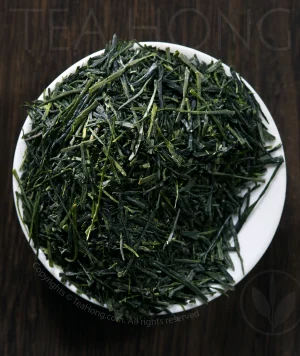
Kyoto Sencha Syunsai, organic Japanese green tea
Cold Energy, Fuller Bodies, Green teas, Japan, Lighter Aromas, Organic teas, Tea$ 25.80春霽 おくゆたか 有機京都一番摘
A well delivered kick with the “just right” amount of strength is the joy of sencha for many tea drinkers. The key, though, is in whether the tea delivers the layers and intricacies like any fine tea should. A not so commonly employed tea cultivar, Okuyutaka, which can yield a finer aroma and more complex taste than other popular tea plants, is used for this top notch organic sencha of our pick. In addition to harvest quality, the mastery and care in processing is critical. Our producer in Kyoto spends more than double the time compared to the modern method so the rolling and heating of the leaves can be gradual and slow in order to render the truly traditional, and more complex taste profile of a respectable sencha. Presenting Tea Hong’s Kyoto Sencha Syunsai, a most enjoyable old style Japanese green tea by the multiple award winning tea master Kikuoka sensei and his diligent team. Net weight: 60g (2.1oz) in Kraft-alu pillow



-
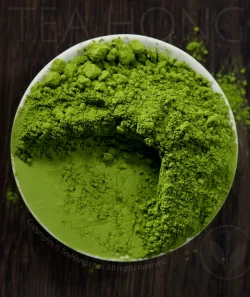
Ise Matcha Mugetsu
Cold Energy, Fuller Bodies, Green teas, Japan, Lighter Aromas, Tea$ 24.30伊勢 御濃茶 夢月
Master ceremonial grade at great value
If you are beyond those matcha lattes or smoothies and want to experience the virtues of a pure matcha, begin with a more genuine quality. One that is from the leaves of the Asahi and Gokou cultivars and that are properly shaded-grown and processed, i.e. from a high quality tencha for the umami, creaminess, low astringency and vibrant green colour. And that is slowly and finely ground to the smooth powder form for untainted purity and silkiness. Presenting Tea Hong’s Ise Matcha Mugetsu, a great value premium selection that is suitable for making either usucha in a chakai or koicha for a chaji ‘tea ceremony’. Even if you are not into those Japanese style tea gatherings, a properly whisked bowl of a fine quality matcha without the masks of foamed dairy is a sheer moment of peaceful happiness in itself.

 Net weight: 30g (1.06oz) in double-lidded tin
 -
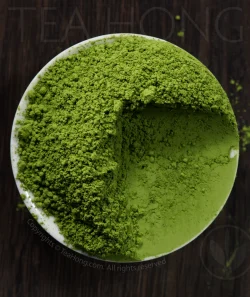
Uji Organic Matcha Sasameyuki, premium ceremonial grade
Cold Energy, Fuller Bodies, Green teas, Japan, Lighter Aromas, Organic teas, Tea$ 24.30宇治 有機 抹茶 細雪 (濃茶)
The best tasting organic matcha we have sampled
While there is no shortage of organic products in the market, getting one that offers the right taste is the most difficult part. That’s why we focus our effort in the mecca of top quality Japanese tea — Uji — to satisfy the different needs of different patrons. While a true connoisseur would want to indulge in the pure and rich flavours typical of a finest matcha, a Zen drinker needs a medium to open windows to the inner soul through the intricate yet solid presence of a tranquillising aftertaste. And then there are those who just want a top quality as their drink ingredient. The patrons in a most exclusive hotel in London seem to agree. We send more of this tea to their discretely beautiful tearoom and cafe than any other varieties. Tea Hong’s Uji Matcha Sasameyuki is the best quality organic production from the same tea master team who directs the quality of our top master grade Uji Matcha Tokumukashi. Their production facility in Higashiyama in Uji is certified for the strictest international food safety standard FSSC22000, and for organic production by Japan Organic and Natural Foods Association (JONA) under the Japanese Agricultural Standards (JAS). Net weight: 30g (1.06oz) in double-lidded tin
 -
Sold out

Uji Gyokuro Yayoinoin, national competition production
Cold Energy, Fuller Bodies, Green teas, Japan, Lighter Aromas, TeaPrice range: $ 33.20 through $ 57.90品評会出品 宇治玉露 弥生の韻
In their small but well organised production workshop in Uji, Master Yoshida and his team carefully sample taste each batch of tea throughout its production process. It is his own reputation that is at stake. As a multiple award winning 16th generation gyokuro master, pursuit for quality is the only way to maintain this honour, and that of his family name. Only the best first flush leaves are selected for processing in this highly specialised workshop. Each step of the processing is monitored and adjusted on the spot for maximising the taste quality. Differences in the weather throughout the growth of the harvest and even the picking time and conditions affect the biochemistry of the leaves. For a green tea, this directly affects the final taste. Adding one degree in heating or a few minutes of baking to optimise the potential of each batch of leaves can therefore mean whether the tea will be good or distinctively superb. Tea Hong’s Uji Gyokuro Yayoinoin is one of these ultimate quality, limited quantity batches hand-rolled by the Master himself, and that we have secured before the annual tea competition. (We wouldn’t be able to offer it if we buy it afterward when it wins. Domestic demand for an award tea is huge even when the price skyrockets upon winner declaration.) Available in 25g (0.88oz) in a double lidded tin, or in 60g (2.1oz) in a kraft-alu pillow pack. Please click below to choose.
 -
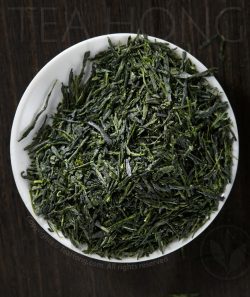
Ise Gyokuro Chikusen
Cold Energy, Fuller Bodies, Green teas, Japan, Lighter Aromas, Tea$ 37.30伊勢 逸品玉露 竹仙
Compared to Uji or even Kyushu, the region of Mie is much less talked about as one of the first major tea production areas in Japan. Yet it is still as important a source for high end classical Japanese green tea. Many big brands come here to OEM their products, some even claiming them as from some other more popularly known origins*. That is why we buy directly from the producers here. It is quality that matters to us after all. We have screened the best tasting teas for our offers and Tsutsumi sensei's teas most often come up on top. I guess he was not buffing when he said, “the demand is getting crazy…” Tea Hong’s Ise Gyokuro Chikusen is Tsutsumi sensei's top quality green tea from this most sought after production farm in Mie. In Japan, teas from Mie and neighbouring areas are generally referred to as Ise teas. We follow that local practice. The soft, supple, umami and slightly floral characteristics of a good value gyokuro like this is an optimum choice for receiving guests of all levels of tea appreciation skills, or for that special tranquil moment that you can retreat your overloaded mind to.
 Net weight: 60g (2.1oz) in Kraft-alu pillow
 -
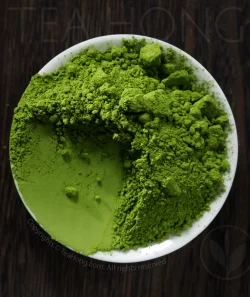
Uji Matcha Tokumukashi, ceremonial master grade
Cold Energy, Fuller Bodies, Green teas, Japan, Lighter Aromas, Tea$ 24.90宇治 御濃茶 徳昔
Traditional stone-ground matcha
You do not have to be a Japanese tea master to enjoy this exceptional matcha, nor reserving it only for that serious tea ceremony. Simply get a respectable tea bowl, whip it optimally, and relax with the gently roasted, consoling fresh aroma. Roll its full, layered and yet subtle umami taste in your mouth. Let that few seconds of sipping transcend into a peaceful hour, or at least a window for serenity, even at a clustered desk or a jammed kitchen table. Just the whipping of that pure, luxuriously intense greenness of the tea is mesmerising in itself. The tradition of competing to yield the most tasteful cup of the purest and most intense colour is still valid and as meaningful today as it was 12 centuries ago. This stone-ground production continues this precious heritage. However, the centuries of horticultural evolution coming to the hands of our tea masters in Uji give us a superb quality that is possible only today, and that would be envied by daimyos feudal lords and their chajins tea masters. Produced in Higashiyama by a team led by Shimada sensei, a regular winner of Uji Tea Quality Competition under Japan’s Ministry of Agriculture, Fisheries and Forestry Award, Tea Hong’s Uji Matcha Tokumukashi is a top choice as a koicha (濃茶) for chaji (aka formal chado tea ceremony). For us, it is a natural choice for enjoying a finest taste in green tea.
Net weight: 30g (1.06oz) in double-lidded tin -
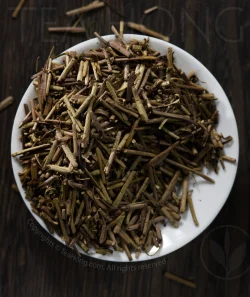
FIR Boucha, far-infrared roasted petiole houjicha
Green teas, Japan, Lighter Aromas, Milder Tastes, Neutral Energy, Tea$ 16.80遠赤外線焙煎 深煎り棒茶
An old style petiole tea much elevated using modern technology
Much like roasting green coffee beans to give a warm, brown liquor, a houjicha is a green tea that is deep roasted. Unlike in China or Taiwan, where a large variety of oolongs and black teas are there readily to choose from for deep baking or roasting, producers in Japan mostly have only green tea to work with. While it sounds straight forward, to find one which taste is respectable is not easy. The very brittle nature of Japanese green tea leaves will become ash when deep roasted. Often larger, older and underprocessed leaves are used and the final quality reflects that. There is one kind of houjicha, however, that caught our attention: that from purely tea petioles — Boucha. Much like in our Karigane where the relative higher cellulose and carbohydrate contents in the petioles gives a sweeter and a relatively more complex dimension, this far infrared deep roasted version of purely small leaf stalks does have a pleasantly warm and tidily intact taste profile. My first encounter with something similar was a small cup served after a luxurious crab kaiseki meal in a pristinely beautiful traditional formal style restaurant. It was quite an impressive surprise. To me, this easy going tea doesn’t have to be enjoyed only after an expensive meal. It can be easily infused using a hot or cold infusion method and it is quite forgiving of irregularities. It suits a lot of occasions where tea is a complement. And it is a nice one.


 Net weight: 40g (1.4oz) in Kraft-alu pack
 -
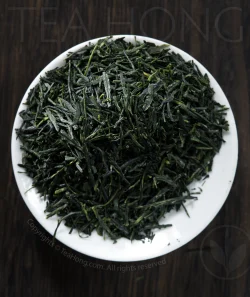
Kabusecha Gyousei, shade grown green tea
Cold Energy, Fuller Bodies, Green teas, Japan, Lighter Aromas, Tea$ 18.80伊勢かぶせ茶 暁星
If a traditional style sencha is a little too brisk for you but you feel needing a bit more zest than a gentle gyokuro, try a kabusecha — a tea made from shaded grown bushes much like a gyokuro, although shaded only for half the time. That gives you less of that extra umami, and relatively more of those tea polyphenols for that slight bite and a little more refreshing sensation that you maybe after. Tea Hong’s Kabusecha Gyousei is a top quality selection of this variety. It is produced by Yoshie san’s farm, the same that gives us Ise Gyokuro Mugetsu. Their farm is one of the best in that region, which is popular in the tea trade for shaded grown tea for the production of gyokuro, kabusecha and tencha for producing matcha. Net weight: 60g (2.1oz) in Kraft-alu pillow
 -
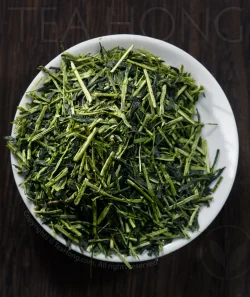
Karigane Gyokuro, a very special kukicha
Cold Energy, Green teas, Japan, Lighter Aromas, Milder Tastes, Tea$ 23.80雁が音 - 白折玉露
When the umami, round and refreshing taste of a good Japanese green tea is desired for a party, or for a casual whole day drink, a good quality kukicha is a popular alternative. Like all other kukicha, or shiraore (another popular name of this tea variety), or karigane, Tea Hong’s Karigane Gyokuro is also produced from leaf stems. There is, however, a significant difference. It is produced as a by product of top quality gyokuro, making it sweeter, softer, a lot more savoury, and as refreshing. Like almost all petiole teas, it is more tolerant of infusion discrepancies, making it a great choice for both green tea beginners and as a daily or party drink. It is a great value alternative to gyokuro. Since a large portion of the leaves are replaced with the leaf petioles, this tea is relatively lower in caffeine too.* Net weight: 120g (4.2oz) in Kraft-alu pack -
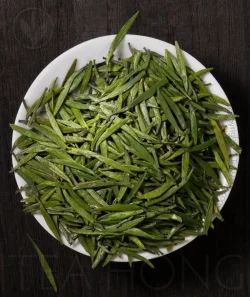
Bamboo Leaf, traditional green tea
Cool Energy, Fuller Bodies, Green teas, Lighter Aromas, Tea, Zhejiang$ 32.70明前極品 竹葉青頂
Zhuye Qingding — a rare shoot leaf green tea
Some people like their green tea soft and sweet, others may prefer a good umami. Yet this leaf shoot tea is neither. Its brisk, lively full body is accentuated with a refreshing aroma and a distinct note of bitterness. After Longjing, of all the other green teas from the Zhejiang region, my personal strongest preference goes to this traditional green tea form of Bamboo Leaf produced in Kaihua. To me it is an alternative to a shot of single malt in the evening, or an afternoon kick of espresso. Maybe more pleasant and invigorating. This style form is produced in a few other tea regions in China. The taste profile does vary from region to region, and even from farm to farm, tea master to tea master. In Emei Shan in Szechuan, the traditional form style name, Zhu Ye Qing, which transliterates as Bamboo Leaf Green, is registered as a brand name by a powerful local tea company. Other farmers and tea companies who have been producing in this same style form are then required by law to sell their products in different names. One of them is Mingshan Shihua. Tea Hong's Bamboo Leaf is a rare quality representing not only the broader taste profile of this style form, but also the intriguing intricacy that gives true quality tea its elevating magic.
Net weight: 50 g (1.8 oz) in Kraft-alu pillow

-
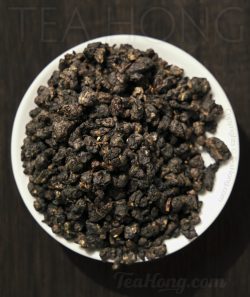
Honey Concubine, medium deep baked Taiwan oolong
Denser Aromas, Fuller Bodies, Neutral Energy, Oolongs, Taiwan, Tea$ 26.90私藏 文火深焙 蜜香貴妃
Guifei Oolong from Cold Peak
Guifei Oolong ( or Honey Concubine Tea, literally translated ) is a medium deep baked, medium oxidation ( 25 ~ 30% ) oolong produced from the Ruan Zhi cultivar in the Dong Ding ( Cold Peak ) area. It is different from the traditional Cold Peak oolong. The leaves of Guifei are bitten by green leafhoppers before plucking. The bug attack triggers a chain of biochemical reactions in the leaves that result in the complex honey notes that typify this tea. It was inspired by the way Oriental Beauty acquires its unique taste profile. However the two teas taste very differently through each’s own unique oolong processing approaches and pluck timing. The tea was invented after the devastation of an earthquake in September 1999, when the farmers had to create more revenue to rebuild their lost homes. «Read more» Baked to perfection by our producer the multiple award-winning tea master Chen Yu Wen, the current batch is certainly one of the best we have ever had from her. Net weight: 70 g (2.5 oz) in Kraft-alu pillow pack
-
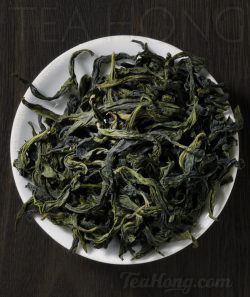
Wenshan Paochong, light style Taiwan oolong
Floral Aromas, Milder Tastes, Neutral-Cool Energy, Oolongs, Taiwan, Tea$ 21.80明前極品 文山包種
"Baozhong" from a true Taiwan master
Originally labelled as “Floral Aroma Tea”, today Paochong is produced in many parts of Taiwan and China, but that in the northern part of Taiwan around Taipei, where it made its name*, remains the most reputable. The highest quality is found in only a few small family farms where the traditional craft continues to pass on and evolve. Like that of Master Weng. Although his production management is certified as ISO22000, this 5th generation tea farmer insists that processing is an art and personally attends to all details of the workflow. That is probably why his farm has won in not only Paochong competitions but also a nationally awarded agricultural entity. Tea Hong is proud to present the best work of this highly devoted tea master. Likely to bring a much more joyous experience than any of what made the tea famous in the past centuries, for what the arts and science, love and sweats have accumulatively invested in its making.
 Net weight: 40 g (1.4 oz) in Kraft-alu pack
 -
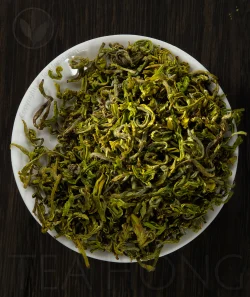
Mo Gan Yellow Snails, yellow tea
Fuller Bodies, Green teas, Lighter Aromas, Neutral-Cool Energy, Tea, Yellow teas, Zhejiang$ 29.90明前熟香 莫干黃芽螺
Revitalising an old yellow tea
Tea Hong’s Mo Gan Yellow Snails is a break away from the old Mo Gan Yellow Tip. We have greatly modified traditional yellowing to give the tea a distinctive yellow look and a taste that is different from both green tea and old style yellow tea. A neo-yellow. Unlike other tea categories, old style yellow tea has not prospered in all these decades since tea’s revival after the destructive Mao era. Its taste needs a lot more to create followers. Similarly from the mountain of Mo Gan in the region of Zhejiang, Tea Hong’s Mo Gan Yellow Snails has departed from the dull colours of the old to maintain a brisk freshness in the look and taste, while achieving a characteristic “cooked” warmth and sweetness that is the real spirit of yellow tea. Now that is a good individualistic character to have a place in any tea repertoire. Net weight: 50 g (1.8 oz) in Kraft-alu pack
 -
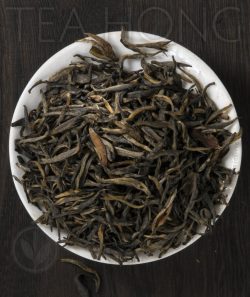
Tongmuguan One, traditional black tea
Black teas, Floral Aromas, Fuller Bodies, Neutral-Warm Energy, Tea, Wuyi-shan$ 33.80桐木關極品 老樹梅占工夫紅茶
Rare Quality Meizhan Hong Cha
Not many black teas can achieve a smooth and full body. To have a floral, yet warm aroma with spicy sweetness and complexity of dried fruit would be a luxury. Tongmuguan One makes it even better by delivering the whole package with a sophisticated balance and yet subtle uniqueness unfound in its peers. A very limited batch produced in the mecca of xiao zhong gungfu black tea, Tongmuguan, this finely processed leaves of Meizhan is precious not because it is rare, but because it is so demanding to produce to this quality. It is not every year that we can achieve a gem like this.
 Net weight: 50 g (1.8 oz) in Kraft-alu pack
 -
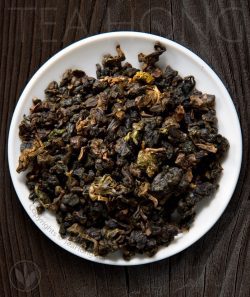
GABA Orange Extra, de-oxygenised oxidation Taiwan oolong
Lighter Aromas, Milder Tastes, Neutral Energy, Oolongs, Taiwan, Tea$ 28.80精選南投 橙韻伽瑪烏龍
Gamma-Aminobutyric Acid Enriched
There maybe a few other options of GABA tea out there, but to produce one that is fine tasting as well as organic requires real experience, dedication and stringent process management. Presenting GABA Orange from Nantou, Taiwan. Our answer to those of you wanting naturally formed GABA from a nice tasting oolong, with that touch of orange wonderfully developed in the tealeaves themselves. Nature always has surprises for us. We just have to work with it to make it happen. ( What is GABA? )
Net weight: 70 g (2.5 oz) in Kraft-alu pillow -
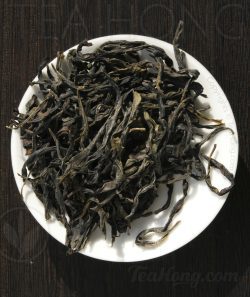
Wudong Cassia, Phoenix dancong oolong
Fenghuang | Phoenix, Floral Aromas, Fuller Bodies, Neutral-Cool Energy, Oolongs, Tea$ 30.30珍品鳳凰單欉 烏崠肉桂香
Rougui Xiang Dancong
Although the name rougui is the same as that variety from Wuyi, this tea is from a pure breed Fenghuang Dancong Shuixian cultivar. Sexual propagation of tea trees does give happy surprises and this is an example of it. Discovered and isolated in 1970 by a horticulturalist Mr Wei and has maintained a low profile to avoid unneeded trouble during the height of Cultural Revolution, the cultivar Fenghuang Rougui Xiang Dancong is only gradually picking up attention recently. Not all farmers are doing it right. It is a slow growing tea and only one harvest per year. We think every leaf is worth the search.


 Net weight: 40 g (1.4 oz) in Kraft-alu pack
