
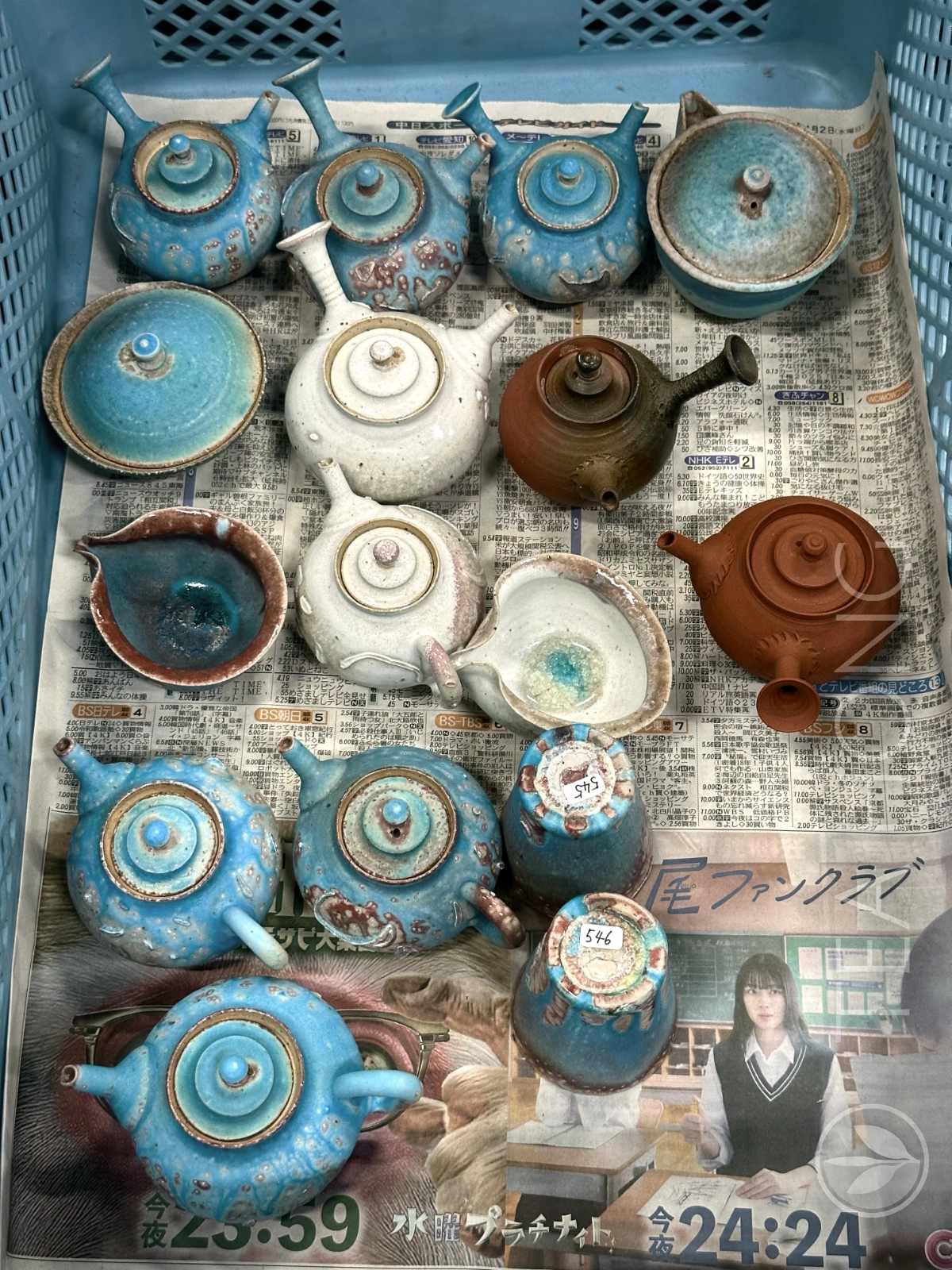
In the artisan agent’s warehouse, a batch of work by the fifth generation of a “National Treasure” artist Tsuneyama Yamada just sat there in one of those rows and rows of plastic baskets. This place is like a treasure clove.
For choosing more serious infusion vessels, although we have been focusing mainly on Yixing teapots, it is hard to resist a deeper study of the artisan grade Japanese teapots that are available to us only an hour’s drive away in the most revered origin, Tokoname 常滑.
Other than our primary concern in infusion effects, ergonomics, aesthetics, and technical skills and its relevancy are our main criteria. This aligns with the same for our Yixing teapots, although for the latter there are also other stricter requirements.
After some comparative studies and daily use, we feel that better options of this category is capable of raising the taste profile, some items with better clays and pot forms are more obvious in that function. I even have one in my personal collection from the fourth generation of a “National Treasure” artist that is made using Yixing zisha clay.
Although a genuine well crafted Yixing is irreplaceable, generally a good Tokoname handcrafted chachū 茶注*, otherwise known as kyūsu 急須*, is friendlier in price. The generally larger strainer with tinier mesh holes is also more suitable for leaves that are smaller and fragmented, as common in most Japanese green teas.
We have compiled the current small collection in our offerings to see how our market accept such products.
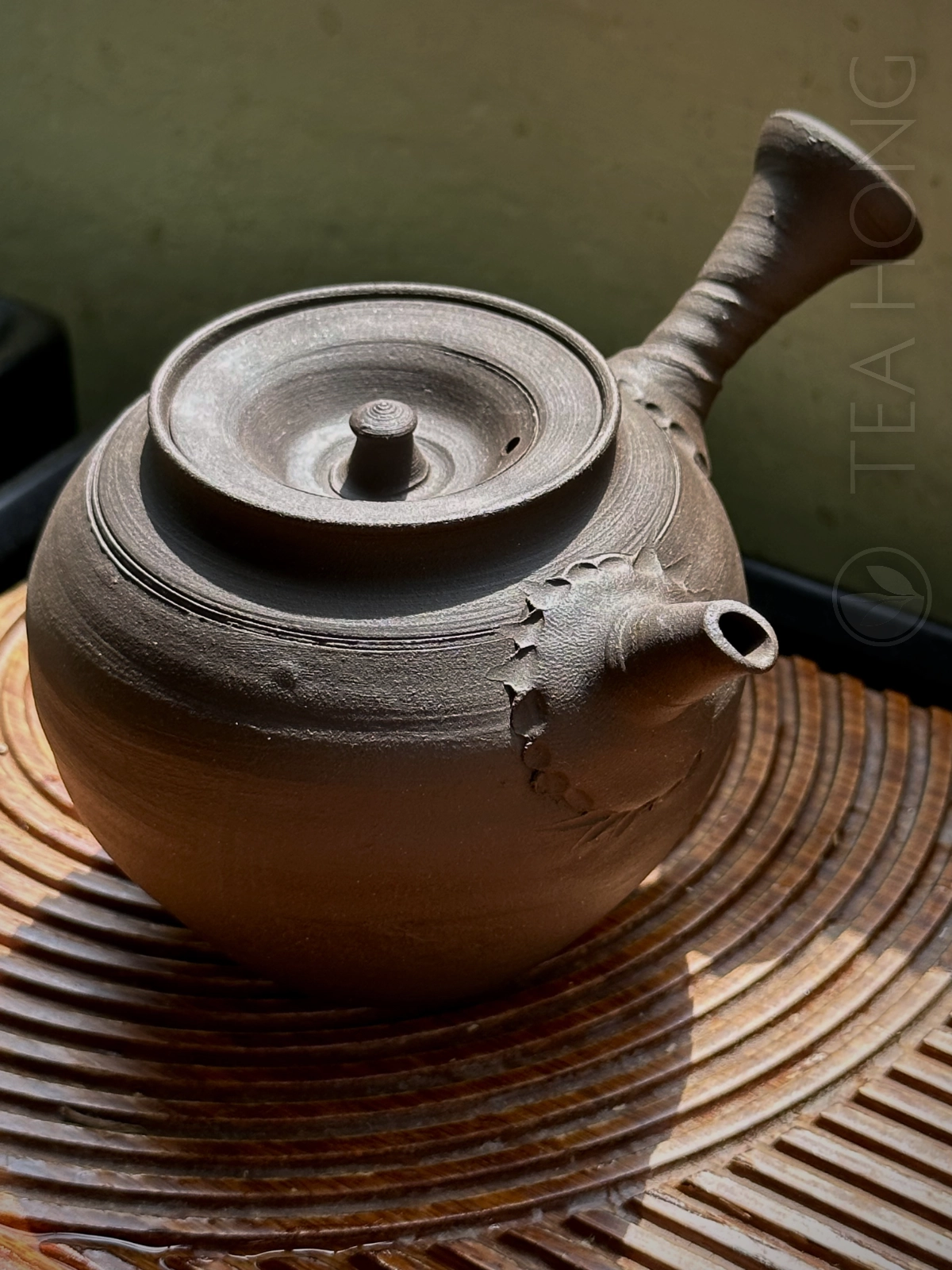
Two years ago when I began studying more seriously about various aspects of Japanese tea, I had acquired this chachū by the fourth generation Tsuneyama Yamada 四代 山田常山 at about ¥200K. When I saw that the agent in Tokoname has in his display by the third generation, who was crowned as a National Treasure 人間国宝, I asked about the price, he just said it’s too much for me. With that kind of market draw, it is understandable that why the market is flooded with counterfeits, and yet for high quality pieces by less famous artists right here, the prices are so friendly.
In the same policy as our Yixing teapot collection, we have priced these chachū all according to the lower end of local Japanese online retail, which is considerably lower than when you buy it in brick and mortar shops in Japan, not to mention from those outlets elsewhere.
Do let us know what you think and if there are things we need to attend to, should we decide to grow this collection.
See all Tokoname Chachū »
* notes:
Kyushu, kyusu or kyūsu? The general name of Japanese teapots 急須 has often been mis-romanised as kyushu, which is the official romanisation of the name for a region in the southern part of Japan — 九州. Some have adapted the version “kyusu”. In hiragana, the Japanese alphabets that can be used in place of the Japanese characters kanji to represent more precisely how a term should be read, the generic term of teapot 急須 is きゅうす — which is read as kyu-u-su. So the easy and proper way to write it is kyuusu. I have just adapted the roman long vowel accent of ū for the two u’s, instead of making the short word with the three u’s too much like a typo. I hope this will be universally adapted.
Why the label chachū instead of kyūsu? While the generic name kyūsu is used in everyday life, amongst more serious teapot artisans, they always refer to their works as chachū 茶注 — a more ancient term that implies respects and disciplines in the making and use of the vessel. Since we offer only products from such more serious makers, we have adapted the name as well. I have also seen some websites mis-romanise the name to become chacho, which actually can mean a few other different things. The hiragana of the term is ちゃちゅう — cha-chu-u, that is why it is chachū.

Comments (0)
Leave a reply
You must be logged in to post a comment.