
A matcha exporter company from Japan?
Not long ago, an entity with a very authoritative name, conveying something like a body representing matcha producers from Japan sent us a huge list of matcha, 6 pages of it. Some organic, some location specific, most are flush specific: first flush, second flush, autumn flush etc. Items with the first flush label dominate the catalogue.
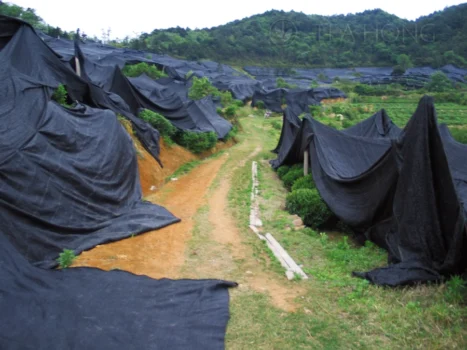
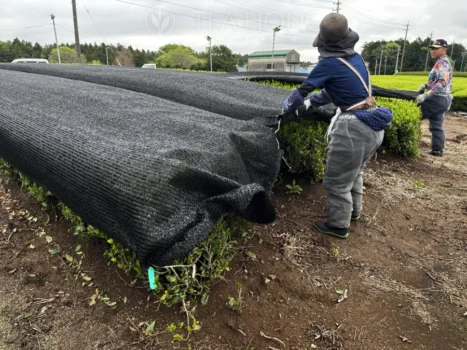
Japan exports less than 30% of the global matcha consumption. Other exporters, such as China, Vietnam, Kenya etc make the majority of what most people would have in their matcha latte in those chain stores and even what you buy in “specialty teashops”
Since it has been our practice to buy directly from producers, we normally do not respond to solicitations from agents and wholesalers. However, this huge catalogue is too alarming to us.
Each producer takes pride in his own secret tencha blending formula
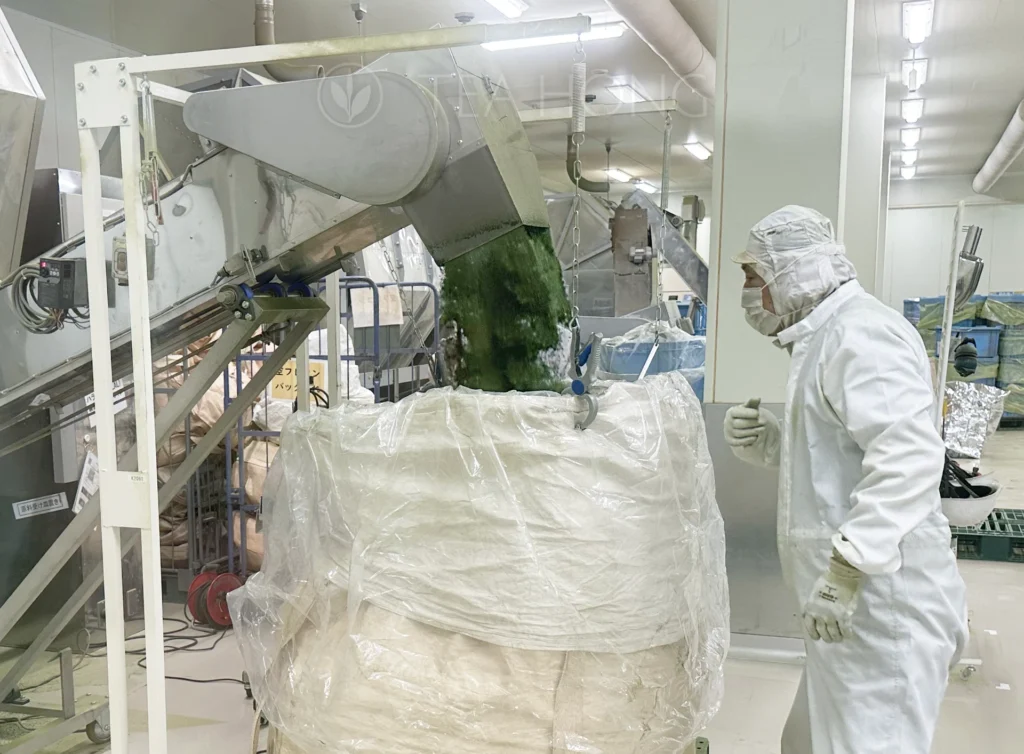
A technician attending to the freshly re-roasted tencha blend as it fills the bag for moving to the grinder. In Uji, at a matcha producer founded since the Meiji era.
This is very much different from our experience in seeing how respectful Japanese matcha producers work — they always blend tencha from different harvests from different areas of different cultivars in order to maintain a relatively stable range of quality so that they can be optimising the operational efficiency of their grinding set up, which is a huge part in the cost, and be able to consistently providing the market with a stable range of quality that represents their reputation. In Japan, reputation is more than an asset.
Supply is still behind demand, dramatically
With the ongoing shortage of supply, all producers are working hard to catch up with supplying their existing clients, there simply cannot be such a large body of products, many even from our best connected origin of Uji, and many with the FDA organic label. Producers in Japan mostly use JAS for organic certification instead of FDA.
We checked the entity’s website and found that the “founder” and representatives are very young men with no tea background. The entity itself is extremely new, set up only last year, during the matcha shortage crisis.
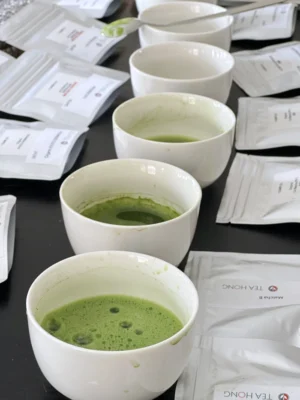
We regularly receive samples from local producers. This firsthand taste experience is critical not only in understanding quality differences, but also in deciphering the production skills and blend differences.
We decided that we should respond to their offer for samples. We asked for some of their top tiered products. The tasting session was horrifying.
As you may have guessed now, those green powders are nothing like the matcha we have sampled from producers in Japan. Some have even been manipulated with flavourings. Some are more like those green tea powders that we have sampled from other countries, but with a bright green colour. Some are with strong, bad taste, obviously not the shaded grown leaves as matcha should be. All are priced at slightly lower than average.
It is perfectly ok to buy from sources outside of Japan
In a global surge in demand, it is absolutely understandable that consumer brands buy from more accessible origins, such as China or Vietnam. Just do not lie about origin. It is fraudulent to set up an entity to disguise your products as those from a reputable origin. It is evil to put artificial ingredients in what the public want as a healthy drink.
And it is destructive to the trade to propagate the lie of single harvest matcha for the purpose of selling more products, true matcha or not. Outside of the few hundred grams that some tea farmer may produce for their own home use, such thing does not exist in Japan.
Know your product well before you sell it
While we continue to receive wholesale enquiries from people intending to set up new tea business, and asking for single harvest or even single cultivar matcha, I feel obliged to post this writing to at least protect the integrity of the tea trade as a whole.
For those aspiring to become a matcha seller, like in any other trades, knowing the product and the reality of its background is step 1 in learning the trade. Otherwise one can unknowingly take part in a scam that could ruin this whole category in the long run.
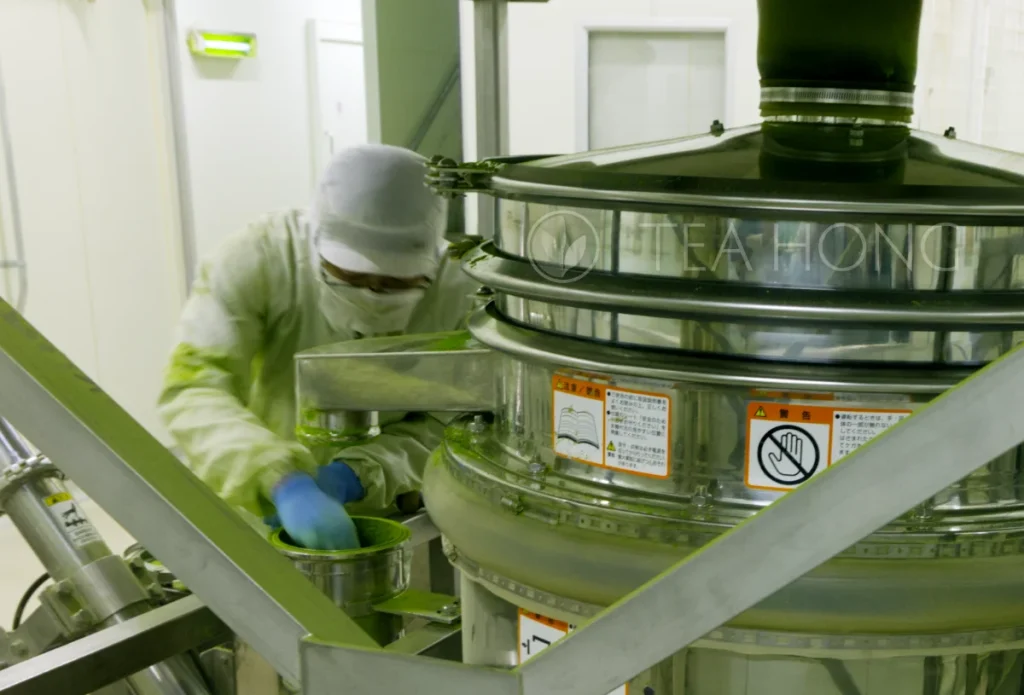
A technician clearing a tube for feeding freshly grounded matcha through a sieving machine. Uji, Japan. The reality in production is often not as romantic as one would like it to be. Yet it is a set up that has to make sense that can deliver true quality that matters.
End note
One would easily see such small stone grinders in one of those teashops in popular tea tourist spots. They would tell you the matcha in their shop is produced from the machine. Some, especially those newer ones set up by foreigners, may even tell you things like single cultivar matcha, or even single harvest ones. Such machine may yield about 700 to 900 gram of powder before sieving for quality control, if it runs 24 hours non-stop. Electricity in Japan is by far one of the most expensive in Asia. Yet the average price of a 30g can of matcha in these shops is about 24±, even after the crazy price hike last year. Do you think they need to have a profit at all? This video was taken in a teashop/tea factory that has a lot of good reviews on Google Map, in a popular tea tourist destination in Yame, Kyushu.
Rather than debunking all those groundless marketing myths, I shall write more about the the quality of matcha in relationship to the unique tea economy of matcha in the context of the history of matcha and the Japanese trade culture. Knowing the realities is, after all, the best way to build intelligence, especially in a world flooded with lies propagated through social media. Subscribe to our newsletter for updates.

Comments (0)
Leave a reply
You must be logged in to post a comment.