

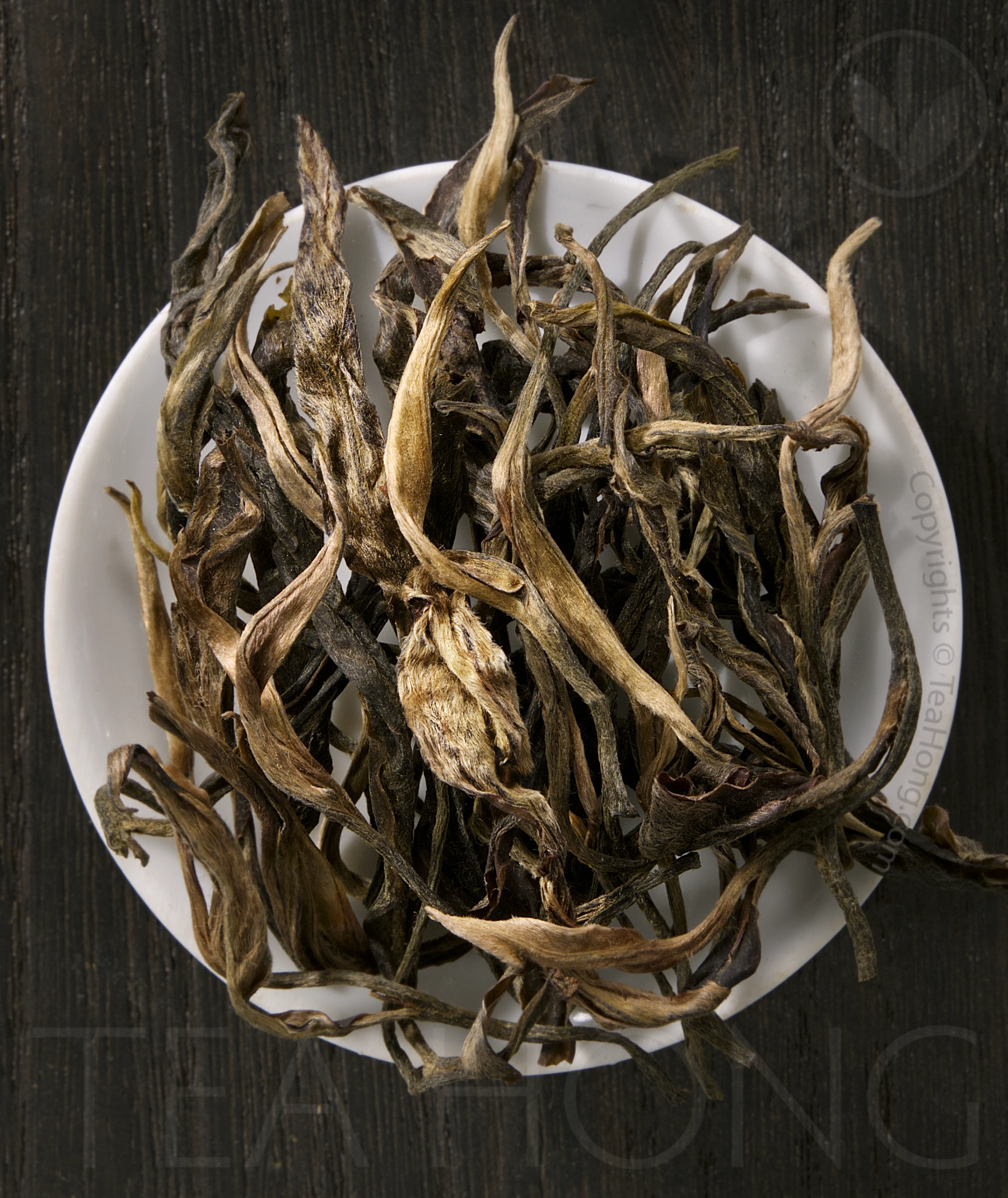
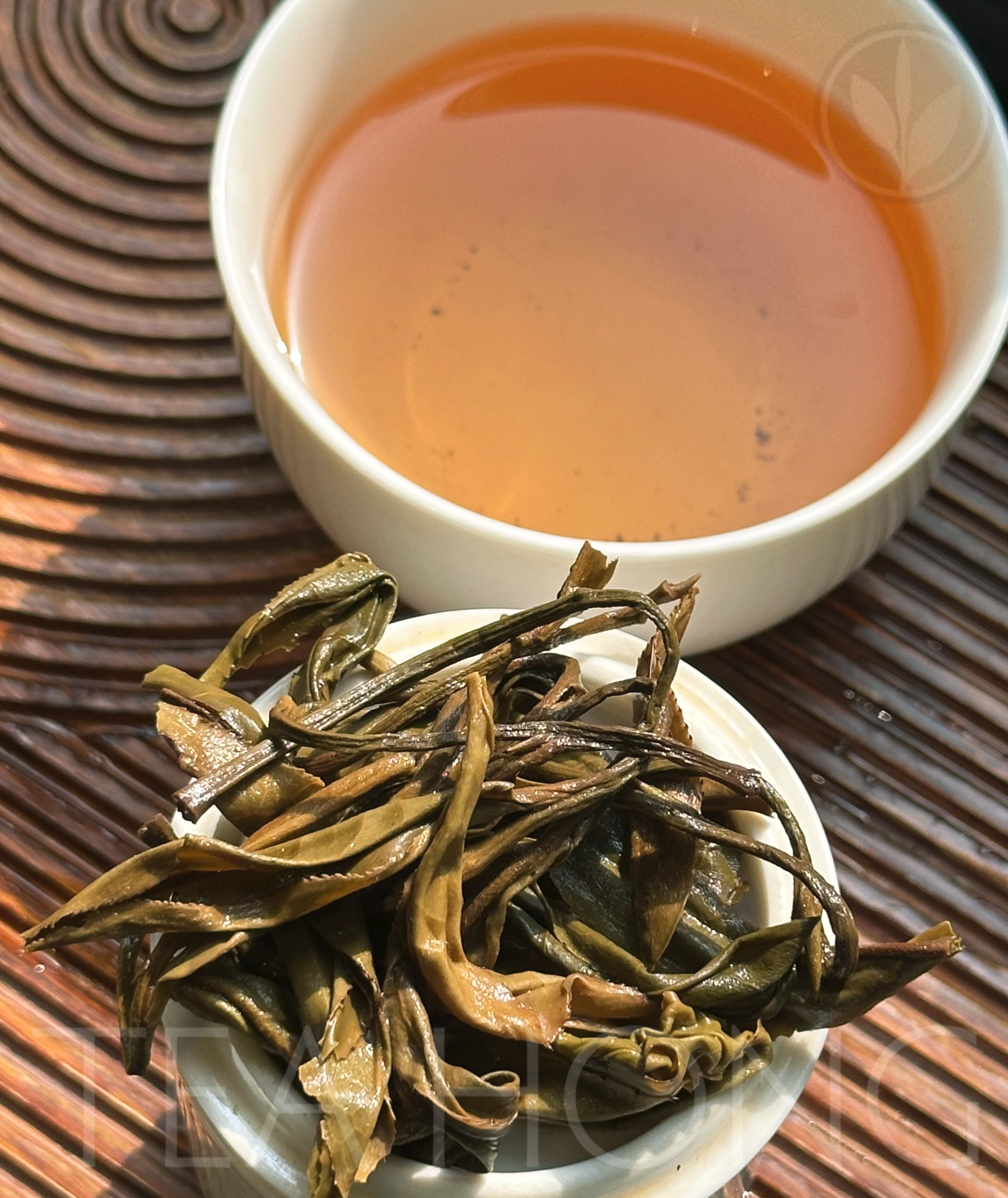
Moss Island 2018, shengcha Pu’er maocha, pu-erh, 40 g
US$21.3
明前冰島 正宗勐庫大葉生茶
Bing Dao Maocha
Leaves from Bing Dao look definitively different as from, say, those of Pasha. It is a different variety of Yunnan Da Ye tea tree1 — Mengku Da Ye (Mengku Big Leaf), that differentiates itself not only with the larger leaf size, but also an accent of crispy sweetness. It is believed that Bing Dao — Island of Moss2 — is the birthplace of the tea tree variety. Variants and cultivars of Mengku Da Ye are used popularly in the county of Mengku3 for both black and pu’er tea production. Some say it began in late 15th century when a governor asked locals to plant 200 seeds here to start tea production. That would become the tens of thousand in this area where the Mengku variety is found to be genetically the most pure. Less than 20% of variation in their DNA, quite impressive for over 500 years of unmanaged sexual propagation in the wild. I think this batch is exceptional in manifesting the characteristics of this unique tea tree. It is a premium harvest. If you are interested, compare this loose leaf form with the compressed form » Bing Dao 2014 that is also available at Tea Hong.
 |
 |
 |
 |
 |
Net weight: 40 g (1.4 oz) in wide Kraft-alu pack
In stock

Taste profile
Nose: Upfront smokiness with a sweet undertone of sugarcane and honey, accented with dries berries on an earthy overtone tinted with dried herbs. Distinct note of ilex kaushue (kuding). Palate: Sharp, smoky, bitter impact with an umami body. Notes of herbs, rose hips and the white meat of jujube. Finish: Tinkling sweet aftertaste.
Infusion note
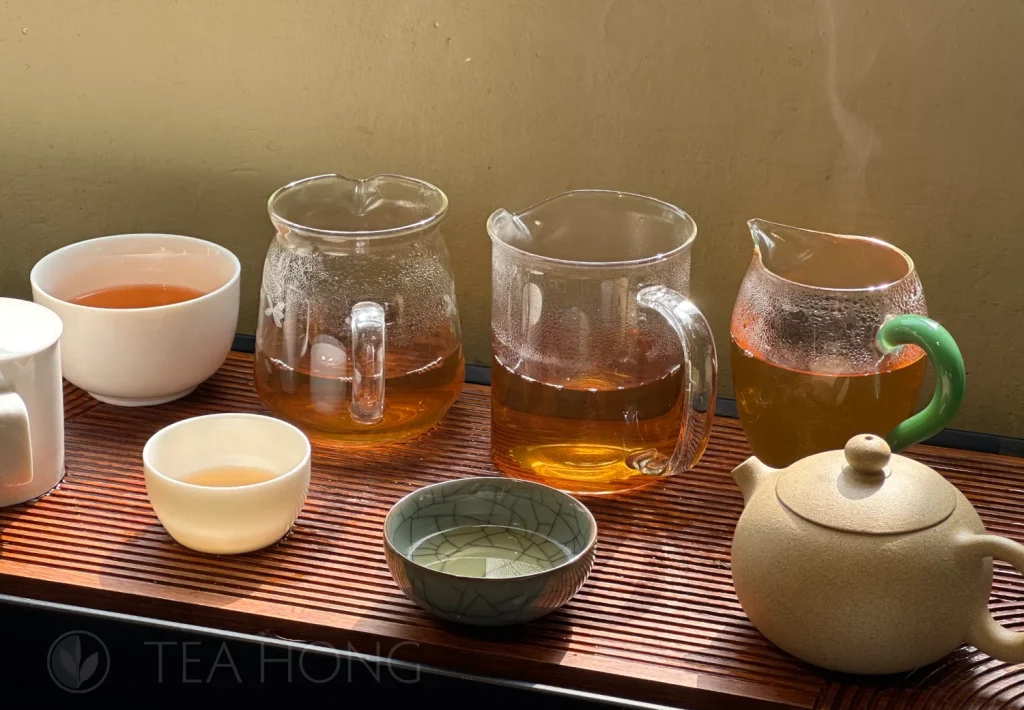
By tasting a tea through infusing it differently, one can find out how best to find a personalised infusion approach for each particular tea for better enjoyment
Please refer to this article: About Infusing Pu’er Maocha
Footnotes
- Yunnan Da Ye varieties: Although it seems to us that a more comprehensive taxonomic survey of the different tea tree varieties is still needed in Yunnan and its immediate neighbouring countries, such as Vietnam, Laos and Myanmar, currently a few sexually propagated (that basically means as grown in the wild) varieties are generally recognised in addition to Mengku Da Ye: Fengqing Da Ye, Menghai Da Ye, Jingdong Da Ye, and Jinggu Da Ye. The suffix in the name — Da Ye — literally means Big Leaf, referring to the relatively larger leaf size of these wild grown tea trees. The prefix of the name is the area where the variety is most abundant in. Since these tea trees have been propagating here in the warm and humid climate for centuries, it is only natural that natural varietals exist in abundance. With plant diversity comes taste diversity. Cultivars developed from these varieties are used popularly throughout Yunnan and some in other regions.
- Moss Island: The original Chinese term Bing Dao literally translates as Ice Island. While it is true that there are several apexes in Yunnan have white caps and one is even named Big Snow Mountain, the name of the area comes originally from Tai, one of the indigenous language groups in the area. The Chinese name was originally only a homophonic translation. In its original language it means a place overgrown with moss. It refers to a local high altitude lake and an area near it.
- Mengku: The size of Yunnan is about 110% that of Germany. Administratively under the current government, it is divided into 16 prefectures. Mengku is an old name referring to an area in the Bulang and Dai Autonomous County in the township-prefecture of Lincang, where some of our Yunnan teas are sourced from.
Additional information
| Shipping Weight | 90 g |
|---|---|
| Dimensions | 18 × 9 × 5 cm |
| Tea category: | |
| Class: | |
| Origin: | |
| TCM character: | |
| Net weight: | |
| Packaging: | |
| Recommendation: | |
| Infusion color: | |
| Vintage |
2 reviews for Moss Island 2018, shengcha Pu’er maocha, pu-erh, 40 g
 Moss Island 2018, shengcha Pu'er maocha, pu-erh, 40 g
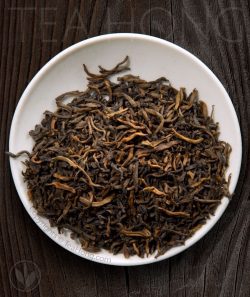
Bada 2011, Pu’er shu cha, 120 g
Home, Tea, Pu'er teas, Yunnan, Denser Aromas, Fuller Bodies, Neutral Energy巴達深山、賀松圓熟
Traditional Premium Shu Cha :
At 1800 m elevation, the temperature difference between day and night can easily be over 15°C even on a hot summer day. That is deep in the mountains in He Song of the Bada region in Xishuangbanna. Leaves grow much slower here, accumulated in them a little bit more plant protein, and the rich minerals from the pristine mountain soils. We pick whole sun-withered leaves from these native tea trees to process and mature into our premium grade shu cha pu’er. Presenting Bada, possibly the richest, deepest, and yet roundest post-fermented tea there is.


 Net weight: 120 g (4.2 oz) in Kraft-alu pack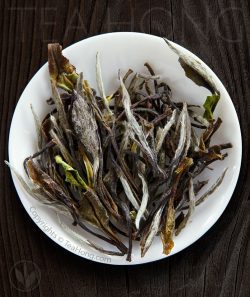
White Peony Classic Long, traditional white tea, 40 g
Tea, White teas, Minnan/ Mindong, Fujian, Lighter Aromas, Milder Tastes, Neutral-Cool Energy明前、政和牡丹王
Zhenghe Mudan Wang
While White Peony from Fuding tastes more floral, that from the other earliest region, Zhenghe, tastes longer and deeper. The more tedious curing process is marked by the darker colors on the leaves. While many prize Silver Needle Supreme for its delicate taste and furry appearance, a superb traditional white tea as White Peony Classic Long delivers a more impressive taste experience. That may explain why this Mudan Wang, aka King of White Peony, is considered the best and most classical representation from the origin, and a favourite by many tea connoisseurs. As most aficionados prefer it, we have always matured this tea adequately before releasing it in the shop. The current stock is a single batch first flush ( i.e. pre-Qing-ming ) that we have matured in our environment since its harvest in 2019.

 Net weight: 40 g (1.4 oz) in wide Kraft-alu pack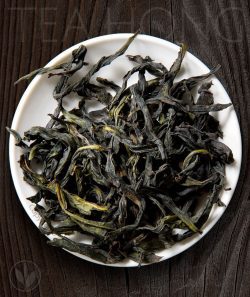
Meizhan Classic, Wuyi yancha oolong, 40 g
Home, Tea, Oolongs, Wuyi-shan, Denser Aromas, Fuller Bodies, Neutral Energy細火純滋味、正岩梅占
Wuyi's Secret Ingredient
Like Rou Gui and Shuixian, Meizhan has long been a major production cultivar in Wuyi. It has never attained that level of prestige like the other two though. Perhaps because traders want to hide a big secret. It is a major ingredient to blend with other varieties to produce what flood the high end market with labels of Red Cloak, Tieluohan, Shuijin Gui or such fancy traditional rare teas. We think it deserves a place of its own. Introducing Tea Hong’s Wuyi Meizhan. Enjoy its sweet floral aroma uniquely finished with a just right Wuyi style firing. A great tea for all occasions. No fancy names, just pure quality at great value. Net weight: 40 g (1.4 oz) in Kraft-alu pack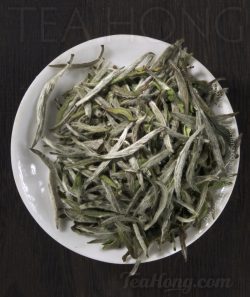
Silver Needle Supreme, traditional white tea, 40 g
Tea, White teas, Minnan/ Mindong, Fujian, Lighter Aromas, Milder Tastes, Cool Energy福鼎 明前 高山白毫銀針
Genuine Baihao Yinzhen:
The first ever modern white tea, Silver Needle that came about in late 18th century withstands time as still the highest quality in the category. Produced in the origin of Fuding with the original pedigree cultivar Fuding Daibai, Tea Hong’s Silver Needle Supreme is a high altitude first flush that distinguishes itself with a subtle yet the most joyful aroma and flavors amongst its peers. The finest and purest of this variety.
 Net weight: 40 g (1.4 oz) in Kraft-alu pack
Moss Island 2018, shengcha mao cha is very special. I’ve never tasted anything quite like it. It has all the best of a standard sheng, not overly bitter, sweetness, a bit of floral, and a deep mineral. It doesn’t stop there… It’s complex, a touch of light smokiness, there’s a hint of mossy forest, and a pleasant medicinal flavor as well. The soup is not your average either, it has a beautiful rose color, I was concerned that I brewed it too hard at first, but no- the infusion was delicious. The aroma is amazing. I’m sure if someone were to see me brew this they would think I was mad, my nose always close to the cup, and gaiwan bowl, even when the cup is cold. Making ooo, and ahhh sounds. Currently it is my favorite Sheng.
I am so happy to see that you have a good time with the tea. It is indeed quite amazing, isn’t it? We really have to screen a lot of batches to finalise our intake and a wonderful one like this is not easy to come by. Particularly that from Moss Island. It is one of the most demanded areas and a substantial amount got fetched by compressed tea factories. While a cha bing is enjoyable, but I have a personal inclination towards maocha for their purer qualities. This is a very unique batch that I like the most so I have reserved it to share online for all my lovely users. Enjoy!
This maocha is unbelievably good. While I love both the 2014 Bing Dao cake and this 2018 maocha that Tea Hong has, if I had to choose between the two of them, this would be the easy choice despite a significantly higher price point – it’s worth it.
Across a full and focused gong-fu session, I get notes of fresh-cut tobacco and tropical hardwood perfectly juxtaposed with overt-yet-subtle undertones of spices and smoke.
What I appreciate most in the flavor profile; from the initial aroma of the dry leaf to the very last drop that comes out from the final steep, is just how pungent and potent the mint quality is. The whole flavor profile of this tea just oozes menthol, eucalyptus, and chrysanthemum. I get notes of meadowsweet flower (Filipendula ulmaria) in there too – it’s sweet, spicy, and cooling all at once.
The individual flavors stand on their own with exquisite depth, yet everything is laced with this overt cooling minty quality that is sublime. It lingers on the palate and is persistent until the end of the aftertaste, along with the ginseng root, mint leaf, frankincense and myrrh which really come out in the final steep.
The hui gan is excellent, it progressively builds on the palate, while the cha qi simultaneously builds in the body. This is a powerful and stimulating tea, with a special resinous quality that sits very deeply in the palate and the amazing evolution of flavors from start to finish, all being anchored in the powerful and sweet overtone of mint.
The leaf quality is superb. These are thick and wholesome leaves, and as they gradually open up I notice they resist becoming softened. They remain plump and firm, never disintegrating even during the final steep where I use water fresh off a rolling boil.