
-
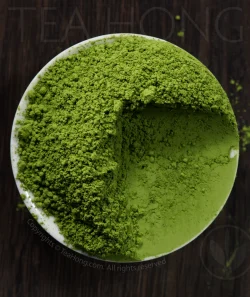
Uji Organic Matcha Sasameyuki, premium ceremonial grade, 30 g
Cold Energy, Fuller Bodies, Green teas, Japan, Lighter Aromas, Organic teas, TeaUS$24.3宇治 有機 抹茶 細雪 (濃茶)
The best tasting organic matcha we have sampled
While there is no shortage of organic products in the market, getting one that offers the right taste is the most difficult part. That’s why we focus our effort in the mecca of top quality Japanese tea — Uji — to satisfy the different needs of different patrons. While a true connoisseur would want to indulge in the pure and rich flavours typical of a finest matcha, a Zen drinker needs a medium to open windows to the inner soul through the intricate yet solid presence of a tranquillising aftertaste. And then there are those who just want a top quality as their drink ingredient. The patrons in a most exclusive hotel in London seem to agree. We send more of this tea to their discretely beautiful tearoom and cafe than any other varieties. Tea Hong’s Uji Matcha Sasameyuki is the best quality organic production from the same tea master team who directs the quality of our top master grade Uji Matcha Tokumukashi. Their production facility in Higashiyama in Uji is certified for the strictest international food safety standard FSSC22000, and for organic production by Japan Organic and Natural Foods Association (JONA) under the Japanese Agricultural Standards (JAS).

 Net weight: 30g (1.06oz) in double-lidded tin
 -
Sold out

Uji Gyokuro Yayoinoin, national competition production, 25 g / 60 g
Cold Energy, Fuller Bodies, Green teas, Japan, Lighter Aromas, TeaPrice range: US$33.2 through US$57.9品評会出品 宇治玉露 弥生の韻
In their small but well organised production workshop in Uji, Master Yoshida and his team carefully sample taste each batch of tea throughout its production process. It is his own reputation that is at stake. As a multiple award winning 16th generation gyokuro master, pursuit for quality is the only way to maintain this honour, and that of his family name. Only the best first flush leaves are selected for processing in this highly specialised workshop. Each step of the processing is monitored and adjusted on the spot for maximising the taste quality. Differences in the weather throughout the growth of the harvest and even the picking time and conditions affect the biochemistry of the leaves. For a green tea, this directly affects the final taste. Adding one degree in heating or a few minutes of baking to optimise the potential of each batch of leaves can therefore mean whether the tea will be good or distinctively superb. Tea Hong’s Uji Gyokuro Yayoinoin is one of these ultimate quality, limited quantity batches hand-rolled by the Master himself, and that we have secured before the annual tea competition. (We wouldn’t be able to offer it if we buy it afterward when it wins. Domestic demand for an award tea is huge even when the price skyrockets upon winner declaration.)


 Available in 25g (0.88oz) in a double lidded tin, or in 60g (2.1oz) in a kraft-alu pillow pack. Please click below to choose.
 -
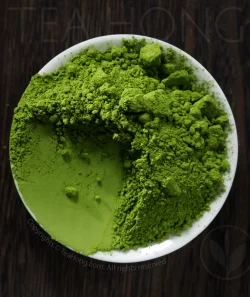
Uji Matcha Tokumukashi, ceremonial master grade, 30 g
Cold Energy, Fuller Bodies, Green teas, Japan, Lighter Aromas, TeaUS$27.0宇治 御濃茶 徳昔
Traditional stone-ground matcha
You do not have to be a Japanese tea master to enjoy this exceptional matcha, nor reserving it only for that serious tea ceremony. Simply get a respectable tea bowl, whip it optimally, and relax with the gently roasted, consoling fresh aroma. Roll its full, layered and yet subtle umami taste in your mouth. Let that few seconds of sipping transcend into a peaceful hour, or at least a window for serenity, even at a clustered desk or a jammed kitchen table. Just the whipping of that pure, luxuriously intense greenness of the tea is mesmerising in itself. The tradition of competing to yield the most tasteful cup of the purest and most intense colour is still valid and as meaningful today as it was 12 centuries ago. This stone-ground production continues this precious heritage. However, the centuries of horticultural evolution coming to the hands of our tea masters in Uji give us a superb quality that is possible only today, and that would be envied by daimyos feudal lords and their chajins tea masters. Produced in Higashiyama by a team led by Shimada sensei, a regular winner of Uji Tea Quality Competition under Japan’s Ministry of Agriculture, Fisheries and Forestry Award, Tea Hong’s Uji Matcha Tokumukashi is a top choice as a koicha (濃茶) for chaji (aka formal chado tea ceremony). For us, it is a natural choice for enjoying a finest taste in green tea.
 Net weight: 30g (1.06oz) in double-lidded tin
 -
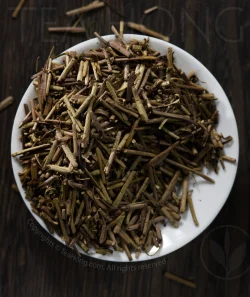
FIR Houjicha, far-infrared roasted green tea petioles, 40 g
Green teas, Japan, Lighter Aromas, Milder Tastes, Neutral Energy, TeaUS$16.8遠赤外線 深煎りほうじ茶
An old style petiole tea much elevated using modern technology
Much like roasting green coffee beans to brown colour for making a dark colour drink, a houjicha is a green tea that is deeply roasted. Unlike in China or Taiwan, where a large variety of oolongs and black teas are there readily to choose from for deep baking or roasting, producers in Japan mostly have only green tea to work with. While it sounds straight forward, to find one which taste is respectable is not easy. The very brittle nature of Japanese green tea leaves does not yield much taste when deep roasted. Roasted bancha — i.e. houjicha of lower grade leaves — which is often served in any neighbourhood eateries, is an example. Since larger, older and under-processed leaves are used and the final quality reflects that. There is one kind of houjicha, however, that caught our attention: that from one of our Uji producers who has mastered the process of roasting using a far-infrared system. Much like in our Karigane where the relative higher cellulose and carbohydrate contents in the petioles gives a sweeter and a relatively more complex dimension, this far infrared deep roasted version of purely small leaf stalks does have a pleasantly warm and tidily intact taste profile. My first encounter with something similar was a small cup served after a luxurious crab kaiseki meal in a pristinely beautiful traditional formal style restaurant. It was quite an impressive surprise. To me, this easy going tea doesn’t have to be enjoyed only after an expensive meal. It can be easily infused using a hot or cold infusion method and it is quite forgiving of irregularities. It suits a lot of occasions where tea is a complement. And it is a nice one.


 Net weight: 40g (1.4oz) in Kraft-alu pack
