

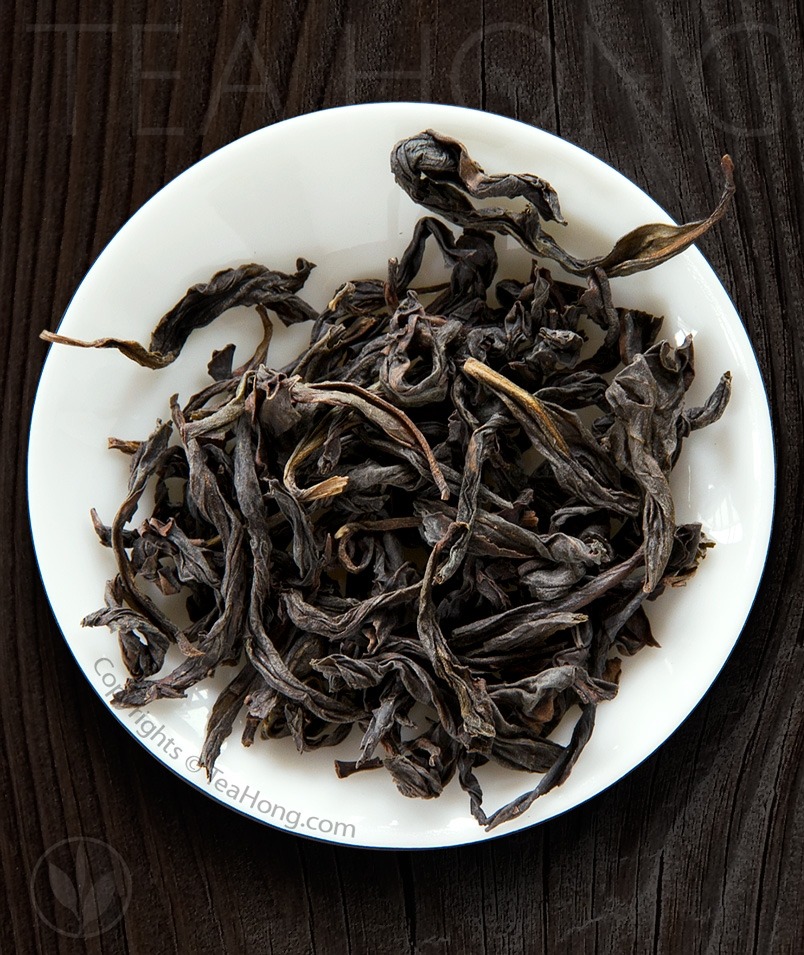
Red Cloak Grande, Wuyi yancha oolong, 40 g
US$41.3
武夷百年老樅、正品大紅袍
Centenary Bush Dahong Pao:
The most revered amongst all Wuyi oolongs, Da Hongpao (translate: Big Red Cloak) from the pure pedigree grown in better horticultural environment mean significant difference and are most sought after. Tea Hong’s Red Cloak Grande is an extremely limited production (10 kg/year) harvested from two second generation noble breed that are over 100 yrs old in the heights of Wuyi. Masterfully processed to best deliver the taste this name represents. The current 2023 batch was not only the best harvest we have seen, but also optimally baked to our liking, and matured under our environment for an even deeper and more enjoyable profile.


Net weight: 40 g (1.4 oz) in Kraft-alu pack
In stock

Taste profile
Nose: Deep, sweet, warm, complex aroma hinting cinnamon, sweet roots, apple sauce with an optimally fired toasty cereal overtone. Accents of moss and earthiness that are typical of high grown oolong characters. Palate: Dark amber stout infusion rounded with good malty sweetness in a silky texture. Finish: Slight citrus accents and immediate, tinkling spicy, bittersweet aftertaste.
Infusion tips
Best rendering by way of gongfu infusion at between 90°C to 95°C, preferably in a higher porosity Yixing zisha teapot.
Additional information
| Shipping Weight | 90 g |
|---|---|
| Dimensions | 18 × 9 × 5 cm |
| Net weight: | |
| Tea category: | |
| Class: | |
| Recommendation: | |
| Origin: | |
| TCM character: | |
| Packaging: | |
| Infusion color: | |
| Vintage |
4 reviews for Red Cloak Grande, Wuyi yancha oolong, 40 g
 Red Cloak Grande, Wuyi yancha oolong, 40 g
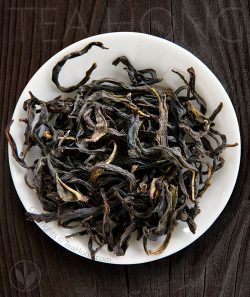
Black Leaf Special, Phoenix dancong oolong, 40 g
Tea, Oolongs, Fenghuang | Phoenix, Floral Aromas, Fuller Bodies, Cool Energy鳳凰單欉 上品大烏葉
Fenghuang Da Wuye:
If classic Phoenix oolongs are too sweet, and bouquet ones too florally aromatic for you, Tea Hong’s Black Leaf Special maybe your cup of tea. It is produced from a new cultivar developed for maltiness and complexity in taste. A very different oolong from the rest. Our special selection is harvested from higher altitudes near the oolong mecca that is Wudong.


 Net weight: 40 g (1.4 oz) in Kraft-alu pack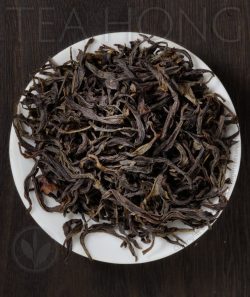
Song Cultivar, Phoenix dancong oolong, 40 g
Tea, Oolongs, Fenghuang | Phoenix, Floral Aromas, Fuller Bodies, Cool Energy鳳凰單欉、烏崠宋種黃橘香(黃枝香)
Huangzhi Xiang Dancong:
Song pedigree tea cultivar Huangzhi Xiang distinguishes itself from others of the same name not only by its living ancestor that has been carbon-dated back to the 13th century (late Song), but also by the elegantly complex taste and aroma of the tea it yields. That is why it is the most revered of all Phoenix oolong in its own origin and at the nearby Gongfu Tea Capital of the World — Chaozhou. Net weight: 40 g (1.4 oz) in Kraft-alu pack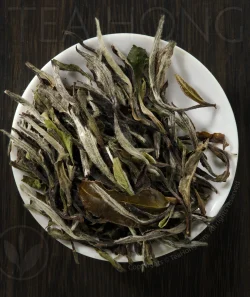
White Peony Classic Floral, traditional white tea, 40 g
Home, Tea, White teas, Minnan/ Mindong, Fujian, Lighter Aromas, Milder Tastes, Cool Energy明前 福鼎牡丹王
Finest Fuding Bai Mudan
Slowly cured in the grand tradition in the origin of white teas, Fuding, Tea Hong's White Peony Classic Floral maintains the original character of floral aroma with a sweet, refreshing taste. White Peony Classic Floral is a first flush from a high altitude garden of pure Fuding Daibai cultivar, ensuring the best possible health potency of white tea. We have matured the current batch since Spring 2019 in our environment to ensure the best possible gastronomic experience. Net weight: 40 g (1.4 oz) in wide kraft-alu wide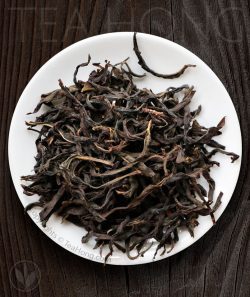
Orchid Gratus, Phoenix dancong oolong, 40 g
Tea, Oolongs, Fenghuang | Phoenix, Floral Aromas, Fuller Bodies, Neutral Energy烏崠 鋸朵仔 ( 杏仁香單欉 )
Wudong Xingren Xiang
For people who like classic style Phoenix but desire something more mellow than Honey Orchid, Orchid Gratus offers a taste that is as full-bodied. It is balanced with as subtle a warm and slightly sweet aroma. Not only is this a great choice for the veteran tea connoisseur who seeks peace in the cup, but is also a bridge between softer oolongs and the more vibrant world of taste in Fenghuang Dancong.
 Net weight: 40 g (1.4 oz) in Kraft-alu pack
It took me a very long time to figure this tea out. It’s the first yancha I tried out of Tea Hong’s catalog, and the last one I’m leaving a review for.
I initially tried it a little over two years ago, and although I was immediately intrigued, it took me a while to fully understand that there is something divine in these leaves worth seeking out – an authentic expression of 岩骨花香 or “rock bone flower fragrance”
I spent a little over a year exploring all of the Wuyi oolongs in Tea Hong’s catalog, as well as a few others. I won’t name them here, but these are top-tier vendors that specialize in yancha. Through them, I was able to procure some high-end tea, including an assortment of fully hand-made yancha from 8 of the 12 original Wuyi Heritage Masters, and more.
The more I drank high-end yancha the more I realized why Red Cloak Grande doesn’t taste like standard Da Hong Pao – because it’s not. This tastes just like Da Hong Pao which costs $2 a gram or more, and is made by a famous master.
Some might mistake it for having a “light roast” but that’s just not true. This is clearly made with an exceptional level of skill – it’s very patiently withered, oxidized deeply but not excessively, and fired perfectly.
No, it doesn’t taste like charcoal or coffee, but you know what else doesn’t? All of the fully hand-made yancha from Wang Guoxing that I paid between $5 and $10 a gram for. Even the masters of heavy roast – like Zhang Hui Chun – keep the roast closer to medium for their most premium offerings. Chen De Hua – a legend of blended Da Hong Pao – never puts excess fire to the leaf.
Same thing with the single-cultivar Qi Dan and Bei Dou made by Chen Zhenying … and although I skipped out on tasting You Yuqiong’s work, at this point I’d be willing to bet that her yancha – just like Ms. Chen’s – would strive to capture the essence of 岩骨花香 – rock bone flower fragrance.
All of the highest-end yancha money can buy tastes similar to Red Cloak Grande.
There is no such thing as charcoal bone coffee fragrance. I can’t stress this enough – the most skilled producers in Wuyi are not interested in making yancha that tastes like Starbucks.
Wuyi is a gorgeous region, it’s a UNESCO World Heritage site with incredible biodiversity. As a simple matter of personal preference, this is what I seek out in yancha now that I’ve been around the block – I want to taste a warm, thick breeze moving through bamboo forests, picking up aromatics of wild exotic fruits and flowers growing all around and even straight out of the surrounding jagged limestone cliffs. I love the sensation of the mineral-rich soils all along the nine-bend river, the damp micro-pits of Hui Yuan which only see 1-2 hours of light a day, the wide-open pockets of Bi Shi Yan and fully-lit fields of Ma Tou Yan. There’s something magical about Tian Xin for sure, and without a doubt Eagle Beak Rock has a significant influence on the flavor profiles of all cultivars grown at its base.
All of this is what I crave. If that’s what 岩骨花香 means then I need as many of these rock bones and flower fragrances as I can possibly get, please and thank you.
The real glory of Wuyi is found by tasting the biodiversity that is captured by and conveyed through properly-made yancha, not by chasing high roast and thinking that the flavor of charcoal is the only defining factor of good quality.
If I had to guess, I’d say that Red Cloak Grande is a blend of old-bush Qi Dan and Bei Dou grown in Jiu Long Ke. I have no good reason to believe this though, and it doesn’t matter ultimately because this is mighty fine Da Hong Pao and I’m going to keep drinking it until Tea Hong runs out.
I am hugely impressed that a tea enthusiast would so diligently study a tea in depth. You have my greatest respect. Indeed there is a trend for over-roasted (or I would prefer the term “over-baked”, to more appropriately describe the process,) Yan Cha out there. As a tea lover myself, I really cannot agree with it. As you have found out yourself, optimum baking and maturing are key to allowing a Wuyi oolong tea to fully express itself, in addition to all the other back-breaking processing steps.
Please also allow me to express my deep gratitude again for all the wonderfully worded and in-depth reviews that you have left on my site. Your generosity, insightful recognition, and commitment to Tea would shame many practitioners in the tea trade. I must say your virtual presence in these many pieces of writings have kept me working harder. It helps me to stay on my mission in tea in difficult times.
Thank you.
Add More Leaves & Wow!
Our initial gongfu brews of Red Cloak Grande 2018 left us puzzled. We used 3g of leaves to 130ml water. We varied the steeping time and temperature but the tea tasted weak.
We decided to use 6g of leaves and what a tremendous improvement it made to the brew! We varied the steeping time but kept the temperature at 95°C which allowed the flavour to come through – full-bodied and well-balanced, yet subtle and distinctive. It was everything worthy of its namesake!
I am glad that you have a great transitional experience with our Red Cloak. There are so much in tea we are still learning everyday. It is good that you are joining us in this journey.
Wasn’t impressed with 2012 version
I truly expected more from this yancha after trying your fabulous Sacred Lily. I feel like the mineral rock taste of this one is a bit lacking compared to Sacred Lily. Perhaps it’s because the roast here seems to me a little overdone as the leaves struggle to open up even when using 99c water, high pour with yixing teapot.
Hello Barack, Thank you for your comments. All comments are useful for us to learn how we should direct our products. I am sorry you do not like the tea. Different people look for different things in different teas. We do try to maximize the quality for what most people look for in each of the varieties. We have also tried to create new varieties — such as the Sacred Lily that you have enjoyed — so people may understand a tea without too much influence of preconceived ideas. By the way, more matured and deeper baked teas are more restrained in their twisted form. They do not open as much as lighter baked and fresher teas. One way to enjoy a genuine Red Cloak of this traditional finish is to double blanch it, and let steep longer. Repeat infusions to taste the play of the tea. I hope you’ll like it better this way.
(original response posted on 2015-10-2 under a different website environment where the response was taken as a product comment. Amended now for the hierarchy of posting structure, but cannot change the date back to the original posting date)
2011 vs 2012
2011 was sold out so I got this 2012 but was surprised the two years don’t taste the same. This is good and has floral taste but I like the more fired taste of 2011 much better. Do you have more fired taste for 2013 or 2014?
Da Hong Pao with deeper baking
Hello Mrs Ngo,
Both firing styles have their own followers and that’s why we are trying out which is more preferred by our customers. There is also a direction that we go both way, though this will not be too easy for us to maintain our inventory. I’ll certainly make a score for you for preference of the deeper baking style and hope your group will win before we decide which way to go.
(original response posted on 2015-2-25 under a different website environment where the response was taken as a product comment. Amended now for the hierarchy of posting structure, but cannot change the date back to the original posting date)