

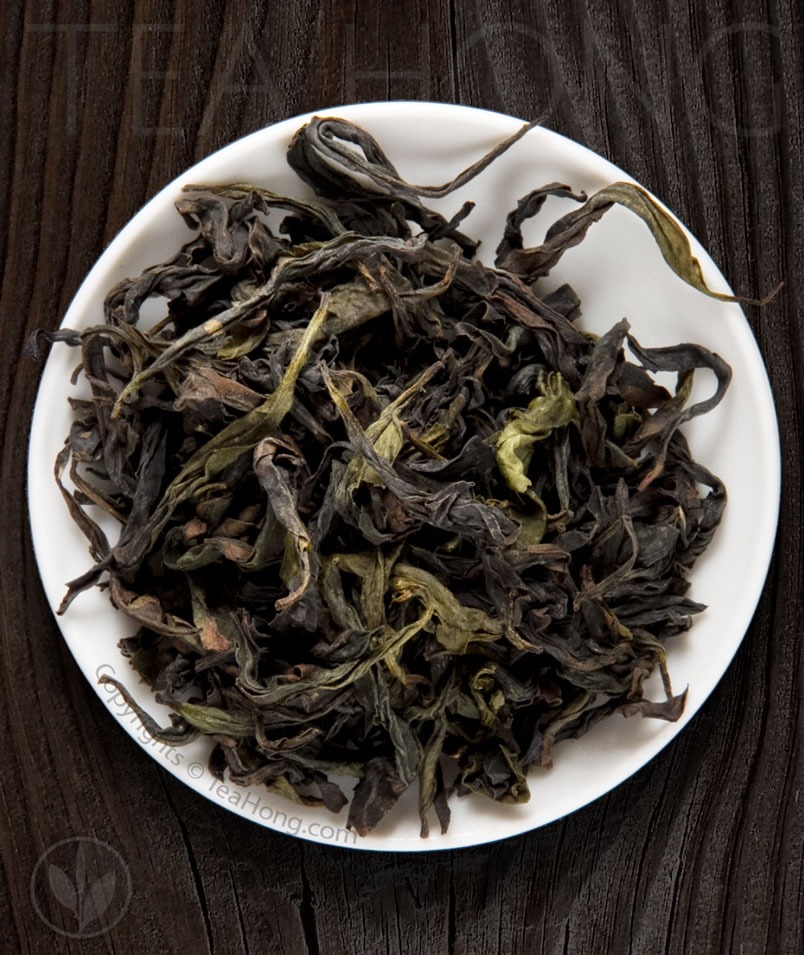
Sacred Lily, Wuyi yancha oolong, 40 g
US$27.1
黑崖上的花香、石源仙桂
Prime of Wuyi Pedigrees:
Through years of researches a fine cultivar carrying the best traits of all the finest Wuyi natural cultivars is now mature and producing. Introducing Tea Hong’s Sacred Lily. Perhaps the most beautiful of all Wuyi oolongs. Grown deep in the steep mountains away from the touristy spots and masterfully processed for subtlety, complexity, and smoothness in taste. A tea that no true oolong connoisseur should miss.


Net weight: 40 g (1.4 oz) in Kraft-alu pack
In stock

Taste profile
Nose: Cleansing fresh sweet wood aroma with accents of cinnamon and Chinese sacred lily (Narcissus tazetta, Shuixian). Hints of citrus peel. Palate: Smooth, malty infusion carried through with a cooling sensation between the teeth and an underlying woodsy tone. Soothing, round body accented with touches of cinnamon, citrus peel and Chinese licorice root. Finish: Long, malty sweet aftertaste and cooling after effect at the teeth, the tongue and the throat.
Infusion tips
For optimal results infuse at 90°C for longer durations or 95°C for shorter ones. A great selection for experimenting various gongfu techniques for different taste effects. Repeat infusion to get all the tea from the leaves. Too good to waste. (Please also reference the product comment by N.N. below)
About the name Sacred Lily

Sacred Lily, aka Narcissus tazetta
Sacred Lily, scientifically known as Narcissus tazetta, is originally the name of a particular kind of daffodils that is native in the Mediterranean and widely cultivated across the world, including parts of the Far East where the flower is celebrated during Lunar New Year. The bouquet has a rare essential oil that gives its unique fragrance. Coincidently when the tea leaves of a certain group of cultivars are being oxidised during oolong processing, a similar kind of strong aroma is generated by the leaves. The name of the flower is thus borrowed to name the tea.
This group of tea cultivars, Shuixian ( 水仙 ) which is the transliteration of how Sacred Lily is called in Chinese (oolongs have been produced for quite many centuries in China before spreading to other parts of the world), is a very large subgroup of wulong cultivars, which includes varieties of Fenghuang Dancong and Wuyi Yan Cha. It so happened that lower price versions of Wuyi varieties were widely adapted in tea houses across southern parts of China and throughout Southeast Asia that the name Shuixian began to represent generic Wuyi oolongs.
Tea Hong’s Sacred Lily is produced from a unique cultivar that is a cross between a Shuixian strand and a Rougui strand.
Additional information
| Shipping Weight | 90 g |
|---|---|
| Dimensions | 18 × 9 × 5 cm |
| Net weight: | |
| Tea category: | |
| Class: | |
| Origin: | |
| Recommendation: | |
| TCM character: | |
| Packaging: | |
| Infusion color: | |
| Vintage |
6 reviews for Sacred Lily, Wuyi yancha oolong, 40 g
 Sacred Lily, Wuyi yancha oolong, 40 g
White Peony Classic Floral, traditional white tea, 40 g
Home, Tea, White teas, Minnan/ Mindong, Fujian, Lighter Aromas, Milder Tastes, Cool Energy明前 福鼎牡丹王
Finest Fuding Bai Mudan
Slowly cured in the grand tradition in the origin of white teas, Fuding, Tea Hong's White Peony Classic Floral maintains the original character of floral aroma with a sweet, refreshing taste. White Peony Classic Floral is a first flush from a high altitude garden of pure Fuding Daibai cultivar, ensuring the best possible health potency of white tea. We have matured the current batch since Spring 2019 in our environment to ensure the best possible gastronomic experience.


 Net weight: 40 g (1.4 oz) in wide kraft-alu wide
Orchid Literati, Phoenix dancong oolong, 40 g
Tea, Oolongs, Fenghuang | Phoenix, Floral Aromas, Fuller Bodies, Cool Energy鳳凰春茶、鴨屎香單欉
the genuine Duck Poo Tea
As a person continues to discover tea, sometimes finding one with subtle and yet complex fineness seems a lot more exciting than one with strong impressions. That is how we feel when we got hold of this. The locals aptly name it “Cao-lan” (Cymbidium goeringii), the rare orchid which ancient Chinese literati had revered for millenniums for its understated beauty and fragrance*. The long, sweet yet subtle taste and aftertaste of this tea echos the sentiments for the civilized persistence for humanity virtues of the classic eras. If you enjoy our Eight Immortals, Orchid Literati will take you to another level.
 Net weight: 40 g (1.4 oz) in Kraft-alu pack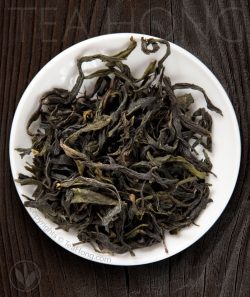
Shiguping Wulong, rare Phoenix oolong, 40 g
Tea, Oolongs, Fenghuang | Phoenix, Lighter Aromas, Fuller Bodies, Neutral-Cool Energy鳳凰隱世珍品 極限量 石古坪烏龍
Rare Indigenous Cultivar:
To us, offering the extremely rare Shiguping Wulong is not a challenge enough. We think we should give you the best of its kind. Trekking further deep into the mountain above the elusive main village of Shiguping, we found the patch of land which the locals called Liao-xi-ya, where it all began. The tea is softer, yet fuller and even more complex than that in the main village. The very original Shiguping Wulong*, as highly acclaimed by the man who devoted all of his life in advocating oolongs of Phoenix, the 74 years-old tea specialist Huang Bozi.
 Net weight: 40 g (1.4 oz) in Kraft-alu pack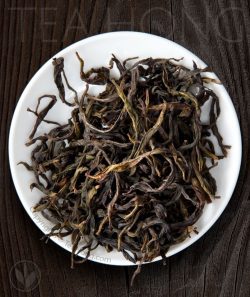
Phoenix Classic, dancong oolong, 40 g
Tea, Oolongs, Fenghuang | Phoenix, Floral Aromas, Fuller Bodies, Neutral Energy鳳凰蜜香 白葉單欉
Fenghuang Baiye:
Before Chaozhou Guest Hotel was privatised, this officially appointed lodging for visiting high-ranking government officials used to serve only classic style Phoenix oolongs in all of their restaurants*. Tea Hong’s Phoenix Classic could well be the special quality in the large white porcelain teapot on the breakfast table sitting next to bamboo steamers holding finely crafted dim sums for the privileged guests. All fine and quintessential characters of the classic Phoenix oolong can be found in this tea — Sweet, fruity, and lively with notes of peach and dried longan, lychee and sweet potato. A proud heritage of Guangdong oolong.

 Net weight: 40 g (1.4 oz) in Kraft-alu pack
It took me almost a full bag to figure this yancha out – luckily for me, I’ve got another bag to keep figuring it out. It’s complex, and a bit finicky, but well-worth the wrestle to dial in the perfect extraction techniques.
There’s a really soft and delicate floral nuance in these leaves that can be quite fleeting and very shy. To coax it out, I found the best thing to do was to use very short steep times and cooler temperatures than is typical for yancha.
The sweet spot for me was to use 8 grams of leaf in my 100mL “Rural Life” gaiwan, with an initial steep of 186*F for 10 seconds, and working up from there incrementally, just a few seconds at a time.
There’s a certain kind of fresh-cut floral quality in these leaves which is persistently sweet and reminds me a bit of osmanthus flowers. It’s very apparent using these cooler temperatures, and much quicker steep times. It seems to emanate from the back of the throat and wafts up through the retronasal olfactory system into the nose, so when I exhale I can feel the sensation of this wonderful bouquet of flowers.
Sounds odd, but good yancha is always a whole-body experience.
These leaves release their flavors quickly, and the initial steeps at only 10 to 15-ish seconds long have plenty of flavor and color. The aromatics are detectable from several feet away – these leaves literally explode with fragrance. It’s wonderful.
This tea also has a strong spine, and resists giving up all of its flavors too quickly. It takes a while to extract all of the flavors from these leaves … not that steep times are really important in the larger context of enjoying tea, but I find these leaves have more stamina than other yancha and I can easily get more delicious soup out of the same quantity of leaf.
This is definitely some special yancha.
I am most amazed with your effort in exploring this tea. At the same time, I feel very much ashamed that I have not returned to tasting this batch for the past three years and haven’t realised the change that the maturity conditions we have imposed on the tea to have brought so much development in its characters. What you have found out in the infusion method is a characteristic of a certain quality of yancha with a certain degree of baking and matured to a good degree. I am actually quite surprised that the effect would come when it has been only six year since its production. I will most certainly taste the tea again when it arrives from Hong Kong at our new workshop in Nagoya with the whole inventory. Will most certainly modify the infusion tips part of the product description to reflect the change. Really looking forward to that, and hopefully reiterating our routine tasting of all tea batches through their maturity.
Many thanks again for your generosity in sharing this experience.
This tea can mature
Hello Tony, Yes this tea can mature. Please refer to Leo’s Tea Guardian article on storage for storing this tea for maturity.
Is this tea able to be matured
Is this tea able to be matured?
A Real Treat
I would call this a mid-roast tea with a high floral aroma with sweet mineral flavours. My mouth is full of flavour, feeling, and the huigan is big! This is a big tea. Dry leaves are long. Layers of flavor and depth. A real powerhouse!
Soft & creamy
What a wonderful Wuyi oolong. It have all the character of teas from this area but in a softer and creamiest way. Deep and subtle smell . Nothing cares when you drink it. A must try before die.