

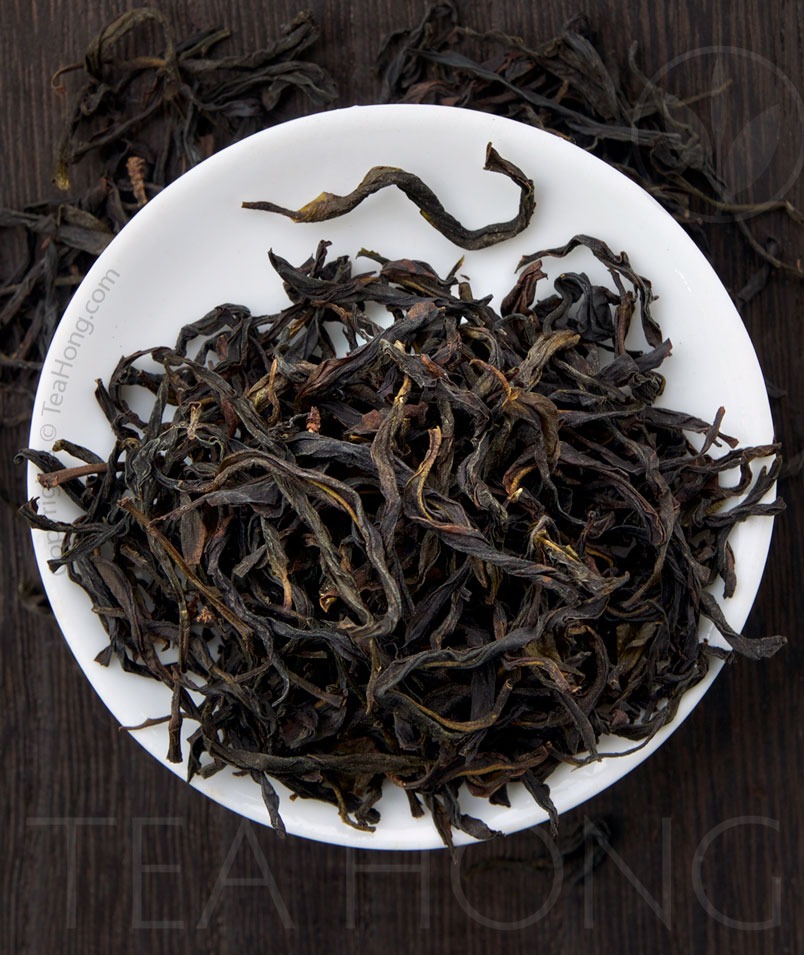
Huangzhi Xiang Classic, Phoenix dancong oolong, 40 g
US$27.1
excluding tax and tariff
鳳凰單欉 慢焙 黃橘香*
Fragrance of Kumquat Fenghuang Dancong
Produced with the leaves from the cousin of our Song Cultivar, Tea Hong’s Huangzhi Xiang Classic is baked with more depth and thus a classic Phoenix oolong finish. Like all other tea of this family, patience and expertise in proper finish-processing and maturing is critical in delivering quality. It is a traditional art that has been largely forgotten. We are bringing it back at Tea Hong. The taste quality of this very Fenghuang Dancong tells you why this heritage matters. It is also the reason one may pay more elsewhere for a tea of the same name, but not quite getting the same level of enjoyment.


Net weight: 40 g (1.4 oz) in Kraft-alu pack
In stock
Taste profile
Nose: Scent of the blossom of kumquat carried in a creamy overtone with accents of freshly baked gingerbread, nutmeg and peach. Palate: Silky liquor. Bright, lively infusion with distinctive tangerine and kumquat accents and the after-rain smell of highland forrest. Pleasant, long lasting tinkling sensation that is almost like effervescent. Finish: Long, mouth watering aftertaste and malty freshness.
Taste note:
This oolong is not to be confused with its cousin, the thorough breed Song Cultivar Huangzhi Xiang. The latter is always baked to a slightly lighter degree for a balance of all its taste properties. Difference in the tree’s biological inheritance and even better environment also give the grander tea its distinction.
On the other hand, Huangzhi Xiang Classic is superb value for every gram of taste the dollar can buy.
Infusion tip
While it is absolutely fine to use this tea in gongfu tea-making, conventional longer infusion is also able to render the taste profile well, as do all classic style Phoenixes. If you take this route, make sure you use an appropriate leaf to water ratio and brew longer than normal. Drain all the liquid into a decanter once the desired time is reached.
Try 1.5 g per 100 ml, 6 min in 500 ml pot or smaller; 1.2g per 100 ml, 8 min in larger pots. Adjust ratio to preference. Increase infusion time by 50% on each repeated infusion. 95°C infusion temperature.
While you can get many repeated infusions in gongfu style, expect 2 times only in the longer approach.
* 依鳳凰單欉前輩黃柏梓解析,通俗寫作黃枝香之原名應為黃橘香。英語音譯本應為Huangju Xiang,惜潮州口音之北京語音譯Huangzhi Xiang 已在西方流行,本行未作特地解析更正,以避大費周章。然對理解中國方言者則毋須多費唇舌,故正名之。
Additional information
| Shipping Weight | 90 g |
|---|---|
| Dimensions | 18 × 9 × 5 cm |
| Net weight: | |
| Tea category: | |
| Class: | |
| Recommendation: | |
| Origin: | |
| TCM character: | |
| Packaging: | |
| Infusion color: | |
| Vintage |
3 reviews for Huangzhi Xiang Classic, Phoenix dancong oolong, 40 g
 Huangzhi Xiang Classic, Phoenix dancong oolong, 40 g
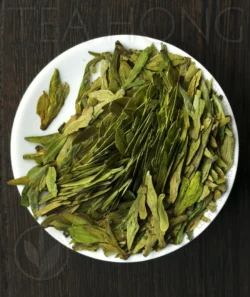
Longjing Traditional Supreme, hand-roasted green tea, 40 g / 70 g
Denser Aromas, Fuller Bodies, Green teas, Neutral-Cool Energy, Tea, Zhejiang經典極品 頭採杭州龍井
Mastery in wok-roasted green tea
The special taste profile of a classic Longjing demands not only a fine harvest from a genuine pedigree, but also the mastery of hand-roasting the leaves. To attain such a skill takes the willingness to endure years of hard practice*. On top of that, a fine Longjing is perhaps the most sought after tea in its native market that is China, and there are people there that are willing to pay thousands for half a kilo of this tea. As a result, good roasting masters are in high demand. A good master producing with top quality harvests is even more rare. To secure a genuinely high quality is therefore a very challenging task. More so at the accessible price we are offering at. Tea Hong's Longjing Traditional Supreme is a proud representation of the best quality of this precious craft, a taste that would have won nobles and mandarins in their tea competition, and when the Qing Emperor Qianlong was still young and flamboyant, and crazy about this tea. Two pack sizes available: 40 g (1.4 oz) and 70 g (2.5 oz) Please check an option below:


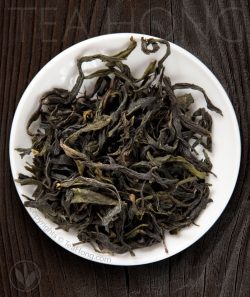
Shiguping Wulong, rare Phoenix oolong, 40 g
Fenghuang | Phoenix, Fuller Bodies, Lighter Aromas, Neutral-Cool Energy, Oolongs, Tea鳳凰隱世珍品 極限量 石古坪烏龍
Rare Indigenous Cultivar:
To us, offering the extremely rare Shiguping Wulong is not a challenge enough. We think we should give you the best of its kind. Trekking further deep into the mountain above the elusive main village of Shiguping, we found the patch of land which the locals called Liao-xi-ya, where it all began. The tea is softer, yet fuller and even more complex than that in the main village. The very original Shiguping Wulong*, as highly acclaimed by the man who devoted all of his life in advocating oolongs of Phoenix, the 74 years-old tea specialist Huang Bozi.

 Net weight: 40 g (1.4 oz) in Kraft-alu pack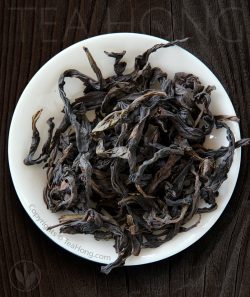
Narcissus Classic, Wuyi yancha oolong, 40 g
Denser Aromas, Fuller Bodies, Oolongs, Tea, Warm Energy, Wuyi-shan武夷、正岩水仙
Dark Rock Shuixian:
This tea may have the same name as some low quality tea used in dimsum restaurants but it certainly tastes differently. It is the ORIGINAL Shuixian, the famous oolong that grows on dark rock cliffs in the depth of Wuyi Mountains. Narcissus Classic, like most other deeper baked oolongs, goes well with a wide range of cuisines and desserts and is a great digestive. Also an adaptable tea for preparation with other ingredients, such as ginger and raw sugar, and a safer tea for the weaker stomach.

 Net weight: 40 g (1.4 oz) in Kraft-alu pack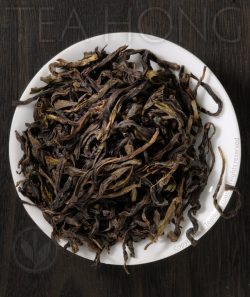
Honey Orchid, Phoenix dancong oolong, 40 g
Fenghuang | Phoenix, Floral Aromas, Fuller Bodies, Neutral Energy, Oolongs, Tea鳳凰單樅、烏崠蜜蘭香
Milan Xiang Dancong:
The fine mastery that produces Tea Hong’s Honey Orchid has to be coupled with select first flush harvests from high grown tea bushes in order to deliver the kind of quality only a restricted circle of tea aficionados have known and kept to their secret. The overall production volume for such quality in the whole Phoenix region is only a few thousand kilos after all. Most will go to local elites, and the rest to the few hardcore Phoenix oolong fans that are also tea merchants, like us. This tea is also available in a small portion as a part of Tea Taster’s Box: Nine Oolong Samplers.


 Net weight: 40 g (1.4 oz) in Kraft-alu pack
This unassuming tea is the fruit of tradition and expertise. Upon placing in a warm gaiwan, the dry leaves start to blossom – soft, creamy and slightly floral scent of citrus. Infusion at lower temperature gives notes of baked cookies, warming spices, toasted nuts and a hint of eau de fleur d’oranger. This tea reminds me of orange baklava ! This tea is like a hug from an old friend.
To be honest, my first impression of this tea was underwhelming. While it was undoubtedly a good tea, it lacked the mellowness of Orchid Gratus and seemed similar to the less expensive Big White. However, as I gradually discovered its true value, it became my most frequently consumed tea.
If I had to summarize this review in one sentence, I’d say: “There’s a reason it’s called Kumquat.” Generally speaking, the kumquat (Citrus japonica) is an ancient and distinct citrus species. Unlike many other citrus fruits that have undergone extensive hybridization and selective breeding, the kumquat seems closer to the fruit our ancestors enjoyed. This might explain why kumquats are smaller than other citrus fruits and offer a complex flavor and aroma profile without any single overwhelming characteristic.
This tea shares similar qualities. While it may not have a distinctive character that immediately catches your attention, it surprises with a wide range of flavors and aromas that coexist in layers. The broad and seemingly contradictory taste profiles mentioned above are not exaggerations! It reminds me, to varying degrees, of all the excellent Phoenix oolongs I’ve experienced. From the honey-like sweetness and subtle floral notes of classic dancongs to the pleasant bitterness and cooling effect of Bouquet style dancongs, this single cup of tea encapsulates a diverse array of experiences. In other words, its flavor profile can vary significantly depending on how you brew it.
This versatility might explain why Teahong recommends a conventional brewing method using a smaller amount of tea, higher water temperature, and longer steeping time. This approach allows one to fully appreciate and distinguish the tea’s complexity. While the gong-fu method can offer a gastronomic experience, I agree that Teahong’s recommendation is nice, and I primarily brew it that way.
However, on mornings when I’m sleep-deprived, feeling under the weather, or when my extremities are cold, I increase the amount of tea while keeping other parameters the same. Even when using 2-3g per 100ml with >6 min, the tea doesn’t become overly bitter and can withstand multiple infusions. This method intensifies the full spectrum of aromas and flavors, producing a brew that almost functions as a tonic for the body. Interestingly, its effect is reminiscent of the cha-qi from well-aged, high-quality sheng pu’er from famous mountains, but with a gentler impact. Enigmatic!
It is so gratifying to read that you understand why we recommend the long steep approach instead of short duration ones as in gongfu tea making. Happy also to see that you use more leaves for a draggy morning. I do it too! Please accept my apology for this exceptionally late reply. Your kind sharing came exactly on the same day when we were packing up the last bits before flying to Japan the next morning for our long, difficult journey of relocating Tea Hong to Japan. It feels warm read a comment from you on this slow morning now that things are a little bit under control, almost one year later. Thank you for sharing; thank you for your continual support.
This is an intricate and delicious tea, when brewed gong-fu style it opens up slowly and its floral qualities really blossom half-way through the session, with the very last steep being perhaps the most potent and having the most clarity between all of the individual layers of flavor. It finishes strong and holds its composure very well right down to the last lingering sensations felt in the aftertaste.
I found this tea to have a powerful mouthfeel and a robust minerality, it grips the palate and has a viscosity like motor oil. It’s thick, with a sappy texture that has many sophisticated layers of flavor which continue to evolve across the session, yet never becoming over-bearing.
It’s strong, but gentle, and takes a couple of steeps to open up before it really starts to build momentum in the session. Once the leaves are awakened, they release a remarkably complex array of fruits and florals that are perfectly contrasted against a backdrop of gentle spices, woods/moss, and that characteristic sparkling minerality that all high-end dancong should have.
The complexity of the citrus notes is captivating – this is not a one-dimensional flavor profile at all. I get some kumquat, tangerine, yuzu, maybe a hint of lime in there… this is such a dynamic tea that brings a ton of flavor at a humble price.
I also get undertones of watermelon, plum paste, and sun-dried figs, all of which harmonize with the tangy and zesty citrus notes to create balance in what is otherwise a citrus-forward flavor profile. The mouthfeel is superb, the finish is strong, and the aftertaste lasts for a very long time.
If you enjoy the Pomelo Flower (“you hua”) cultivar, you should try this.