

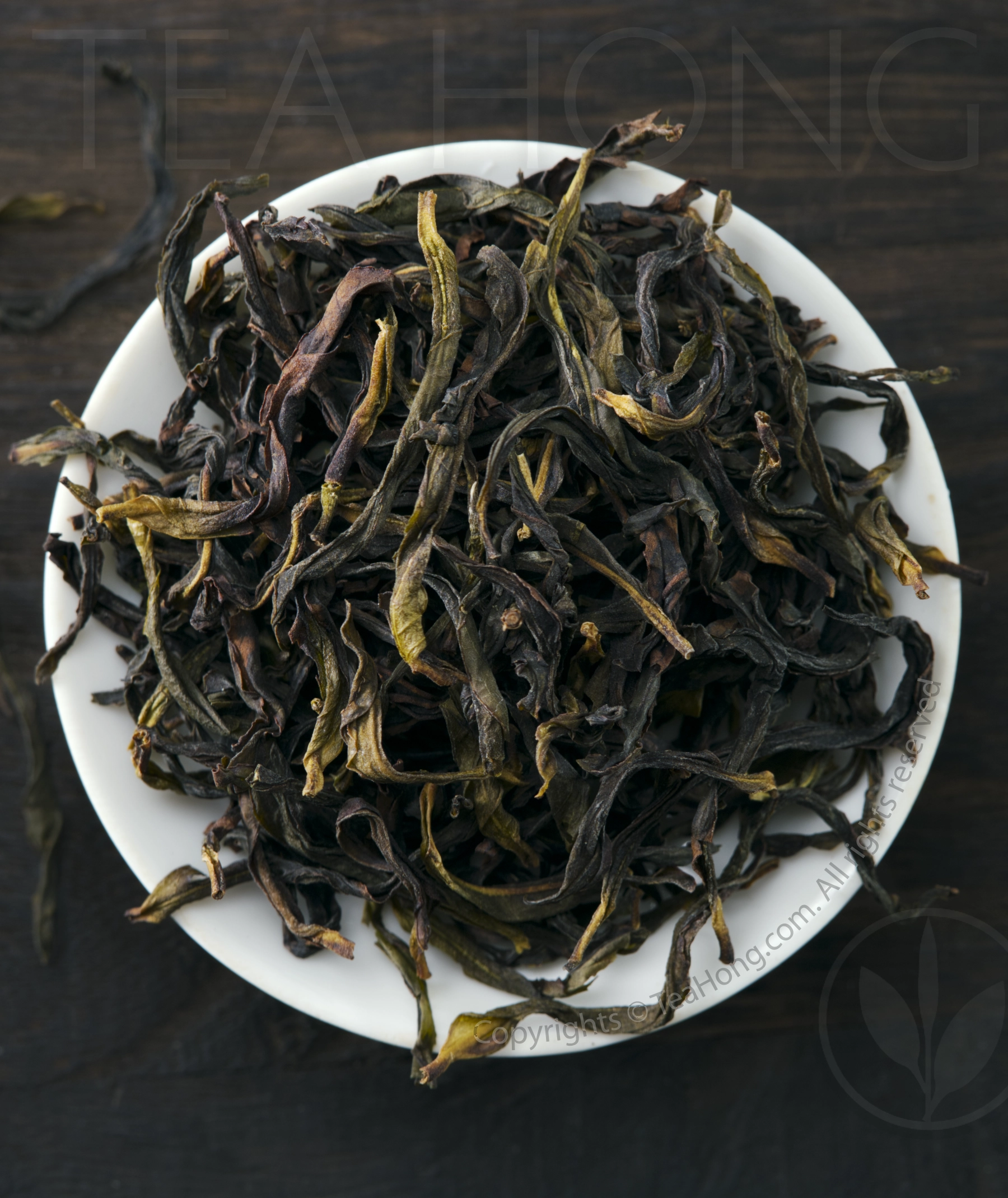
Old Bush Zhilan, bouquet dancong, 40 g
US$43.8
excluding tax and tariff
鳳凰烏崠、丹湖老欉芝蘭香
From the same small farm that produces our beloved Danhu Old Bush Song Cultivar, old Master Lin tends three venerable bushes that his father planted in his youth, now about 80 years old, crafting from them a seductively fragrant Zhilan Xiang. As a dancong bush gains age in its natural environment, the tea from its leaves has the potential for greater complexity taste and aroma. This is a distinctive trait of this oldest form of oolong. That is one reason harvests from older bushes are keenly sought after by connoisseurs.
For a bouquet dancong, however, achieving perfection depends not only on the terroir and the mastery of processing but also on the precise weather and leaf condition at harvest. Unlike classic dancong, where there are a few more steps in which the tea master has some room to compensate for less-than-ideal circumstances, the fewer steps and shorter time in bouquet-style processing has less margin for error note. That means some years are distinctively better than others.
That is why for a harvest as nearly perfect as this one, it is a blessing.


Net weight: 40 g (1.4 oz) in Kraft-alu pack
In stock

Storage note
We keep this tea in cold storage until delivery. While it is okay to leave the pack in room temperature for a couple of months, it is best to store it in the refrigerator if you are not ready to consume it soon.
Make sure the content is at room temperature when you open the bag, and always close the bag tightly with the least amount of air inside before returning to cold storage. For Old Bush Zhilan, after a bag is open, please try to finish it within 2 months.
Infusion suggestion
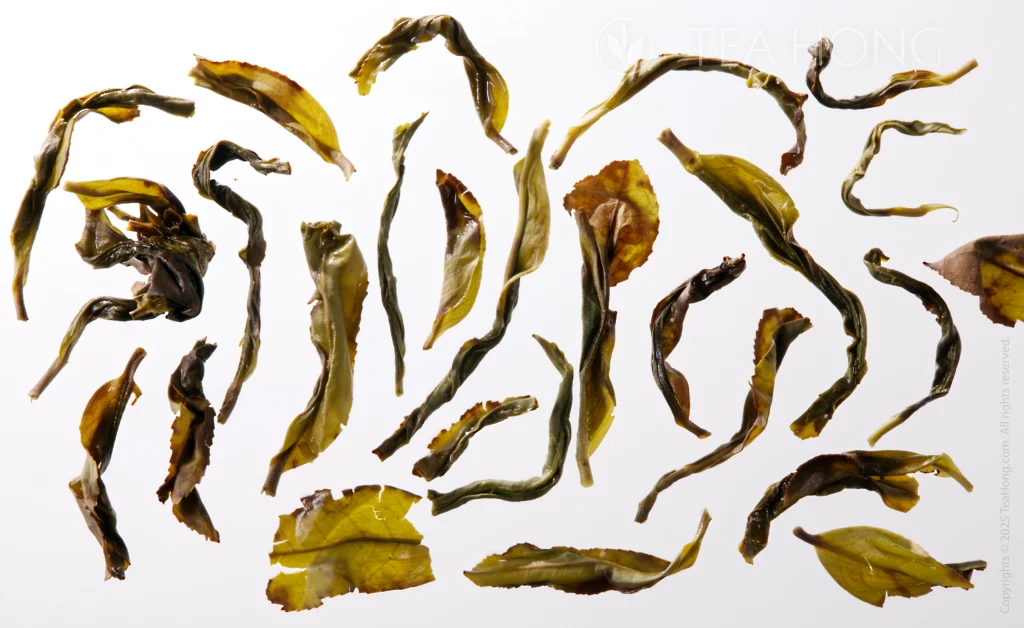
The status of the leaves of Old Bush Zhilan after 3 sessions of infusion, totalling to over 25 minutes, and hours in between. A very large portion of the leaves are still very tightly rolled and can afford further meaningful steeping. This straight photo was made by spreading the leaves on a lightbox. No retouching or montage or cut and paste involved. The leaves were also randomly clipped from a standard taster’s mug after a routine tasting exercise. For those who are interested in understanding more about tea quality, reading the infused leaves is useful to investigate the quality of the pluck and of the different key steps in processing. For a fresh bouquet dancong, a rolling that is so well preserved after such long infusion time denotes very good workmanship, amongst other things. (note: this conclusion applied only to fresh bouquet style dancong, for other style and matured teas, it is another story)
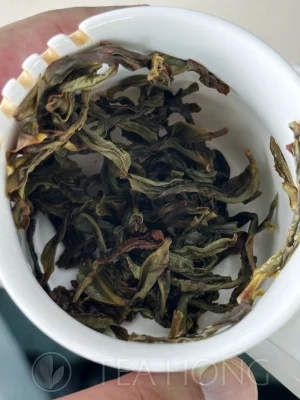
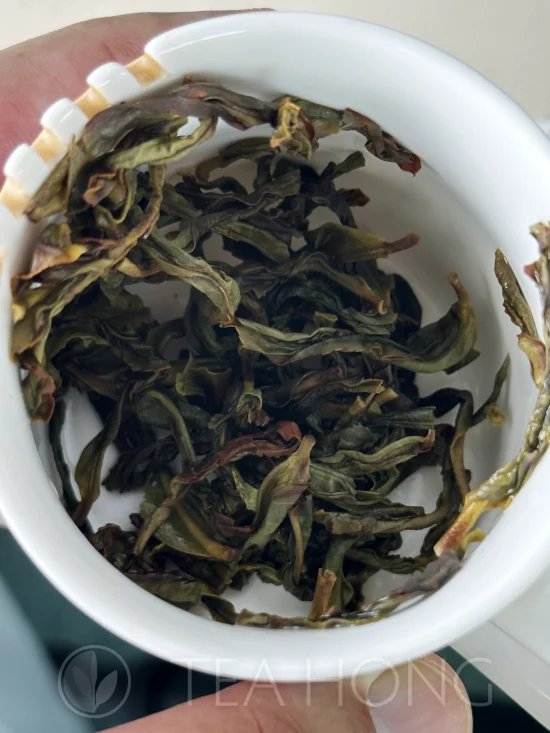
The status of the tealeaves after 5 minutes of infusion in a standard taster’s mug
For a balance of taste, texture, and aroma, use a long infusion duration of 6 min for 2.5g of leaves in 150ml of water at 90~95°C. I use 3g myself. Add 30% more time in subsequent infusions.
If you have the luxury of sitting down for a tea break, fill 95°C water to the bream of your 150ml infusion vessel with 6~7g of leaves, to steep for 30s. Increase the steeping time by 10%+ in subsequent infusions, and more substantial increase towards later ones.
There is a rumour going around for using Chaozhou clay teapot for best infusion results for dancongs. This is a marketing myth. If you do not have a decent genuine quality Yixing teapot, use a porcelain infusion vessel. I use a gaiwan or a taster’s mug most of the time.
If you have the luxury of choosing a proper and genuine Yixing teapot, use one made with a high density clay, such as duan-ni, zhu-ni or da hong pao etc. For a shorter infusion duration approach, choose a pot with a wider mouth (top opening), shorter body height and a wider spout for quicker decanting.
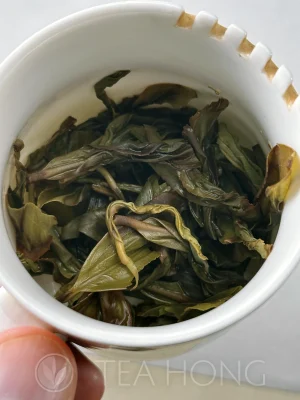
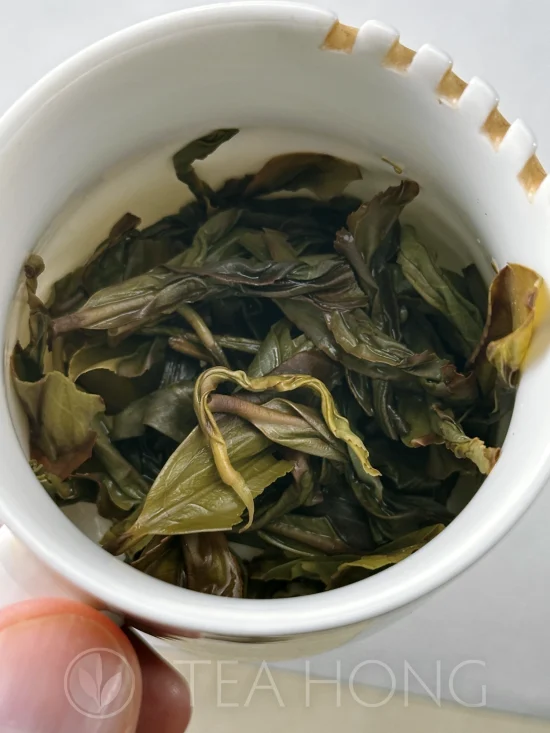
The status of the tealeaves after 3 sessions of infusions totalling over 25 minutes, with long resting time in between.
Taste profile
Nose: Blooming aroma of live bouquet, refreshing yet warm with tones of nectar and and an undertone of popcorn, freshly baked bread and a slight hint of cinnamon. Palate: Velvety mouthfeel carrying a smooth body with a sweet, refreshing overtone. Tints of minerals, baked nori, oil and a slight hint of salt. Intricate nectary and herbaceous undertones. Prominent presence of the aroma inside the palate and throat. Finish: Long, lingering sensation of the taste and aroma.
Cherishing such intricate complex aroma and tinkling melody of tastes is not only a refuge from the challenges of life, but also a moment of gratitude for existence.
If you make it with ample strength, however, please sip slowly. This was the tea that triggered my first tea-drunk 27 years ago, having chain-drank from after lunch to after sunset, in quite many tea farmers’ homes.
Tea drunk, unlike what some YouTube “tea influencers” described, is a serious discomfort that can involve piercing headache, dizziness, instability in movement, detachment, stomachache, subsequently, vomit and severe gastric upset. The lingering headache the morning after, in my experience, could drill you for a whole day disregarding what painkiller pill you take.
I drank quite a lot though, and this tea was only a triggering point. It is wise to enjoy this tea moderately, if you brew it with strength.
Production note

The first and a critical step in fine quality Fenhuang dancong (Phoenix oolong) processing is sunning
A high fragrance bouquet style dancong, such as this Zhilan Xiang, is usually given a shorter oxidation duration so as to retain most of the volatile aromatic oils that are formed in the first four hours of the process. The difficulty for producing the intricately complex taste body with this shortened oxidation means optimising other factors that affect the taste of the tea.
One important step is to maximise the biochemical activities of the leaf at the moment it is plucked — at least a couple of hours after sunrise on a sunny day ( this is crucial not only in dancong, but also in most other oolongs ). After plucking, ample sun-bathing time (1~2 hours) is given to the plucked leaves to maintain the photosynthesis process to heighten the biochemical contents of the leaf that contribute to its final quality, such as various forms of carbohydrates, amino acids, enzymes, lipids, terpenoids (e.g. essential oils), etc.
This is a step essential to the quality of all oolongs, but more critical for bouquet dancongs.
Note that you do not simply go out to do the plucking on any sunny day. The size and grown condition of the leaf have to be right too. There is only a window of a couple of days otherwise the leaf would not be in the proper size. A leaf too young or too old does not only present a different set of biochemistry, but also a different physical structure, such as hardness of the cuticle and thickness of the epidermis. This greatly affects what the tea master can and cannot do during processing, particularly during the oxidation stage.
That is why harvesting condition is critical to the quality.
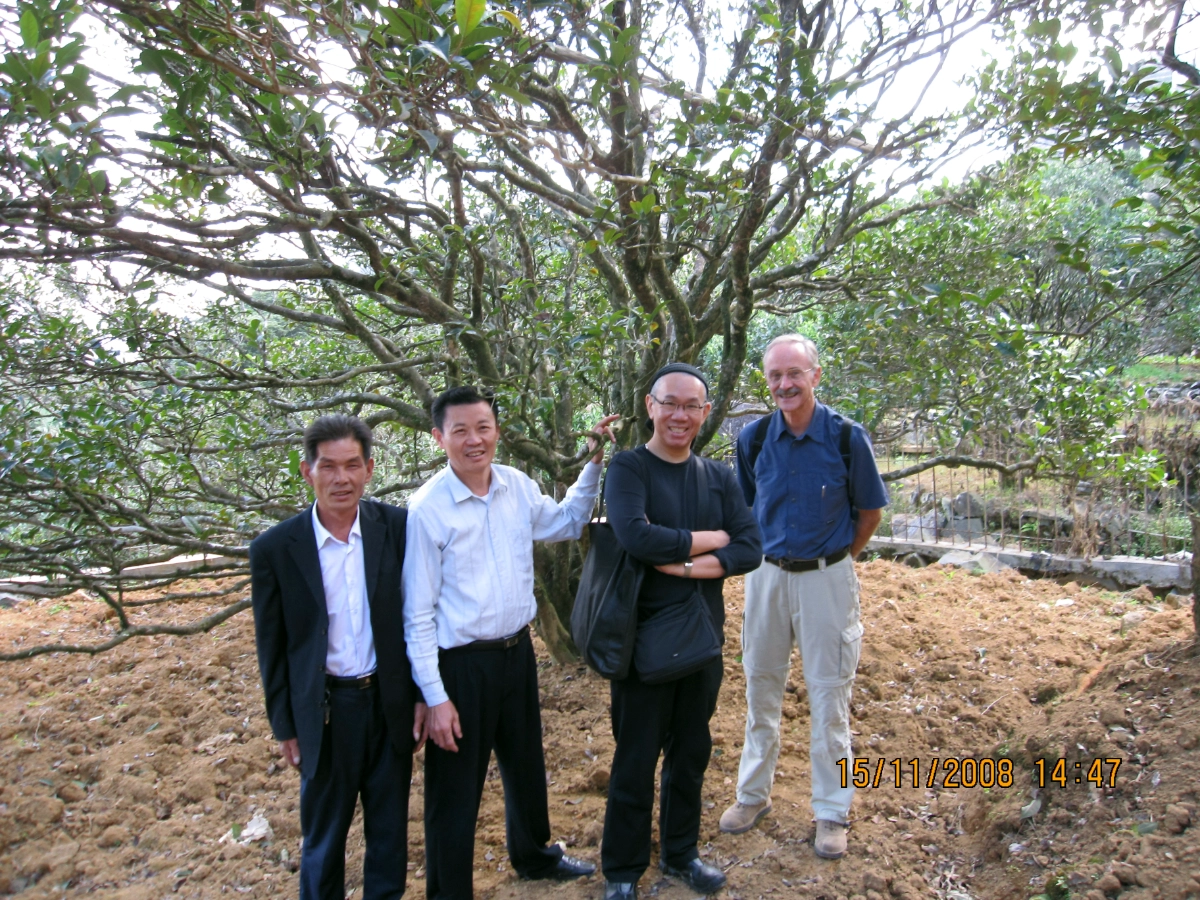
Master Lin (left most) took us around in his farm and his neighbours’ when my friend and patron, Hanspeter Reichmuth (right most), a wine master turned tea advocate, asked me for a Fenghuang visit. Notice that the ground around the old tea bush is covered with a large collar of “undersoil” — soild dug from deeper layer of the ground — as a means of maintaining the bush in winter. This is a common practice throughout the Fenghuang area for most older bushes. November, 2008.
A side history
Together with Milan Xiang (Honey Orchid), Zhilan Xiang was my first love when I began to study tea seriously as my trade in 1998. These two teas were the main stars in the first commercial offerings when I launched my first tea brand in 2000.
I created an English name for it — Mandarin Orchid. It was fondly mentioned by a few local and foreign media as they told my tea story. The term has since been widely adapted by many entities, tea or other things. It is still being used by the current operator of my old tea brand. I have no idea what its quality is now.
Maybe that is why I have chosen to use the romanisation of Zhilan instead for this very special tea in my heart for this current offer.
Additional information
| Shipping Weight | 90 g |
|---|---|
| Dimensions | 18 × 9 × 5 cm |
| Net weight: | |
| HSCODE | 090230 |
| Tea category: | |
| Class: | |
| Recommendation: | |
| Origin: | |
| TCM character: | |
| Packaging: | |
| Infusion color: | |
| Vintage |
1 review for Old Bush Zhilan, bouquet dancong, 40 g
 Old Bush Zhilan, bouquet dancong, 40 g
April Mist, traditional green tea, 80 g
Cool Energy, Green teas, Lighter Aromas, Milder Tastes, Tea, Zhejiang明前 九龍雲霧
Wild Bush Yunwu:
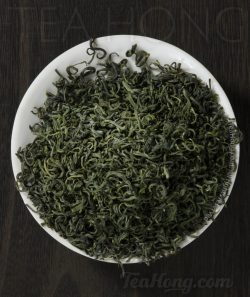
For those who prefer a little more strength in their green tea, April Mist is a pleasant choice. Harvested from scattered wild tea bushes in late March or early April, depending on the conditions that year and pre Qing Ming nevertheless, in the misty days of the mountainous region for a deeper taste. Lightly roasted for a balance of warmth, aroma and refreshing brightness, this Yunwu (translate: cloud and mist) makes a distinct difference from its counterparts that may look similar.

 Net weight: 80 g (2.8 oz) in Kraft-alu pack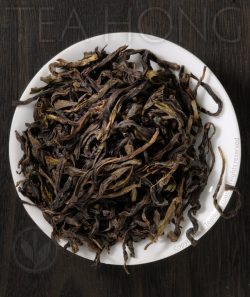
Honey Orchid, Phoenix dancong oolong, 40 g
Fenghuang | Phoenix, Floral Aromas, Fuller Bodies, Neutral Energy, Oolongs, Tea鳳凰單樅、烏崠蜜蘭香
Milan Xiang Dancong:
The fine mastery that produces Tea Hong’s Honey Orchid has to be coupled with select first flush harvests from high grown tea bushes in order to deliver the kind of quality only a restricted circle of tea aficionados have known and kept to their secret. The overall production volume for such quality in the whole Phoenix region is only a few thousand kilos after all. Most will go to local elites, and the rest to the few hardcore Phoenix oolong fans that are also tea merchants, like us. This tea is also available in a small portion as a part of Tea Taster’s Box: Nine Oolong Samplers.


 Net weight: 40 g (1.4 oz) in Kraft-alu pack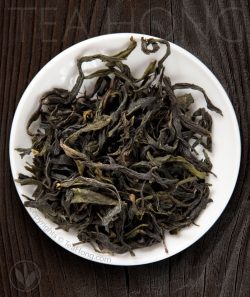
Shiguping Wulong, rare Phoenix oolong, 40 g
Fenghuang | Phoenix, Fuller Bodies, Lighter Aromas, Neutral-Cool Energy, Oolongs, Tea鳳凰隱世珍品 極限量 石古坪烏龍
Rare Indigenous Cultivar:
To us, offering the extremely rare Shiguping Wulong is not a challenge enough. We think we should give you the best of its kind. Trekking further deep into the mountain above the elusive main village of Shiguping, we found the patch of land which the locals called Liao-xi-ya, where it all began. The tea is softer, yet fuller and even more complex than that in the main village. The very original Shiguping Wulong*, as highly acclaimed by the man who devoted all of his life in advocating oolongs of Phoenix, the 74 years-old tea specialist Huang Bozi.


 Net weight: 40 g (1.4 oz) in Kraft-alu pack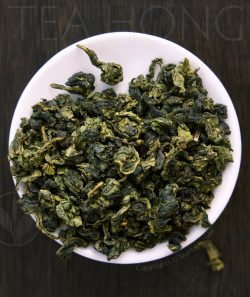
Tieguanyin Floral, bouquet oolong, 80 g
Cold Energy, Floral Aromas, Milder Tastes, Minnan/ Mindong, Fujian, Oolongs, Tea花香滿樓 頭春金觀音
A very fragrant Jin Guanyin
While some people like their Tieguanyin subtle and long like it used to be traditionally, some others want it to be more floral. So we give you Tieguanyin Floral, a very bouquet version of this popular oolong. The cultivar is Jin Guanyin ( aka Golden Tieguanyin ), a child between the traditional Tieguanyin plant and a relatively newer bleed, Huangjin Gui *. While the latter is widely used as a substitute for the genuine Tieguanyin for its pleasing nose, it lacks the body and length of the real thing. The resultant hybrid, however, has the best of both parents. The terroir is in Xianghua, a mountainous area in the Anxi county in the subtropical southern part of Fujian, where the best Tieguanyin is produced. This tea is also available in a small portion as a part of Tea Taster’s Box: Nine Oolong Samplers.

 Net weight: 80 g (2.8 oz) in Kraft-alu pack
This is metaphysical-grade Zhi Lan Xiang. Master Lin consistently puts out some of the best dancong that money can buy – so if you’re reading this, and you haven’t tried either this or the Danhu Old Bush, make sure you put two of each in your cart and give them the attention they deserve. They will change everything you think you know about Phoenix oolongs.
Old Bush Zhilan is the manifestation of a flawless overlap between nature and nurture – so sublime, it feels impossible, yet here it exists anyways, undoubtedly as a product of divine grace. Master Lin is among the best in all of Wudong, but even he was a conduit for nature’s gift in this case. Dancong of this caliber is what the greatest masters, in all of the famous villages, strive to one day achieve.
The cong wei is surreal. The dry leaf explodes with silky, buttery aromatics of fresh-cut flowers, and oozes complex notes of woods and spices that are pungent and immediately pierce the forehead, tingling the brain. The fragrance melts into the liquid, and all of the wonderful aromatics are captured in each sip, clinging to the throat and quickly building up what ultimately becomes a long-lasting huigan.
The flavors are mind-melting, and the sensations are ethereal. I feel the energy of the mountain resonating in my bones – there is something magical in these leaves, a water-soluble worm-hole that starts off as flavors which interface with the palate, but quickly morphs into a portal for the nervous system.
For me, what’s on the other end of that portal is the most fascinating rendition of Zhi Lan that I’ve ever come across. It’s unique because of how fresh it is, I feel like these leaves are still pulsating with the life force that defined them as they were growing.
Very grateful to both Master Lin and Leo (and Olivia!) for sharing something so profoundly miraculous as this Old Bush Zhilan.