A Few Ways to Select a Tea

Select a tea by category, region, taste or TCM character

At TeaHong.com, we try to put ourselves in our customers’ shoes. Different people have different priorities. Each sees the world differently. Naturally when it comes to selecting a tea, your criteria may not be the same as that of any other tea drinkers. That is why we group our tea products in different ways so you can see them in the context that is closest to how you think when selecting a tea.

Selection by
Tea Category

Selection by
Tea Region

Selection by
Taste Preference

Selection by
TCM Character

Our tea regions

Fenghuang / Phoenix

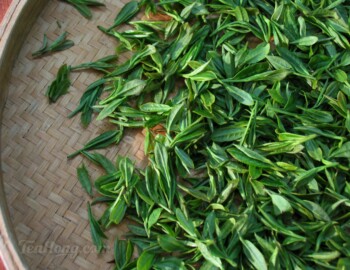
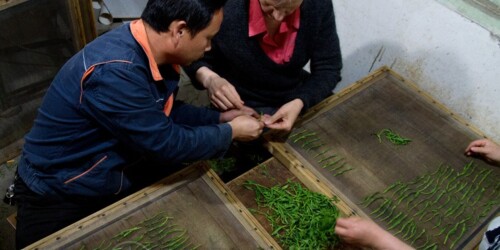
Tea farmer withering tea leaves in the afternoon sun

Yunnan

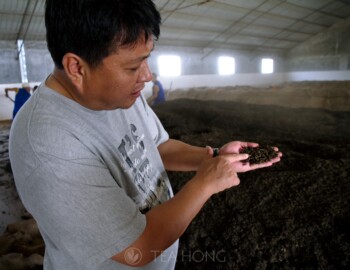
Young Master Zou explaining about degree of fermentation with a handful of tealeaves undergoing the post-fermentation process in the making of shu cha pu'er.

Minnan-Mindong, Fujian

Wang's peak farm

Japan

a technician in full protective clothing working on a matcha grinder

Nepal, the Himalayas

Tea Regions of TeaHomg.com: Nepal / Himalayas

Taiwan

Master Li talks about ant problem in his wild Red Jade tea field

Wuyi-shan

the process of Yao Qing, Wuyi Shan

Huangshan/ Anhui

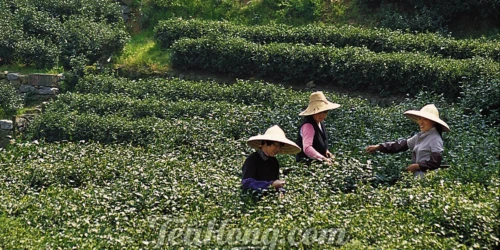
Tea picking on the hill side terrace

Zhejiang

Tea Hong: Finest Hand-roasted Green tea: Longjing Spring Equinox

other regions

Selection by Tea Category


The most common way to group different varieties of tea is by the category of processing method with which they are produced. Some call it Tea Classification, others Tea Categorisation. We think the later label is semantically more accurate.

Many connoisseurs and tea specialists organise their collections with this concept.

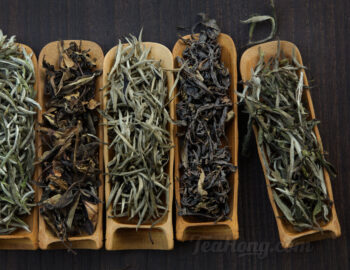
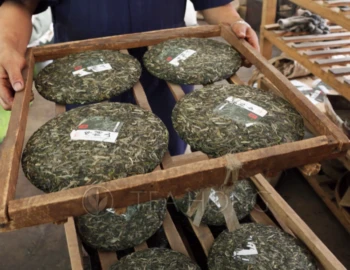
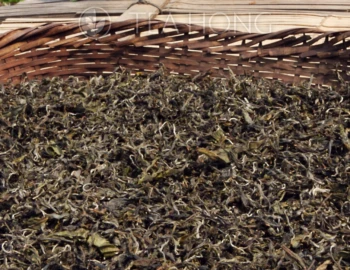
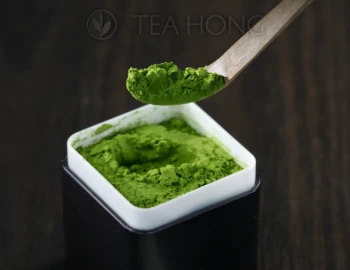
The above chart shows the five main categories: Green, Black, White, Pu’er ( Post-Fermentation ) and Oolong teas. Click the pie chart to browse the category of tea, click on your choice and enjoy the browse!

Need more info about a category before seeing the products? Here are some articles:

Selection by Taste

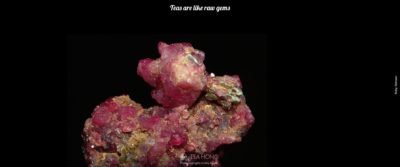
Teas are like raw gems. The true taste of each awaits the revelation made possible by the way you make it. Your personal need matters. It may change according to mood, time of the day, and occasions.

tasting

Tasting is the ultimate way to learn about a tea

Experience and explore

Begin by tasting a few selections using various infusion styles to gain more specialist understanding of the finesses and differences. Relate this with your personal preferences and you will gradually carve out a direction in building your own repertoire of tea. This will be your very own line that best suits your taste and your needs. With repeated usage your senses and perceptions will deepen. This will empower you with the connoisseur skill to easily master yet more varieties to continue to gain levels in the vast world of tea.

Selection by TCM Characters

This is for those who understand the needs of answering the voice of the body. A well customised and balanced collection not only helps to maximise tea’s health benefits, but also tea’s gastronomic qualities. At Tea Hong, we categorise our collection by traditional Chinese medicinal character.

Check out trending best sellers

If all these other ways of thinking about how to select a tea are not for you, perhaps you can see what other people are buying. These are some of what’s trending now:

Customer Reviews

Yet another way to get an idea is to see how other customers see our products. Read a few random reviews they have posted in this site, and click on the link to go to the product page:

  • Taiping Houkui Traditional, green tea of shidaye cultivar

    What an amazingly beautiful and supremely delicious green tea! I follow the brewing suggestion, adding 3-4 ice cubes on the bottom of a tall clay cup and brewing the leaves up with freshly boiled water. I’ve been brewing Taiping Houkui (and a few other teas, such as a green tea made from the “Zi Juan” cultivar) this way for 6+ years with no problems, the clay does not crack, and it produces a unique flavor profile that cannot be replicated any other way.

    Tea Hong’s version is exquisite – a pinch less floral than what I’m used to, but the mouthfeel is much fuller and rounder, with an apricot-like fruitiness balancing out the notes of steamed vegetables & mung beans. There are undertones of spinach & broccoli, with some volatile aromatics that are pretty earthy and deeply satisfying.

    The cha qi of this tea is powerful – it’s very invigorating and direct. Maybe all of the love and hard work that goes into producing every meticulously-crafted leaf of Tea Hong’s Taiping Houkui Traditional is captured within the leaves themselves, and somehow released once again during the brew, so that the drinker may enjoy a glimpse of what it took to create this one-of-a-kind of experience.

    I particularly enjoy the detailed information that is available about this tea in Leo’s blog post. It’s amazing to contemplate the level of skilled craftsmanship required to manifest this tea while sipping on it simultaneously.

    NN
  • Eight Immortals Wudong, Phoenix dancong oolong

    Good humble smell

    Very comfortable good smell. Not too much like fragrant flower. Humble like good Confucius teaching. Long lasting and good class taste. This tea make me happy.

    Ai Han Ngau
  • Dianhong Classic, traditional black tea

    Indeed, the experience of taste can be a very subjective matter. As you have pointed out the infusion method matters. A different way will most definitely give you another experience. I am glad you have enjoyed the tea, every batch of which has taken me so much work to finalise.
    Leo Kwan

    Tea Hong
  • Silver Needle Supreme, traditional white tea

    I don’t drink much white tea, and I thought this bag was going to last me at least a couple of months, but here I am exactly 1 week into opening it and I’m down to the last brew.

    The batch I’m reviewing is from 2022, and at the time of this review it’s just over 3 years old – the perfect time to open it up and see how time has tempered these leaves?

    It’s still young enough to retain some fresh qualities – the aroma of the dry leaf is reminiscent of pastry dough and zucchini blossom – but it’s also mellowing out and settling into its age comfortably, with creamy notes of vanilla already well-developed, and a fantastically smooth body that doesn’t have much in the way of rye/hay/grain-like notes.

    The mouthfeel is very doughy and chewy, it’s like freshly-baked rolls dusted with vanilla beans and cacao powder. The note of cacao is subtle and short-lived on the palate right now, but I could see this becoming more pronounced in about 10 years.

    As I approach the bottom of my first bag, the technique I’ve found to work best may be unusual, but it always renders a sublime experience:

    6 to 8 grams in a 400mL thermos, using water around 150*F / 65*C, and letting it steep fully sealed for 1 to 2 hours before drinking.

    The flavor profile is always fully clarified, I don’t feel like I’m missing anything these leaves have to offer despite the temperature being rather cool. The mouthfeel is creamy, soft on the palate, and sinks heavily into the gums, hanging out stubbornly between the teeth for a long time.

    This specific quality is something that really hits the spot for my oolong-loving soul, except with this white tea, I’m getting clear notes of vanilla bean and cookie dough.

    … I’ll be back for more. This is very good Silver Needles.

    NN

Information on a tea page

Detail information on each tea page includes a description, taste profile, infusion tips and a few properties described with icons. This article gives a general orientation in case you want to prepare yourself before browsing.

Stay informed

Subscribe to our newsletter. Subscribe to True Quality, True Taste.

We don't spam, nor do anything else with your info. Read our privacy statement <here.>