
Gran cru of teas

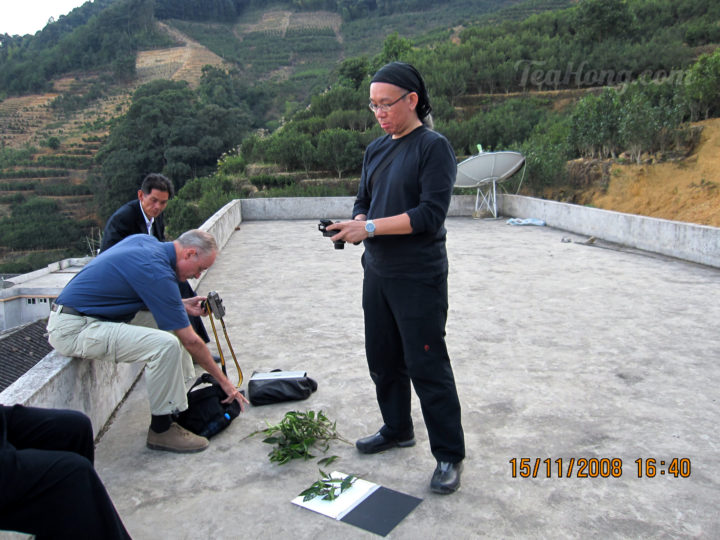
With Hanspeter Reichmuth in a production visit in 2003, when RTHK, the public TV station in Hong Kong was producing a feature story of my tea career.
None other tea categories can challenge oolong as the gran cru of teas. It offers the widest range of taste profiles in tea. In it you can find the most complex and engaging gustation experience. Hanspeter Reichmuth, the retired and renowned Swiss wine critic who switched to tea in the later part of his career, expressed to me during one of the oolong trips, “This is comparable only by some of the finest wines…”
As tea lovers ourselves, naturally we carry by far more selections in oolongs than anything else. We sell what we love to drink, and we firmly belief in this philosophy and are proud of it.
Oolongs are not simply “semi-oxidised” teas

Initial sun-withering, Wudong, the mecca of Phoenix dancong oolong. Freshly plucked leaves are laid under the sun for a couple of hours of withering before they are shade-withered. This is critical in the preemptive triggering of the change of the biochemistry within the leaf cells that is critical in the creation of the aromatic and taste elements through the subsequent enzyme-triggered oxidation process.
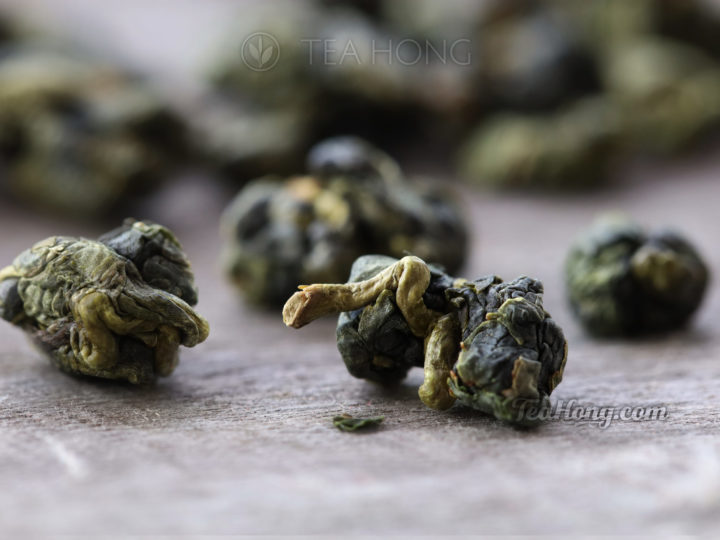
Many vendors and marketeers would like you to believe that “semi-oxidised” teas are oolongs. They are not. Although oolongs are partially oxidised, there are particulars steps in which the unique taste characters are made possible. Such as the tedious and critical step of “rocking of leaves” — yao qing — as seen in the photo below. On the other hand, semi-oxidised teas are produced rather like black teas except with shorter oxidation. Such are lower skill, lower cost processes. A very large proportion of such products are marketed as “oolongs”. Many are even mechanically cut leaves. Don’t be fooled.

Rocking of the leaves, 4 am on one of the harvest days, Wuyishan, Fujian, for the processing of Wuyi yancha oolongs. After the freshly plucked leaves have been sufficiently withered, they are then rocked with various degrees of vigour in sessions with various resting periods in between. The duration of this enzyme-triggered oxidation process can range from 4 to 7 hours depending on the style of the processing, cultivar variety, pluck condition and the environmental condition.
Single batch gems
While the oolongs in most teashops ( be it “boutique” or national brands ) are blends or gangs*, all of our oolongs are single batch productions. Besides keeping the taste quality pure and unique for its variety, it is extremely demanding for all steps along the processing and quality control to deliver a balance palate. It is not only a matter of tea master’s pride, but also the benefit to our customers for accessing the broad spectrum of taste varieties in genuine fine oolongs.

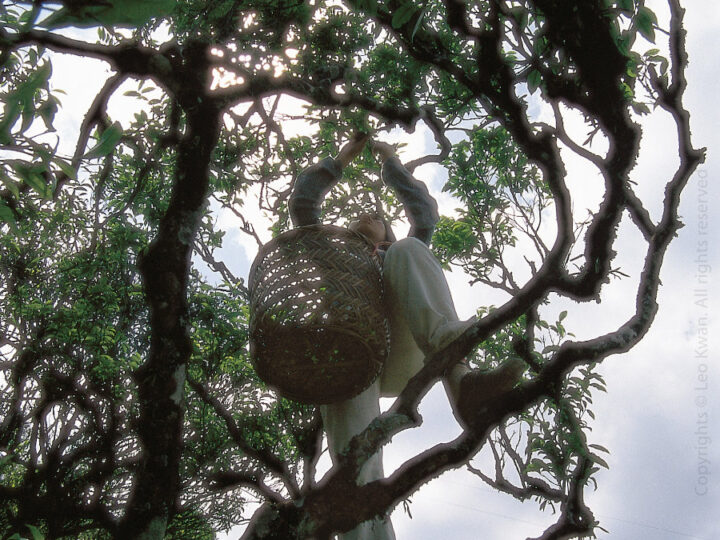
Spring plucking of a tea bush that is a few hundred years old, Wudong, Phoenix (Fenghuang), Guangdong
Fenghuang-shan for Phoenix oolong
Known to some tea-drinkers as dancongs, the Phoenix range is not only the oldest existing form of oolong, but also the most attractive one in terms of taste diversity and complexity. That is also why we have the longest list of this. A few of our exclusive qualities are here for hard core aficionados. These selections demand the drinkers’ skills in both infusion and appreciation. If you are a beginner or casual hobbyist, please try our cost-effective selections. Examples of these include Big White, Black Leaf Special, Phoenix Classic etc. These great value dancongs are so high standard that many serious drinkers include them as favourites. Honey Orchid Supreme and Danhu Old Bush Song Cultivar are pinnacles in the subcategories of classic style and bouquet style respectively. They are what aficionados repeatedly come back for. Of course there are other popular selections — Orchid Literati ( aka Duck Poo tea ), Eight Immortals, Orchid Gratus ( aka Xingren Xiang ), Aura of the Night, Shiguping, etc etc… Phoenix is the line that is closest to our heart.
From the region of Wuyi-shan

Man carrying two baskets of fresh tea leaves back to his home processing shack while the son following. Wuyishan, Fujian
Wuyi oolongs are characterised with a first impression of higher fire. Between higher fire and over-fired there is a fine line. We work closely with all our producers and farmers to optimised the degree of the bake so there is a balance between the individualistic innate taste of each of the selection and the distinct fire character people look for in Wuyi oolongs. The result is a line of finest traditional oolongs, each shines with its own gastronomical distinction. This is a far cry from all those over-baked products you may find elsewhere, including in the very origin. In traditional tea processing, they say a tea is half about the water ( tea juice ) half about the fire. We would like to believe that we are carrying forth this beautiful piece of heritage. The taste quality of our basic grade, such as Cassia Classic, Narcissus Classic, Meizhan Classic etc are comparable to the best in the majority of other online shops. Experienced connoisseurs may also want to try our Red Cloak, Iron Buddha, or Lily Eccentric… and a lot of other not so easily found varieties in our Wuyi line.
Tieguanyin of Minnan

As we climb the hill to one patch of their ancestral farm at the peak, Young Master Wang points at Nanyan, the legendary seat of the first Tieguanyin tea bush.
Tieguanyin is the ultimate Minnan oolong and we offer a small range of it. The individualistic palatial experience of each is a result of the differences in cultivar, region, processing and again, the use of fire. We do not carry such items as ginseng oolongs, osmanthus oolongs, milk oolongs etc, which are mainly produced in Minnan but can be marketed as Taiwan teas. They are low quality products masked with flavouring for profiteering. We’d rather keep our faith in quality rather than in higher profit margin. Then again, we sell only what we love to drink.
Great diversities from Taiwan, the land of beautiful emerald mountains

Closing the stainless steel barrel for deoxygenated oxidation processing in the production of GABA oolong. It is a process discovered by a Japanese scientist and developed in Taiwan into its current processing form. GABA — Gamma-Aminobutyric Acid, is found to be effective “relieving anxiety, improving mood, reducing symptoms of premenstrual syndrome (PMS), and treating attention deficit-hyperactivity disorder (ADHD). It is also used for promoting lean muscle growth, burning fat, stabilising blood pressure, and relieving pain.” ( from WebMD.com ). The substance exists naturally in tea, but this particular processing significantly raises the amount to have observable benefits.
In our Taiwan line, there are great value selections such as the famous Cold Peak (aka Dong Ding), or Tea Hong’s very own Eternal Spring. They are not only easy tasting and great to show off to friends your infusion skills, but also of great quality. There is also the more adventurous GABA Oolong for its unique taste profile and health potency. Our Muzha Tieguanyin is probably the most genuine traditional style tieguanyin one can get in the market today. Diversity is also a hallmark in Taiwan oolongs. There is Oriental Beauty with the highest rate of oxidation in any oolong, which is famous for its involvement of a bug bitten triggered biochemistry that is part of the full body of the tea. On the hand there is the easy and refreshing Jinxuan that is popular amongst younger drinkers, or the very delicate and smooth high altitude oolongs of Wenshan Paochong, or the meticulously deeply oxidised Cedar Creek Classic…
Gongfu tea or the big old teapot
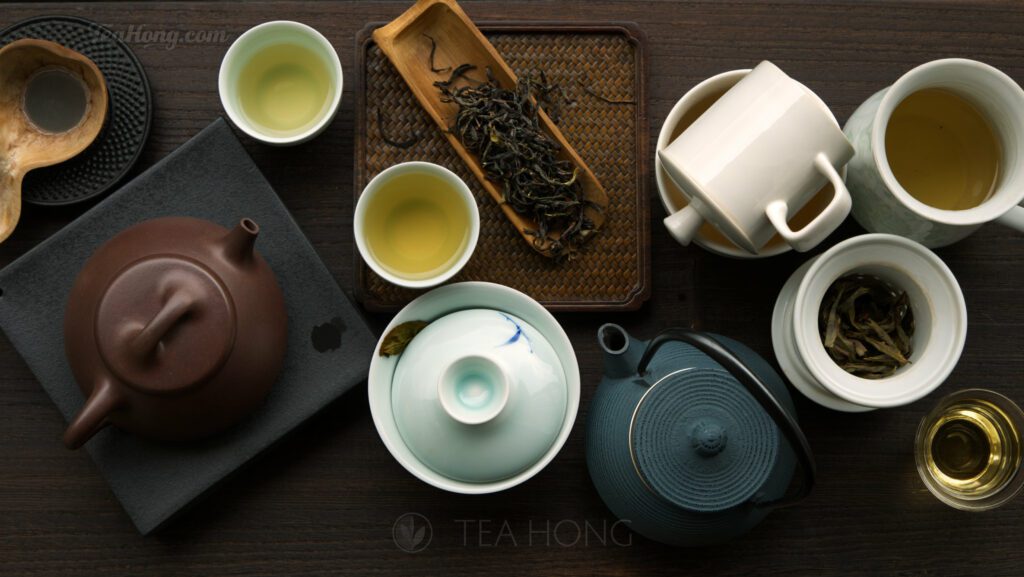
A tea can be manifested very differently under different preparation approaches and variables. This can be most dynamically elaborated in the world of fine oolongs.
All of our oolongs are of at least connoisseur quality. Many are extremely rare. They are naturally the best for carefully prepared in smaller portion, or in the gongfu style. However, that does not mean they are not suitable in the big old teapot, as long as you do it well. A fine cup is a fine cup. It can be strong, medium or light. Large or small. You are the master of your own cup of tea, after all.
Our comprehensive oolong lines would not be possible without the hard work from our farmers and producers. The fruits of their sweat make each of our challenging days bearable, each happy day shine. A fine oolong is not only a great tea, it is Life’s generous dividend for us that is really worth sitting down a while for.


9 varieties of oolongs from our extensive collection of the category. Differences in cultivar, harvesting time, processing style and terroir of each give highly diversified taste profiles that can be manifested through different tea preparation techniques as your daily cup or as a subversive sipping experience.
note: The term gang (Chinese: 併堆 — bing dui) is used amongst Chinese tea producers and traders for putting together different batches of the same variety of tea produced in the same season. Most often the purpose is to produce a larger lot for trading. Unlike blending, where different varieties, regions, and even seasons and years may be involved, ganging of batches are almost always from the same region, same season and using the same tea variety. However, some traders do put together batches from different years to minimise inventory.