

De facto tea for some, loathed by others
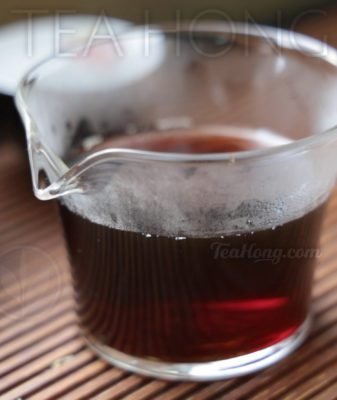
The dark burgundy colour of a standard shu cha infusion
None other tea category is as difficult to explain to a new tea drinker as pu’er. Too many tales have already populated pages and webpages. This is the de facto tea choice for some, but loathed by others. Its taste is unlike those in any other tea categories.
There are two major groups of tea under the pu’er label: shu cha and shengcha. Some translate them as “cooked” pu’er and “raw” pu’er. We prefer to use the romanisation of the original names for clarity of concepts.
Shu cha
Given the right quality, a shu cha yields a deep burgundy infusion which taste can be sweet and smooth with a soft, earthy character, while that of a shengcha can be crystal clear gold, with a body that is bright, sharp and floral. They seem like they are not the same category of teas. Indeed, they aren’t.
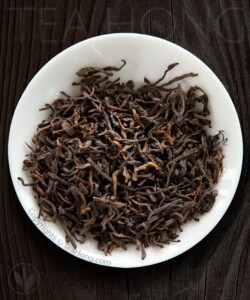
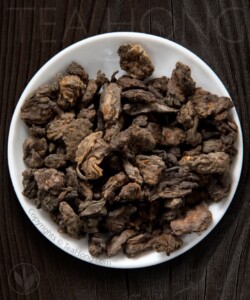
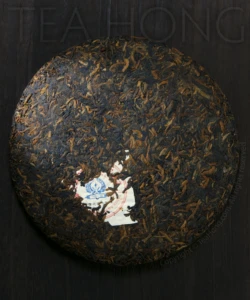
3 examples of Pu’er shu cha
A shu cha is a shengcha after it has turned dark through post-fermentation. This special microbe-triggered processing can be either induced or “natural” through prolonged exposure to air. It is this process that transforms the sun-withered, lightly oxidised tea ( shengcha ) into a post-fermented tea ( shu cha ). They are, therefore, really two categories of teas.
Since induced post-fermentation requires not only a proper setup, but also experienced expertise and systematic management to give safe, high quality products, we work only with people who are the best in this category. That is why our shu cha selections are delicious and great value, as well as meeting strict international phytochemical standards.
Shengcha — loose leaf form
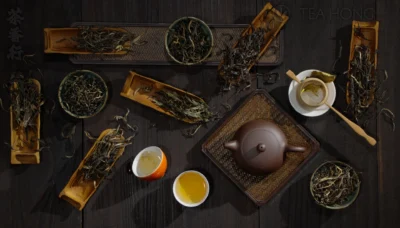
Pu’er maocha — otherwise known as loose leaf Pu’er shengcha — what are they?
A shengcha is rather like a white tea except for a relatively shorter shade withering and a very brief roasting for quick drying. The leaves thus produced used to be collected by other producers to turn into compressed forms or as the material for making shu cha. These leaves, are therefore, materials intended for further processing. In the trade, such a stage of the tealeaves is call a maocha, the pre-finish-processing tea. In recent decades, because of the advancement in logistics, and packaging, such maocha can be accessible for consuming as is, without further processing.
To us, from the understanding of the strong cold energy of such a tea, all maocha items that we offer are properly aged to tone down such energy for the benefits of your qi-energy balance.
Compressed form — cha bing
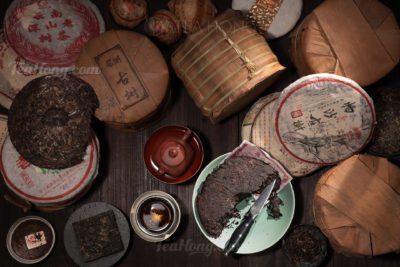
Perhaps the most visible difference in the category of Pu’er is the compressed form, and mostly in the discus shape, the cha bing, with a bracket term “bing cha”.
Historically, teas produced in Yunnan used to be compressed into a discus (aka cha bing or tea cake), a brick, or pendulum form for optimising logistics in trading with nearby foreign countries. The compression and subsequent drying process transform the biochemistry of the leaves and render a slightly different taste profile from the maocha. In the past century this form has been elevated into a connoisseur or even a collector item. We focus our collection in the gastronomic value.
Likely the most versatile of all tea, especially for food pairing
For people who have no preconceived ideas of tea, a fine pu’er is a very nice drink after all. Whether to pair it with almost any kind of food, or a small, strong dark cup of shu cha after the rush of a day, or a sip of a clear crisp shengcha in the drowsiness of the afternoon, you may find in this category a good companion that quietly helps you through the days.
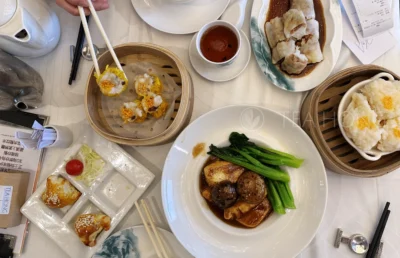
Pu’er — the quintessential food companion tea in Hong Kong, and as adaptable in your local cuisine as well. (Note: when going to a restaurant in Hong Kong, we always bring our own tea, sometimes even our own teapot. Not sure if you can do the same in your home country. Just make sure it is the right quality tea on your own table anyway.)
Blanching
While you may skip blanching in most other teas, it is a critical process in making a good pot of pu’er, especially those matured ones. This applies for both shengcha or shu cha. Blanch it two times if it is a compressed tea, even those naturally occurring compressed tea like Cream of Pu’er. The taste difference in the cup is quite significant with or without proper blanching.