

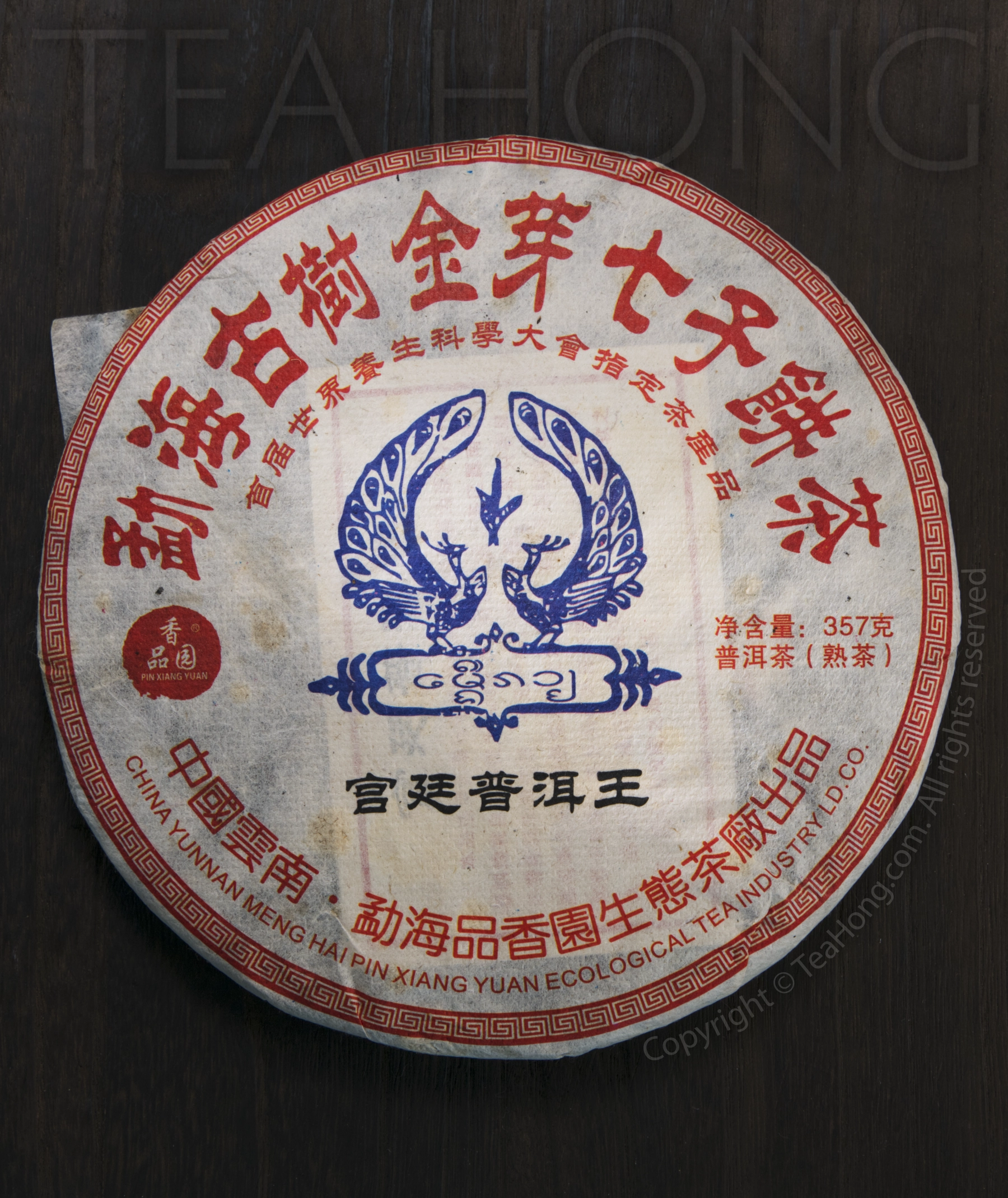

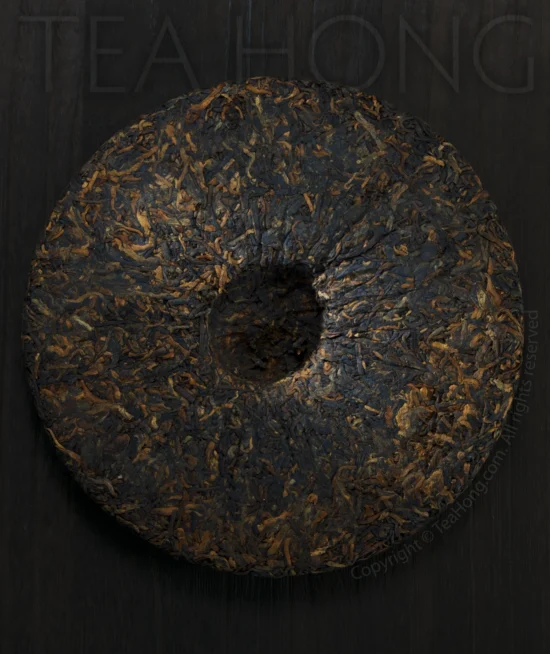
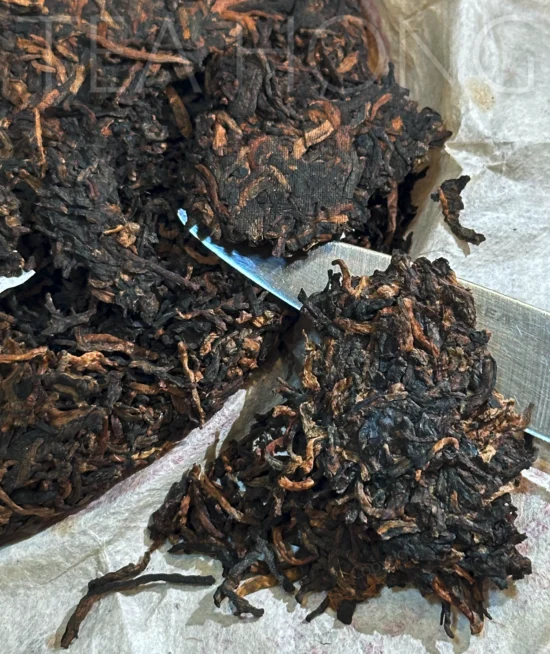
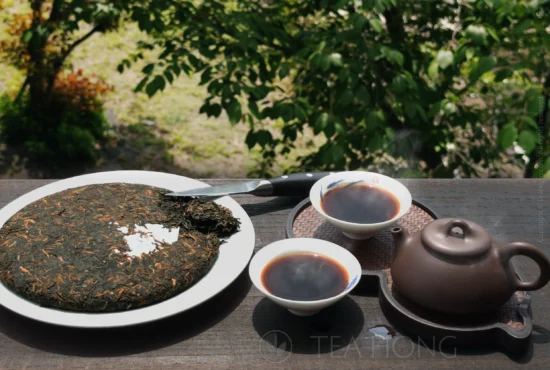
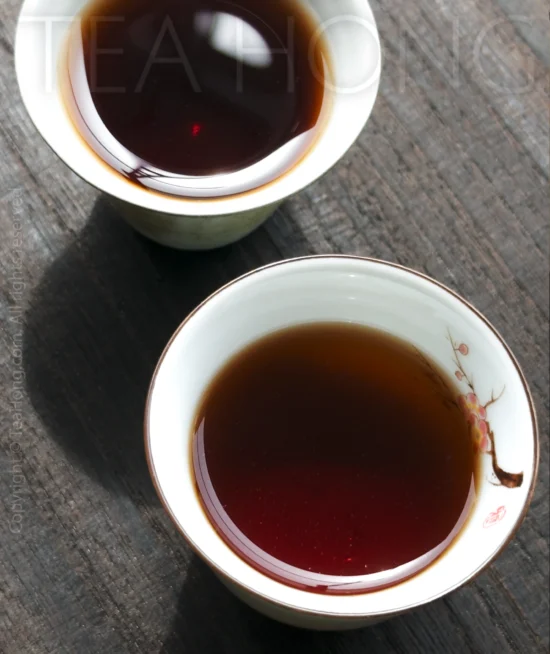
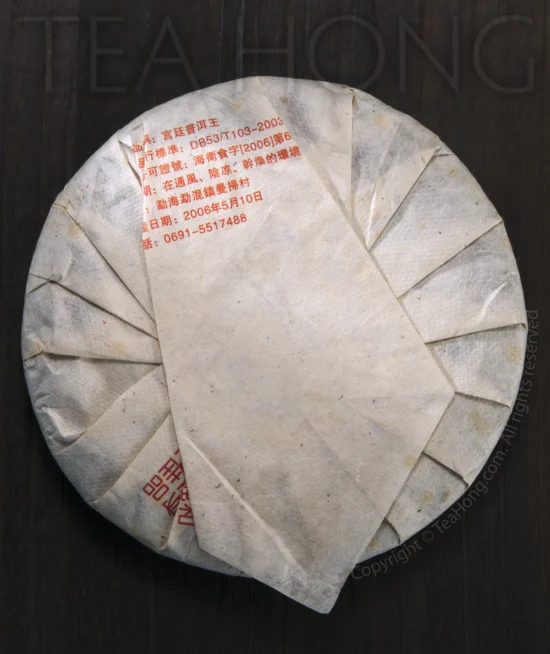
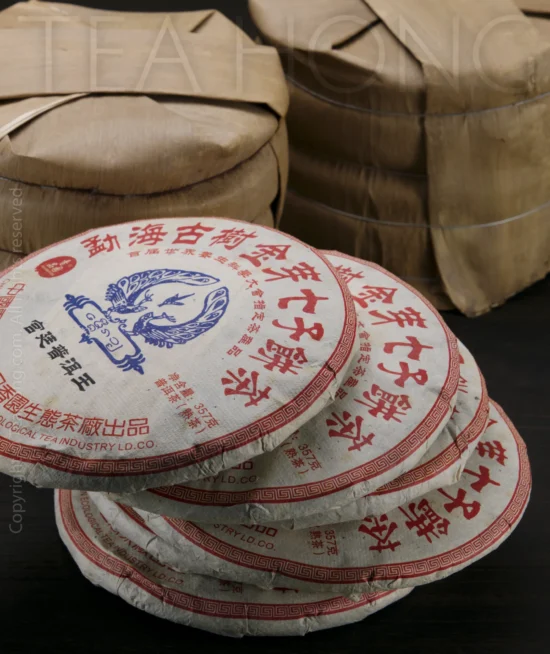
Old Tree Golden Flush 2006, Pu’er shu cha bing, 357g
US$43.0
excluding tax and tariff
勐海古樹金芽茶餅
A pristine origin without the pricetag
Although a mere 15 km away from the much sought after origin of Ban Zhang (班章), Màn Sǎo (曼掃) has a very similar horticultural environment for tea trees. To us, this village in the mountainous Xishuangbanna (西雙版納) region is a great source for tea for its lesser fame that allows for much easier accessibility and and greater values. This fully post-fermented tea is an example. A leaf that has gone through 70+ days (20 days less than some of our other shu pu’er) of true post-fermentation can easily be so mellowed that all its characters pertaining to its unique terroir could have been overly subdued. Yet this Old Tree Golden Flush is still able to tinkle, however harmoniously subtly, with the accents and tones typical of the products from the high altitudes in this southern part of Yunnan bordering Myanmar and Laos. Having been properly baked and amply aged, this TCM neutral-warm tea is not only an adaptable and friendly food pairing tea, but also a submersive experience for your special tea moment.


In stock

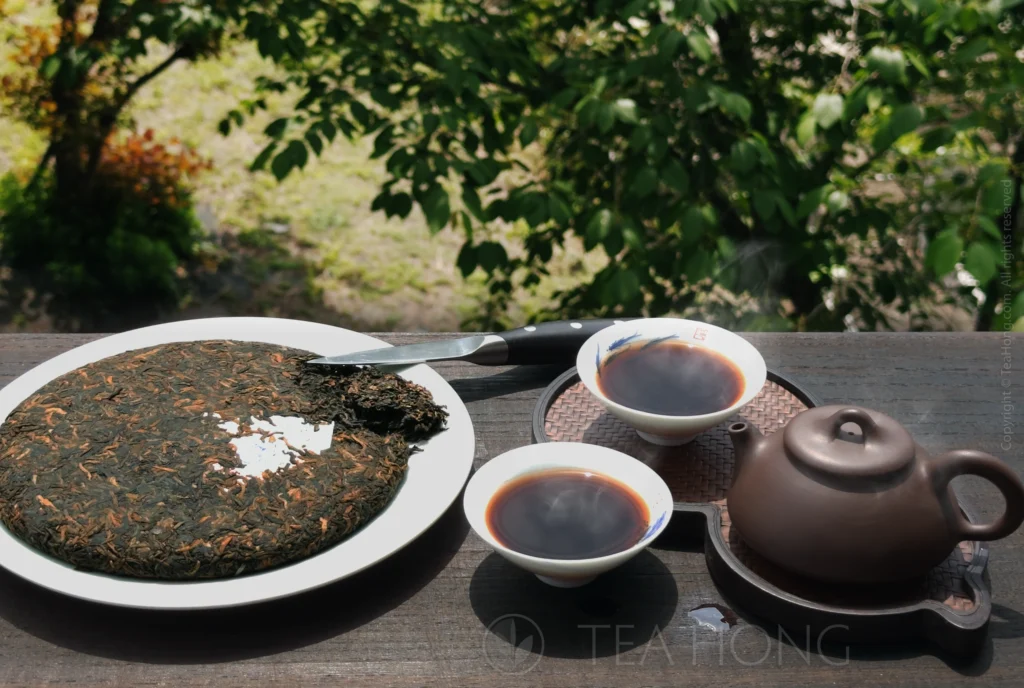
Taking time to infuse well even for a price-efficient tea like this Old Tree Golden Flush makes tea enjoyable not only at the moment you sip it, but also an enjoyable process in itself.
Taste profile
Nose: If you have the experience of strolling through a high altitdue wild subtropical forest after the rain, the aroma of the tea is somewhat similar. Old fallen trees, pretty mushrooms, blooming little flowers, beds of dense moss on rocks. The difference is that the package comes in a warm, pacifying tone. Palate: Smooth, full body with great depth. Velvety texture. Accents of dry longan and Chinese licorice root on a malty, woodsy, and slightly sweet undertone. Tinkles of minerals. Finish: Calming, smoothing, quenching.
Preparation idea
As for all other dark (post-fermented) tea, always use freshly boiled water (100°C) for both blanching and infusion. For a matured compressed shu cha like this, blanching it two times before the first infusion is the best practice. Otherwise, blanch it at least once.
After that, this tea is extremely forgiving. Do it the standard 2g to 100ml water ratio for 5 min, or for a tea nerd like me, 6.5g to 100ml for 1 min. Or even more time.
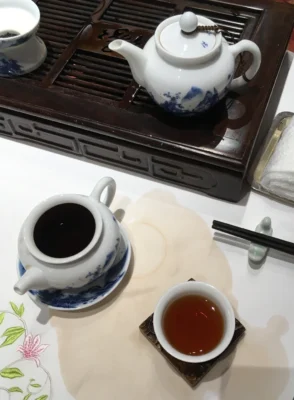
Although they serve a mediocre Pu’er in this highend dimsum restaurant in China, they made a smart choice in choosing an inexpensive porcelain teapot for tea service. Not that it is better for the tea, but easier for them to maintain hygiene in a fast turnaround environment. For your own use, however, you have much more flexibility and should choose an infusion vessel that helps you maximise the taste potential of a tea.
Or in the Hong Kong dimsum restaurant stlyle — throw 10g ~ 15g into a family size teapot for indefinite amount of time while continuously refilling with hot water. This is not recommended though, but this tea is forgiving and can still render an acceptable cup.
Choosing a proper infusion vessel
For extracting the best of this tea, employ a smaller infusion vessels between 80ml to 250ml, using the standard or the gongfu approach can render a far more satisfying cup than that restaurant lazy style. Use a lower density Yixing teapot — old style zisha — for optimum results. Otherwise, an unglazed stoneware can still render a better result than porcelain.
Yet a porcelain one is still comparatively much better than a glass option. If you have to choose glass, use one that has a porcelain, or thick glass infuser inside, or a double wall one for slightly better heat retention.
If you have to use a metal one, a thermal works better than a normal silverware. Avoid those thin single layer style that they use in some restaurants. If for some reason you need to use a tetsubin as the infusion vessel — which is originally meant to be a water kettle, not teapot — preheat it well first.
Storage
We have stored this tea under our own controlled environment for proper aging for the pristine condition of this product. Once you have broken the cha bing, it is advisable to keep the wrapping paper separately. Keep the discus in the foil bag that we ship to you with, or in any other similarly air tight container. Always touch the naked discus wearing gloves to make sure nothing else grow on that solid mass during storage.
Additional information
| Shipping Weight | 510 g |
|---|---|
| Net weight: | |
| Tea category: | |
| Class: | |
| Recommendation: | |
| Origin: | |
| TCM character: | |
| Infusion color: | |
| Vintage |
 Old Tree Golden Flush 2006, Pu'er shu cha bing, 357g
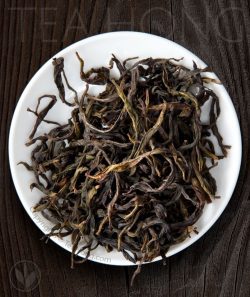
Phoenix Classic, dancong oolong, 40 g
Fenghuang | Phoenix, Floral Aromas, Fuller Bodies, Neutral Energy, Oolongs, Tea鳳凰蜜香 白葉單欉
Fenghuang Baiye:
Before Chaozhou Guest Hotel was privatised, this officially appointed lodging for visiting high-ranking government officials used to serve only classic style Phoenix oolongs in all of their restaurants*. Tea Hong’s Phoenix Classic could well be the special quality in the large white porcelain teapot on the breakfast table sitting next to bamboo steamers holding finely crafted dim sums for the privileged guests. All fine and quintessential characters of the classic Phoenix oolong can be found in this tea — Sweet, fruity, and lively with notes of peach and dried longan, lychee and sweet potato. A proud heritage of Guangdong oolong.


 Net weight: 40 g (1.4 oz) in Kraft-alu pack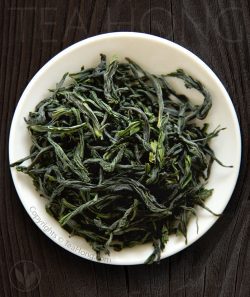
Luan Guapian Traditional, handcrafted green tea, 50 g
Cold Energy, Green teas, Huangshan & Anhui, Lighter Aromas, Milder Tastes, Tea珍品、六安瓜片
The sweetness in a unique bitter green
Unlike other green teas that are prized for plucking early in Spring, leaves of Da Guazi need to be quite grown and spread in order to make a fine Luan Guapian. This gives the proper biochemistry that yields enough pectin for the tea's signature velvety texture and unique bitter character. This is possible only with a special local cultivar — Da Guazi — Big Melon Seed, hence the funny name. Some say it takes enough experience in life for a person to appreciate the bitterness in a food or drink. We think maybe it only takes a person with a truly sensitive taste faculty to understand and prize such a wonderful tea.

 Net weight: 50 g (1.8 oz) in Kraft-alu pack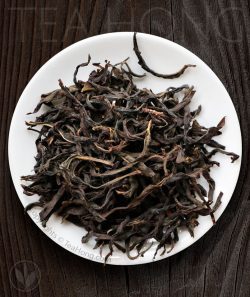
Orchid Gratus, Phoenix dancong oolong, 40 g
Fenghuang | Phoenix, Floral Aromas, Fuller Bodies, Neutral Energy, Oolongs, Tea烏崠 鋸朵仔 ( 杏仁香單欉 )
Wudong Xingren Xiang
For people who like classic style Phoenix but desire something more mellow than Honey Orchid, Orchid Gratus offers a taste that is as full-bodied. It is balanced with as subtle a warm and slightly sweet aroma. Not only is this a great choice for the veteran tea connoisseur who seeks peace in the cup, but is also a bridge between softer oolongs and the more vibrant world of taste in Fenghuang Dancong.


 Net weight: 40 g (1.4 oz) in Kraft-alu pack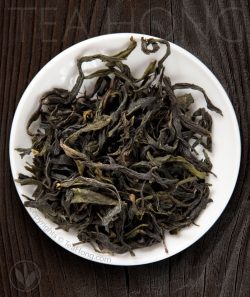
Shiguping Wulong, rare Phoenix oolong, 40 g
Fenghuang | Phoenix, Fuller Bodies, Lighter Aromas, Neutral-Cool Energy, Oolongs, Tea鳳凰隱世珍品 極限量 石古坪烏龍
Rare Indigenous Cultivar:
To us, offering the extremely rare Shiguping Wulong is not a challenge enough. We think we should give you the best of its kind. Trekking further deep into the mountain above the elusive main village of Shiguping, we found the patch of land which the locals called Liao-xi-ya, where it all began. The tea is softer, yet fuller and even more complex than that in the main village. The very original Shiguping Wulong*, as highly acclaimed by the man who devoted all of his life in advocating oolongs of Phoenix, the 74 years-old tea specialist Huang Bozi.


 Net weight: 40 g (1.4 oz) in Kraft-alu pack
Reviews
There are no reviews yet