

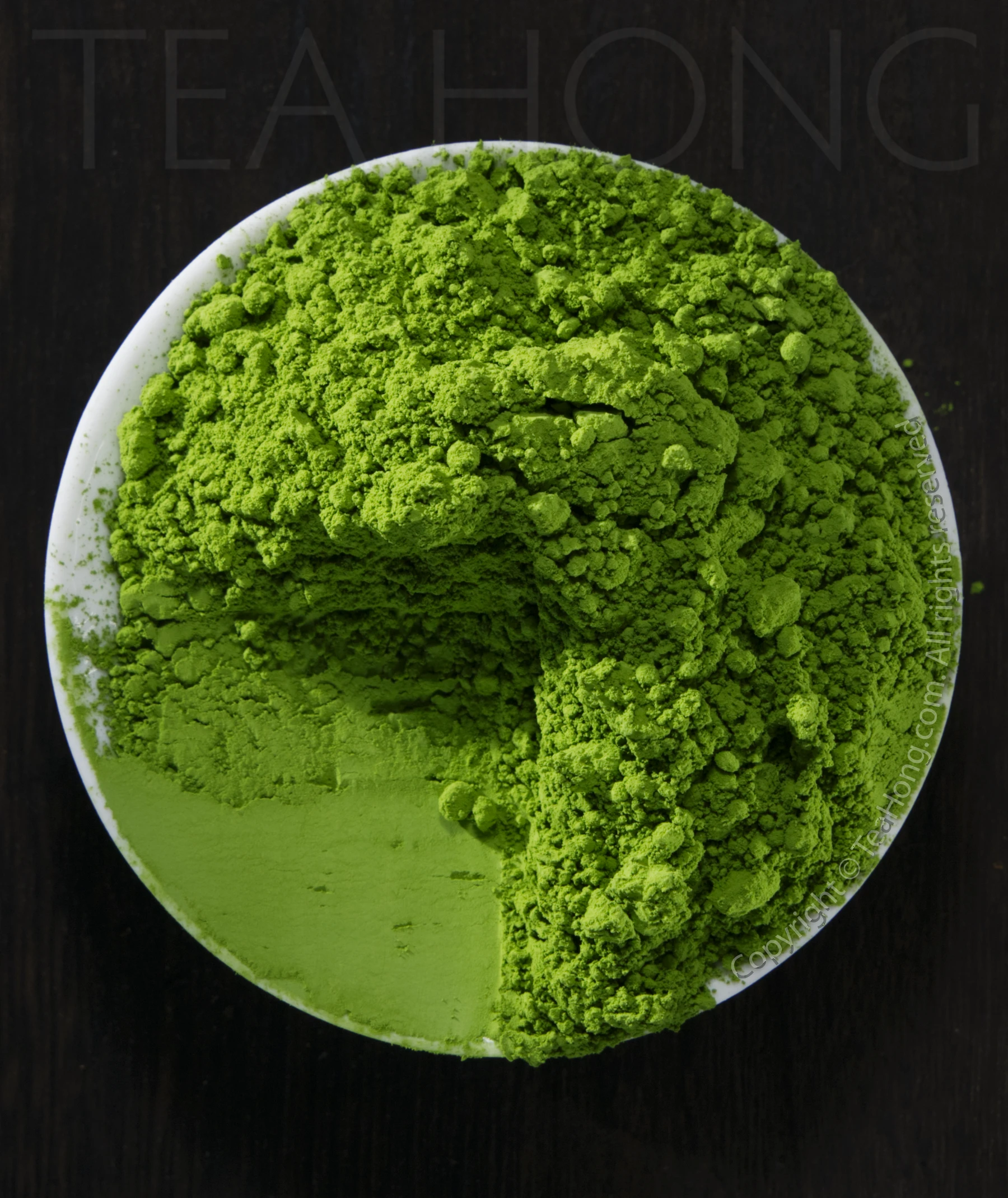
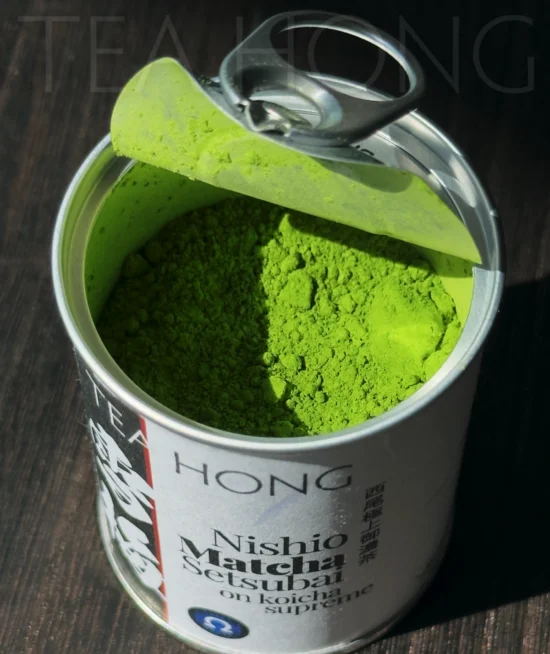
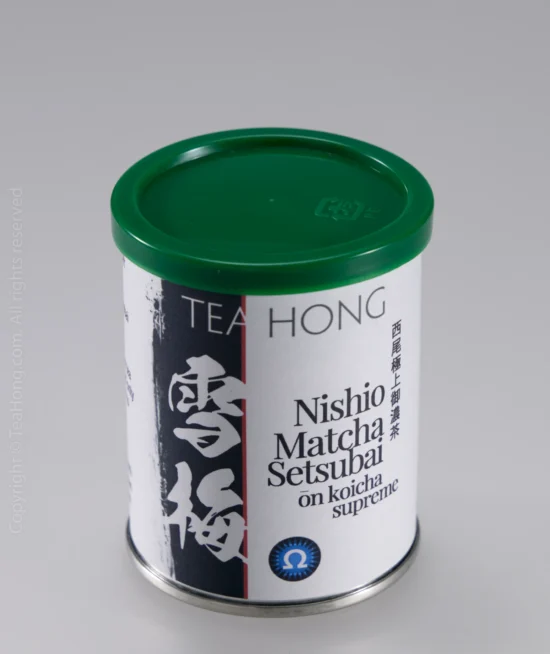
Nishio Matcha Setsubai, Ōn Koicha Supreme, 30 g
US$39.5
excluding tax and tariff
西尾 極上御濃茶 雪梅
Plum blossoms in the snow
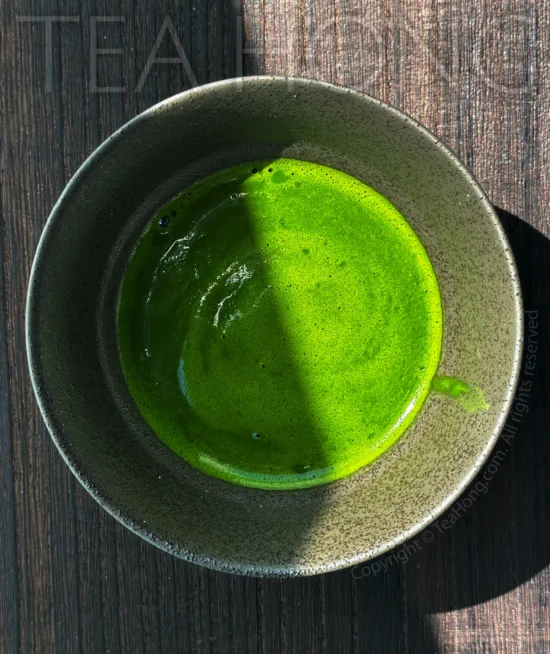
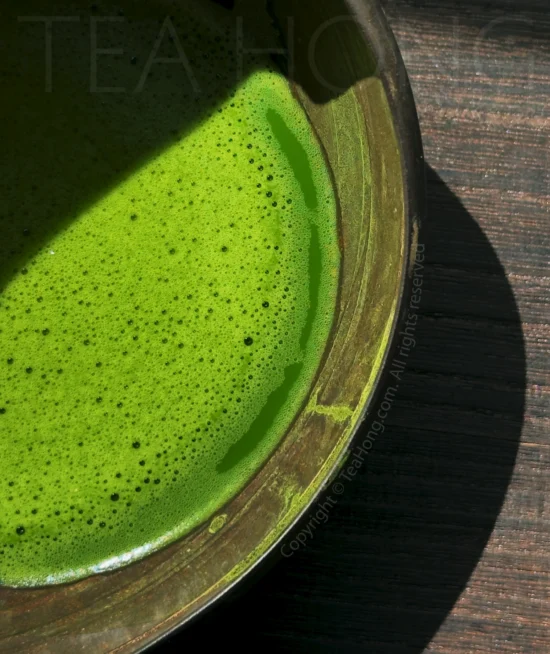
In the southern tip of Aichi prefecture before reaching the Mikawa Bay connecting to the Pacific Ocean, there is a small region that is known as the matcha capital amongst Japanese tea professionals — Nishio. A family farm which began tea production here since the end of 19th century is still thriving here. Two young cousins now run the setup: one oversees the tea farm, the other in the grinding facility. We were not convinced until we were each served with a small chawan of their koicha — the strong serving style as in Omotesenke おもてせんけ tea ceremony — so there was no hiding behind the foamy texture as in usucha, nor the dairy distractions as in matcha latte. When a tea is delivered in such a dense package, every bit of it is clearly revealed. We were struck immediately by its distinctive character: a refreshing “sea character” with a complex, engaging taste profile that is profoundly different from all the other matcha we have had from other regions. To us, it is this uncompromising insistence on its own strong character, rather than following trends toward softer, milder tastes, that deeply resonates.
Introducing the best product from the Matcha Capital of Japan, Nishio Matcha Setsubai. Like the plum tree that blossoms even in the snow, a tea with a steadfast spirit that has won our respect.



Net weight: 30g (1.06oz) in pull-lid tincan
In stock
⇣Click to see related items
-
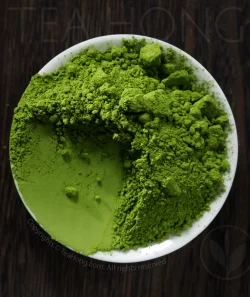
Uji Matcha Tokumukashi, ceremonial master grade, 30 g
Cold Energy, Fuller Bodies, Green teas, Japan, Lighter Aromas, TeaUS$27.0
Uji Matcha Tokumukashi, ceremonial master grade, 30 g
Cold Energy, Fuller Bodies, Green teas, Japan, Lighter Aromas, TeaUS$27.0宇治 御濃茶 徳昔
Traditional stone-ground matcha
You do not have to be a Japanese tea master to enjoy this exceptional matcha, nor reserving it only for that serious tea ceremony. Simply get a respectable tea bowl, whip it optimally, and relax with the gently roasted, consoling fresh aroma. Roll its full, layered and yet subtle umami taste in your mouth. Let that few seconds of sipping transcend into a peaceful hour, or at least a window for serenity, even at a clustered desk or a jammed kitchen table. Just the whipping of that pure, luxuriously intense greenness of the tea is mesmerising in itself. The tradition of competing to yield the most tasteful cup of the purest and most intense colour is still valid and as meaningful today as it was 12 centuries ago. This stone-ground production continues this precious heritage. However, the centuries of horticultural evolution coming to the hands of our tea masters in Uji give us a superb quality that is possible only today, and that would be envied by daimyos feudal lords and their chajins tea masters. Produced in Higashiyama by a team led by Shimada sensei, a regular winner of Uji Tea Quality Competition under Japan’s Ministry of Agriculture, Fisheries and Forestry Award, Tea Hong’s Uji Matcha Tokumukashi is a top choice as a koicha (濃茶) for chaji (aka formal chado tea ceremony). For us, it is a natural choice for enjoying a finest taste in green tea.
 Net weight: 30g (1.06oz) in double-lidded tin
 -
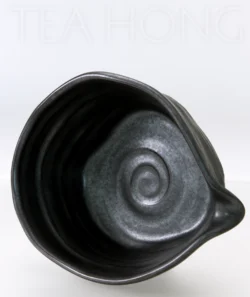
Minoyaki chawan: Black Spout
Chawan, TeawareUS$37.0美濃焼 片口抹茶碗 — 黒
Kiln lineage: Minoyaki Bowl capacity: 300 ml Bowl diameter: 15.7 cm / 13cm Bowl height: 7 cm Material: glazed stoneware Net weight: 429 g Origin: Gifu, Aichi, Japan Packing: Cushioned carton box*note: the photo with a hand holding the tea bowl is intended for the viewer to relate to the size of the piece. It is not meant as a reference for any proper handling style.
-
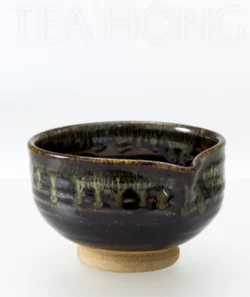
Kasengama katakuchi chawan: Flowing Glaze
Chawan, TeawareUS$41.0花泉窯 天目流し片口抹茶碗
Kiln lineage: Kasen-gama Bowl capacity: 340 ml Bowl diameter: 12.8cm Bowl height: 7.2 cm Material: glazed stoneware Net weight: 409 g Origin: Hasami, Nagasaki, Japan Packing: Cushioned carton box*note: the photo with a hand holding the tea bowl is intended for the viewer to relate to the size of the piece. It is not meant as a reference for any proper handling style.
-
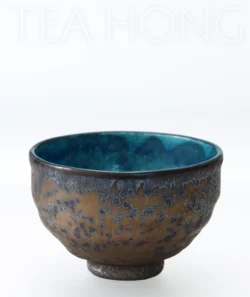
Minoyaki chawan: Two Colours
Chawan, TeawareUS$18.0美濃焼 黒土塗分けブルーマット抹茶碗
Kiln lineage: Minoyaki Bowl capacity: 400 ml Bowl diameter: 12 cm Bowl height: 7.7 cm Material: glazed stoneware Net weight: 294 g Origin: Gifu, Aichi, Japan Packing: Cushioned carton box*note: the photo with a hand holding the tea bowl is intended for the viewer to relate to the size of the piece. It is not meant as a reference for any proper handling style.
-
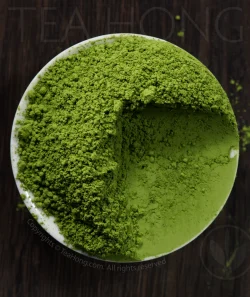
Uji Organic Matcha Sasameyuki, premium ceremonial grade, 30 g
Cold Energy, Fuller Bodies, Green teas, Japan, Lighter Aromas, Organic teas, TeaUS$24.3
Uji Organic Matcha Sasameyuki, premium ceremonial grade, 30 g
Cold Energy, Fuller Bodies, Green teas, Japan, Lighter Aromas, Organic teas, TeaUS$24.3宇治 有機 抹茶 細雪 (濃茶)
The best tasting organic matcha we have sampled
While there is no shortage of organic products in the market, getting one that offers the right taste is the most difficult part. That’s why we focus our effort in the mecca of top quality Japanese tea — Uji — to satisfy the different needs of different patrons. While a true connoisseur would want to indulge in the pure and rich flavours typical of a finest matcha, a Zen drinker needs a medium to open windows to the inner soul through the intricate yet solid presence of a tranquillising aftertaste. And then there are those who just want a top quality as their drink ingredient. The patrons in a most exclusive hotel in London seem to agree. We send more of this tea to their discretely beautiful tearoom and cafe than any other varieties. Tea Hong’s Uji Matcha Sasameyuki is the best quality organic production from the same tea master team who directs the quality of our top master grade Uji Matcha Tokumukashi. Their production facility in Higashiyama in Uji is certified for the strictest international food safety standard FSSC22000, and for organic production by Japan Organic and Natural Foods Association (JONA) under the Japanese Agricultural Standards (JAS).
 Net weight: 30g (1.06oz) in double-lidded tin
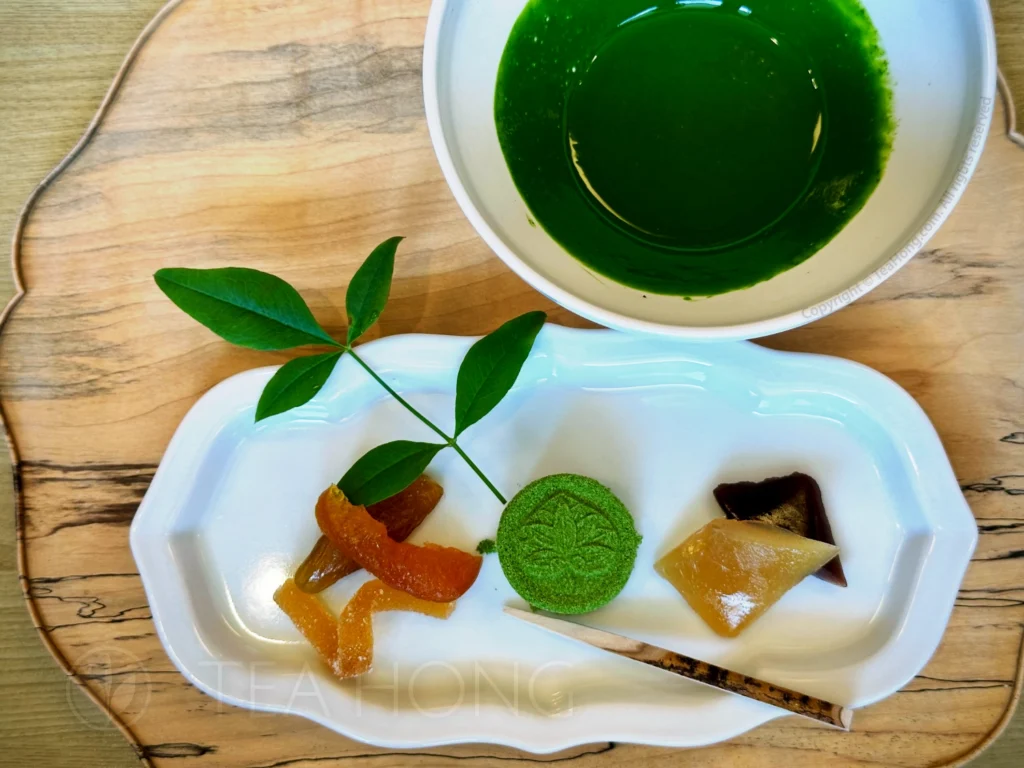
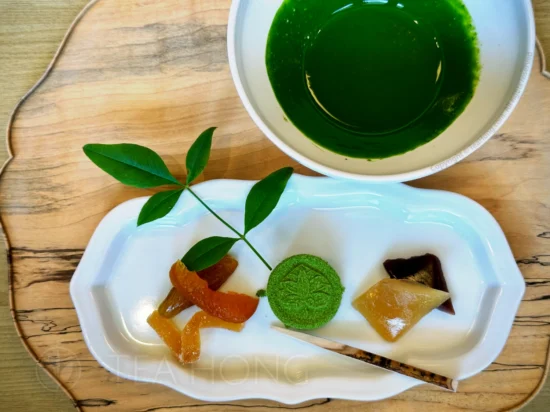
The most delicious way to enjoy this exclusive matcha is preparing it in the koicha style, but not necessarily in a tea ceremony. A few simple tea snacks with it would make any casual tea time a memorable one.
Taste profile
Nose: Brisk tones of the breeze of the sea over roasted nori and hijiki seaweeds on an undertone of breadcrust, soda cracker and tinkles of minerals. Palate: Lively, full body in an impactful umami overtone with accents of roasted greens, seaweeds, grains, nuts, and minerals. Finish: lingering umami and mouth-watering.
Preparation suggestion
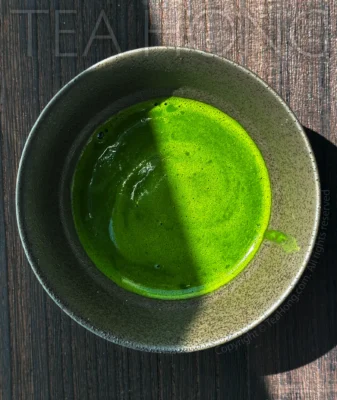
Another great way to enjoy this supreme quality Nishio matcha is prepare it in our recommended semi-koicha style.
This is a great choice if you practice Omotesenke style tea ceremony. We have attended some such occassions and have yet to see a tea as good as this one. We think that intense style is, more usefully, most enjoyable for a casual teabreak.
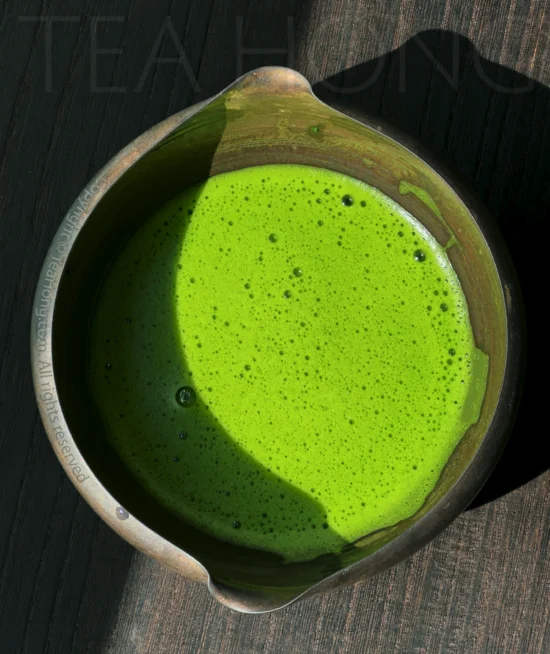
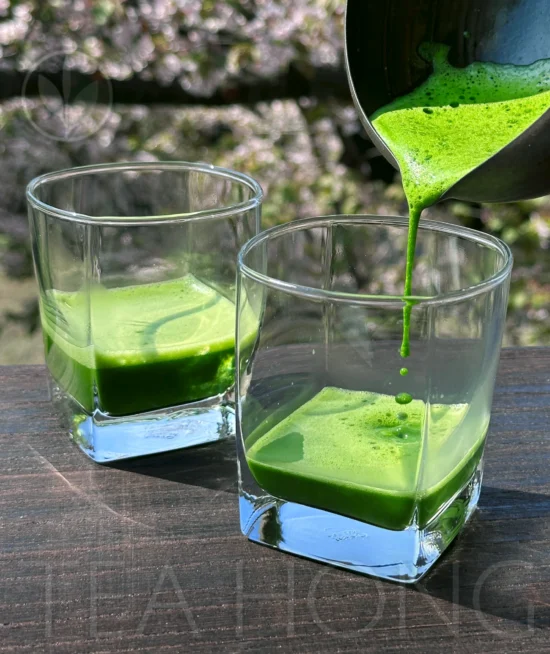
However, if you are not upto that kind of intensity yet, try an intermediate version that we call as a semi-koicha: 3g of matcha to 80ml of water at 70°C. Try not overly foam it and enjoy it like an espresso, or pour it into a glass like a good scotch, without the rocks, preferably.
Such great quality, not to mention, is ideal for ushucha or your hot or cold latté. Don’t spoil it with any sweetener, though. Let its great taste smooth your soul.
Additional information
| Shipping Weight | 40 g |
|---|---|
| Net weight: | |
| Tea category: | |
| Class: | |
| Origin: | |
| TCM character: | |
| Packaging: | |
| Infusion color: | |
| Vintage |
1 review for Nishio Matcha Setsubai, Ōn Koicha Supreme, 30 g
Customer photos and videos
 Nishio Matcha Setsubai, Ōn Koicha Supreme, 30 g
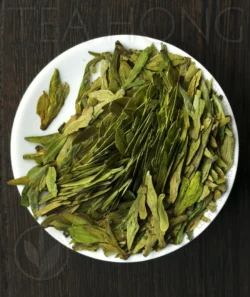
Longjing Traditional Supreme, hand-roasted green tea, 40 g / 70 g
Denser Aromas, Fuller Bodies, Green teas, Neutral-Cool Energy, Tea, Zhejiang經典極品 頭採杭州龍井
Mastery in wok-roasted green tea
The special taste profile of a classic Longjing demands not only a fine harvest from a genuine pedigree, but also the mastery of hand-roasting the leaves. To attain such a skill takes the willingness to endure years of hard practice*. On top of that, a fine Longjing is perhaps the most sought after tea in its native market that is China, and there are people there that are willing to pay thousands for half a kilo of this tea. As a result, good roasting masters are in high demand. A good master producing with top quality harvests is even more rare. To secure a genuinely high quality is therefore a very challenging task. More so at the accessible price we are offering at. Tea Hong's Longjing Traditional Supreme is a proud representation of the best quality of this precious craft, a taste that would have won nobles and mandarins in their tea competition, and when the Qing Emperor Qianlong was still young and flamboyant, and crazy about this tea. Two pack sizes available: 40 g (1.4 oz) and 70 g (2.5 oz) Please check an option below:


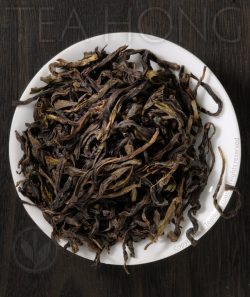
Honey Orchid, Phoenix dancong oolong, 40 g
Fenghuang | Phoenix, Floral Aromas, Fuller Bodies, Neutral Energy, Oolongs, Tea鳳凰單樅、烏崠蜜蘭香
Milan Xiang Dancong:
The fine mastery that produces Tea Hong’s Honey Orchid has to be coupled with select first flush harvests from high grown tea bushes in order to deliver the kind of quality only a restricted circle of tea aficionados have known and kept to their secret. The overall production volume for such quality in the whole Phoenix region is only a few thousand kilos after all. Most will go to local elites, and the rest to the few hardcore Phoenix oolong fans that are also tea merchants, like us. This tea is also available in a small portion as a part of Tea Taster’s Box: Nine Oolong Samplers.


 Net weight: 40 g (1.4 oz) in Kraft-alu pack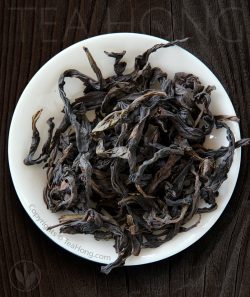
Narcissus Classic, Wuyi yancha oolong, 40 g
Denser Aromas, Fuller Bodies, Oolongs, Tea, Warm Energy, Wuyi-shan武夷、正岩水仙
Dark Rock Shuixian:
This tea may have the same name as some low quality tea used in dimsum restaurants but it certainly tastes differently. It is the ORIGINAL Shuixian, the famous oolong that grows on dark rock cliffs in the depth of Wuyi Mountains. Narcissus Classic, like most other deeper baked oolongs, goes well with a wide range of cuisines and desserts and is a great digestive. Also an adaptable tea for preparation with other ingredients, such as ginger and raw sugar, and a safer tea for the weaker stomach.

 Net weight: 40 g (1.4 oz) in Kraft-alu pack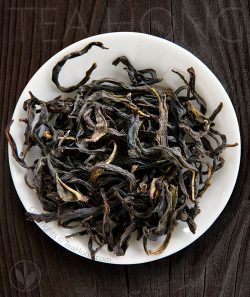
Black Leaf Special, Phoenix dancong oolong, 40 g
Cool Energy, Fenghuang | Phoenix, Floral Aromas, Fuller Bodies, Oolongs, Tea鳳凰單欉 上品大烏葉
Fenghuang Da Wuye:
If classic Phoenix oolongs are too sweet, and bouquet ones too florally aromatic for you, Tea Hong’s Black Leaf Special maybe your cup of tea. It is produced from a new cultivar developed for maltiness and complexity in taste. A very different oolong from the rest. Our special selection is harvested from higher altitudes near the oolong mecca that is Wudong.

 Net weight: 40 g (1.4 oz) in Kraft-alu pack
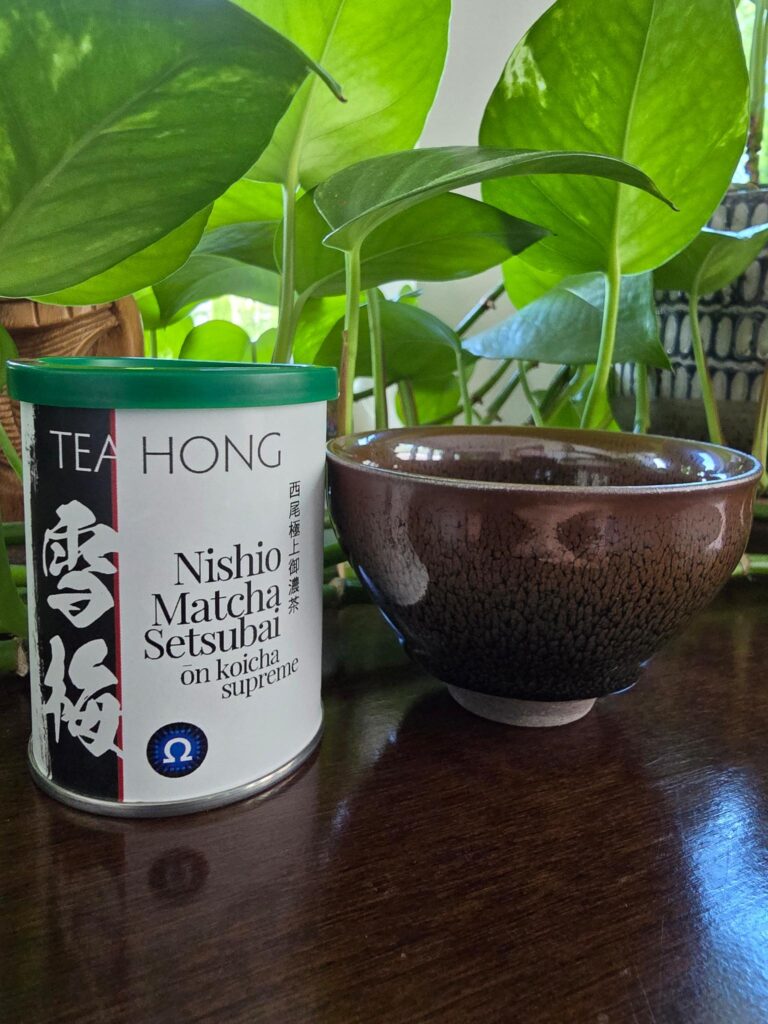
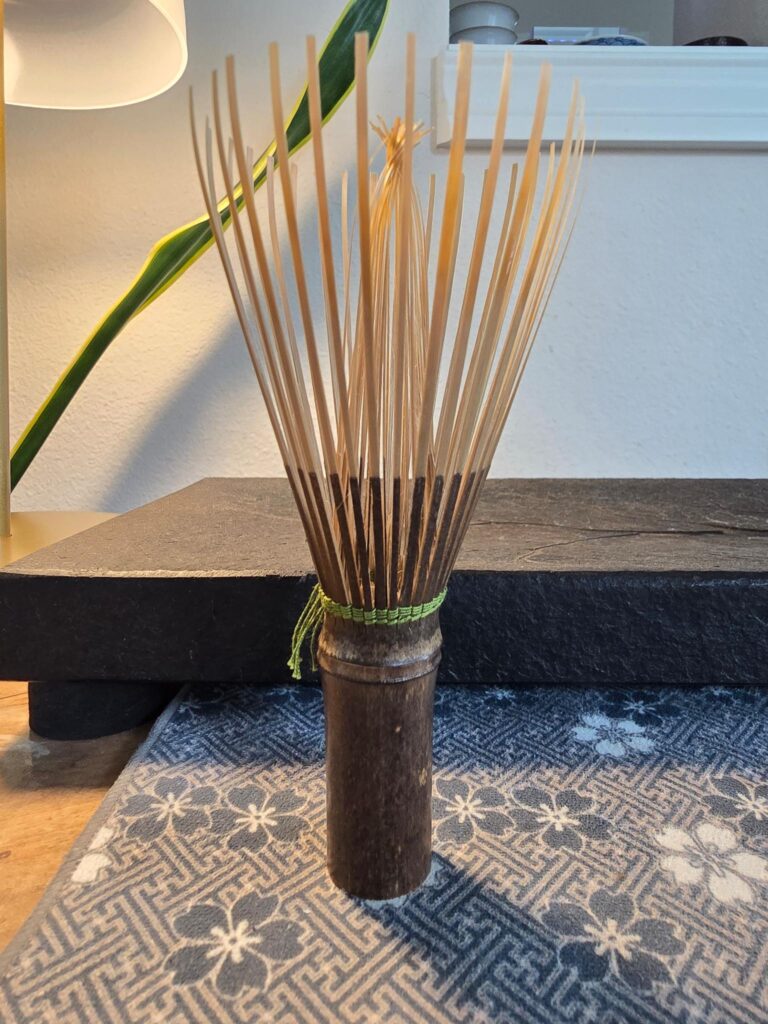
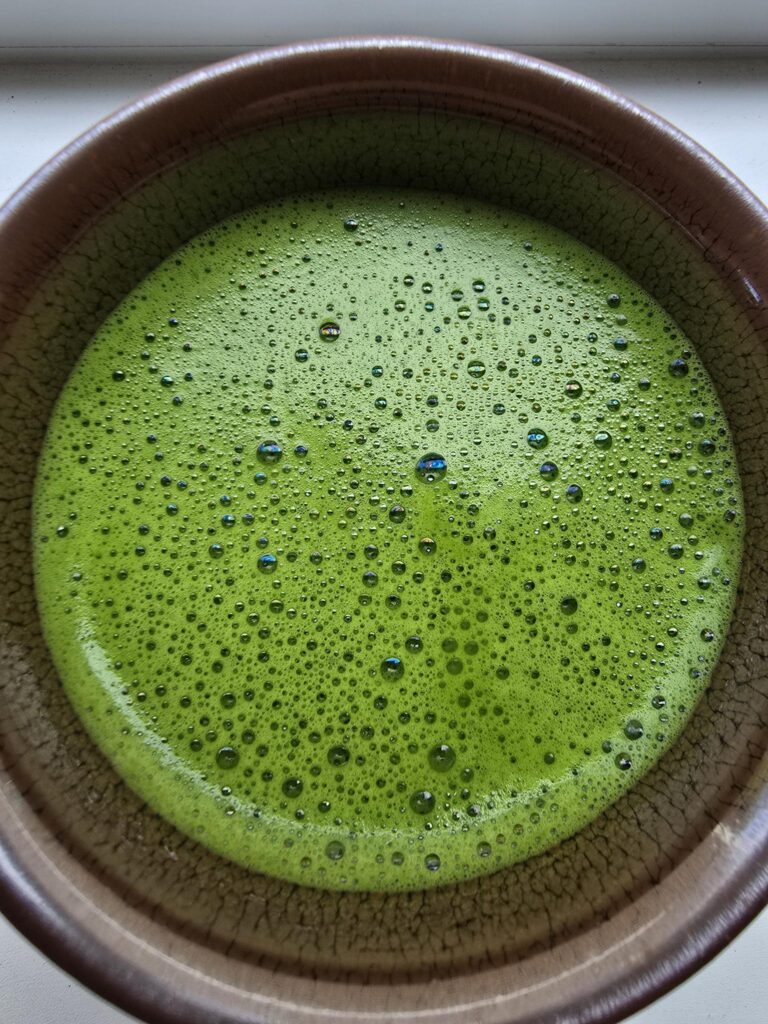
A very enjoyable matcha with a strong personality, as mentioned in the description. I was inspired to get a new whisk for koicha-style so that I could experience Setsubai in its full glory – and I’m glad I did.
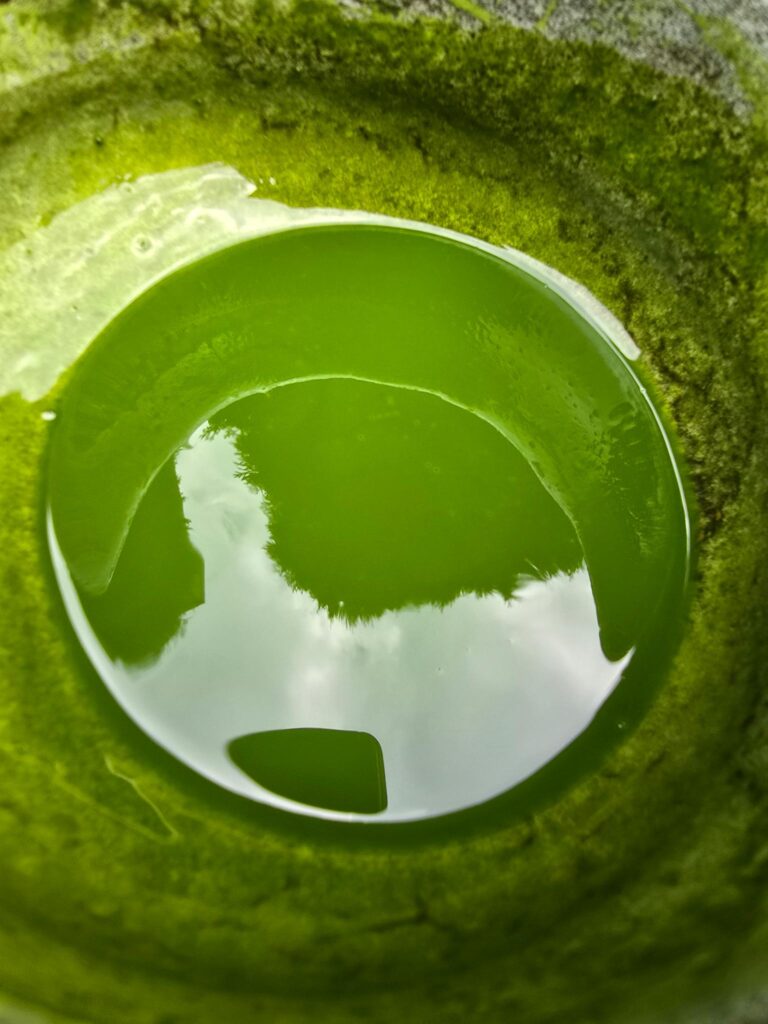
4 grams gently kneaded in 40 grams of water using a Matsuo-ryū naka-araho whisk renders quite an intense experience, to say the least, with dense yet vivid flavors that lean towards earthy, brothy, seaweed, and mushroom-like, rather than green or grassy.
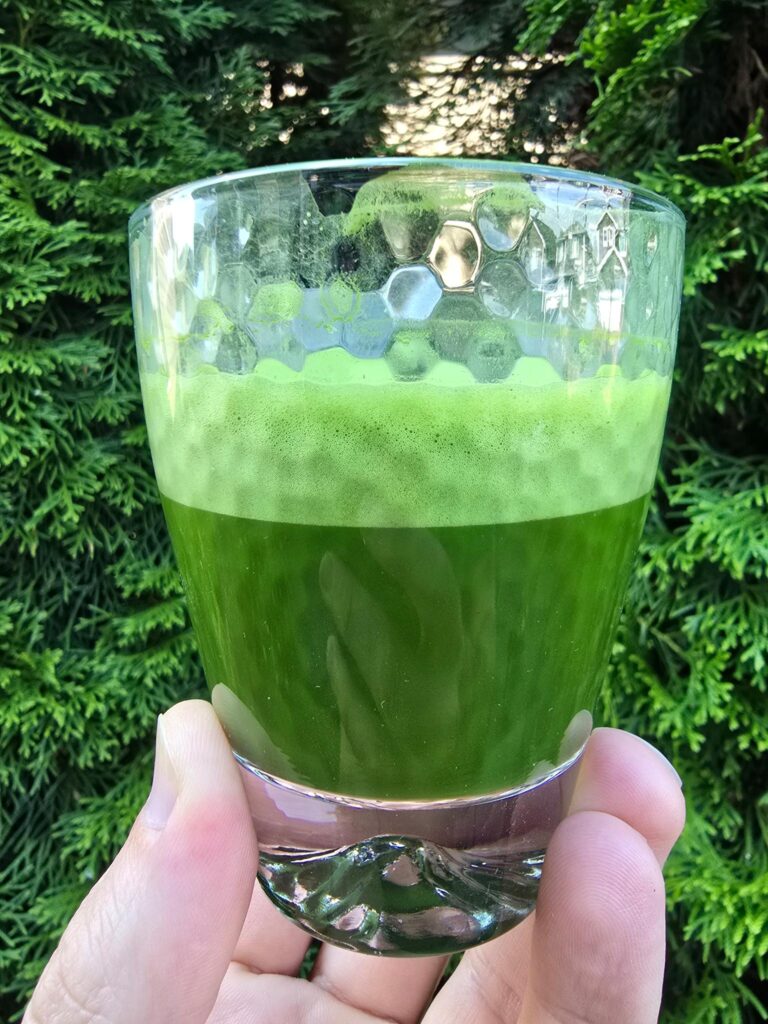
The interplay between the strong umami and persistent briny qualities makes this one worth savoring, regardless of if it’s kneaded flat, whisked finely, or dare I say foamed aggressively?
Although I continue to learn and practice with a 1:10 ratio, I find myself gravitating towards 1:20 and using 5 grams of matcha in 100 grams of water. I get a really nice, clean, subtle and neutral note of persimmon fruit that seems to hold the composure of this entire flavor profile together.
Even at 1:50 and beyond, the flavors and personality of this tea come through despite them being relatively thinned out initially. The flavors stack in the background and eventually come to the forefront, planting themselves firmly on the palate. It’s nice to see matcha with this kind of torque.
I’m on my second tin and I don’t think it will be my last.