

Black tea like it used to be. Before industrialisation. Before additives.
We are not happy with English Breakfast or Earl Grey, whatever brand. Not even that Darjeeling with the British Crown endorsement. Black tea should taste good. Like it used to be.
Black tea once altered the beverage habit of the largest Western empire on earth, changed the course of human civilisation, triggered the Boston Tea Party that led to the founding of the USA, bewitched one of the first national commercial espionages executed by Robert Fortune, created the world’s largest trading deficit that ultimately caused the Opium Wars, which gave birth to the once most uniquely beautiful place that was Hong Kong, and also laid the ground for the fall of the largest empire in the East. It was a alluring drink.

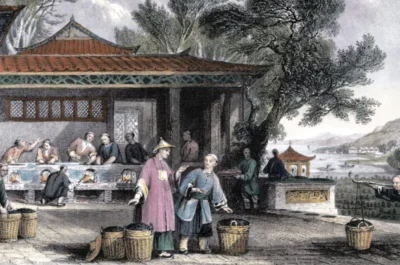
Tea packing, Canton, China, 1820. This picture is one amongst a few series of similar trading themes of the time commissioned through the 13-Hongs, the exclusive export body in China at that time. Notice in the lower left foreground a British is negotiating with a Chinese merchant while workers are busy packing tea in wooden crates, stamping on the leaves such that the crates can contained the highest weight of tea, while breaking the leaves and sacrificing quality — a way to maximise the cargo weight of the English clipper, a way by the English merchant to minimise the transportation cost. Picture clipped from the Tea Guardian: Black tea — origin & production
In another painting titled “Tea Buying” by an unknown foreign painter also from the early 19th century, where in the background tea is still being processed, it is obvious that the finished products are not stamped upon for the sake of lowering transportation cost
Yet after commoditisation through industrialisation and continual lowering of production cost for higher margins, it has a become a grocery item of broken dried leaves in a despicable bag, often adulterated with various additives, fruit bits, dried flowers, or other ingredients hidden behind fancy names, to cover up the poor original taste of poor production, poor storage and poor packaging. And for ever higher profits.

Tea farmer’s boy
Red Jade tea farm, Nantou, Taiwan
However, the very craft and tea gardens that used to create that indulging daily beverage still exist. They continue to thrive and develop, becoming better. Only that their produces are circulated within certain connoisseur groups. We are here to share these wonderful teas with you.
Tea Hong humbly presents the proud fruits of labour from some of the best black tea regions in this world. You may still keep the habit of putting sugar in your tea, but they are really good enough to enjoy straight. A new world of gastronomy awaits your discovery.
A versatile tea category
Make it strong to drink with milk, or lemon and honey, or syrup with ice. Prepare it carefully in the gongfu style with a fine zisha Yixing teapot. Velvety and sweet with nothing added. Or steep it lightly in a large teapot for serving the whole gang…
Black tea* is as versatile as it is indispensable for many. At Tea Hong, whether it is Red Plum Classic produced from the leaves of Longjing, or the hand-rolled Imperial Topaz from the Himalayas and carefully aged at Tea Hong, or the really individualistic Red Jade from Taiwan, we want black tea truly tasteful, like it should be.

This ultra rich volcanic soil seems to me a critical element in the resultant tea profile of Master Shimizu’s productions.
Best regions in the world
Some say black tea is a totally fermented tea. Other say totally oxidised. We say it is the process.
Pluck, wither, curl ( or roll, as some say ), oxidation, heat.
Changes in the variables in these steps, such as duration, internal temperature, manner of curl etc make a difference to the final tea. Some a huge difference. Some put more steps in between. Some repeat steps. That plus different cultivars, different soil, different climate. Black tea can be as diversified as green tea.


Our black tea collection has been curated with the intention to represent the best from origins with respectable yields rather than those industrial qualities that flood the markets. These are 9 of them. Have fun exploring.
See all black teas
No reasons to put up with anything less
In the 18th century, when black tea was invented* around Fujian and Jiangxi in China, it was intended to satisfy an ever expanding export demand. Today, farmers, producers and researchers are trying to make ever better and unique quality over and on top of the now mundane “export quality”. The market has never been better informed after all. You do not have to put up with that chopped up leaf bits and various disguises of them with fancy name additives. Or dried petals or fruit bits.
You deserve better. No pirates, revolutionaries nor colonisation army, nor any other forces, can take away the pure joy of sipping the enchanting true taste of genuine top quality black tea from you.

The intensely red and crystal clear liquor of a standard infusion of Tea Hong’s Red Jade, from Taiwan’s unique cultivar TTES#18
note:
- In the Far East, black tea is generally known as “red tea” because of the Chinese original name “Hong Cha”. That is why this category is sometimes referred to as red tea in some other websites/literature. As to why red tea has become black tea in the Western World, it will be the subject of another article.
- When did black tea first appeared? I have written a detailed study about this in the fine tea reference site, Tea Guardian — Black tea: origin and production