

Chinese licorice vs licorice
When we say “Chinese licorice” in a tea’s taste profile, the last thing we have in mind is what some people would associate the term with the taste of the liquorice / licorice candies.
Chinese licorice is a different species of plant with a different taste profile from the common licorice, and a far cry from the licorice candy.
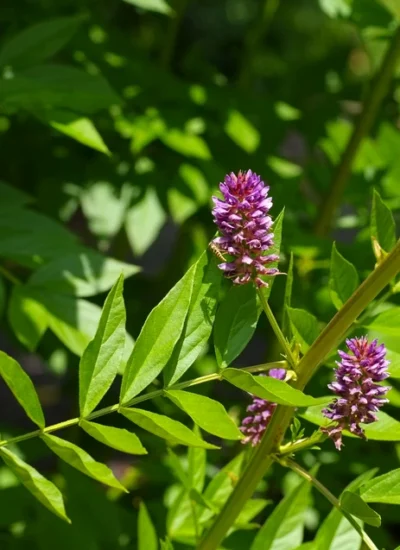
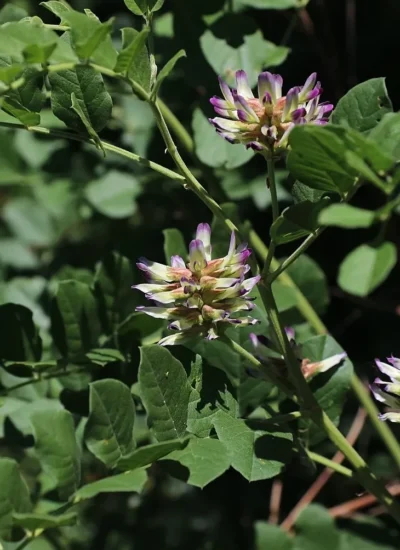
The common licorice, Glycyrrhiza glabra, is characterised by a high amount of the sweet substance glycyrrhizin (a saponin), and contains anethole (a phenylpropanoid), the substance that contribute to the anise seed notes of the common licorice.
Most of those dark colour licorice candies even contain anise seed extracts, giving the candy that strong characteristic taste that maybe alienating to some people.
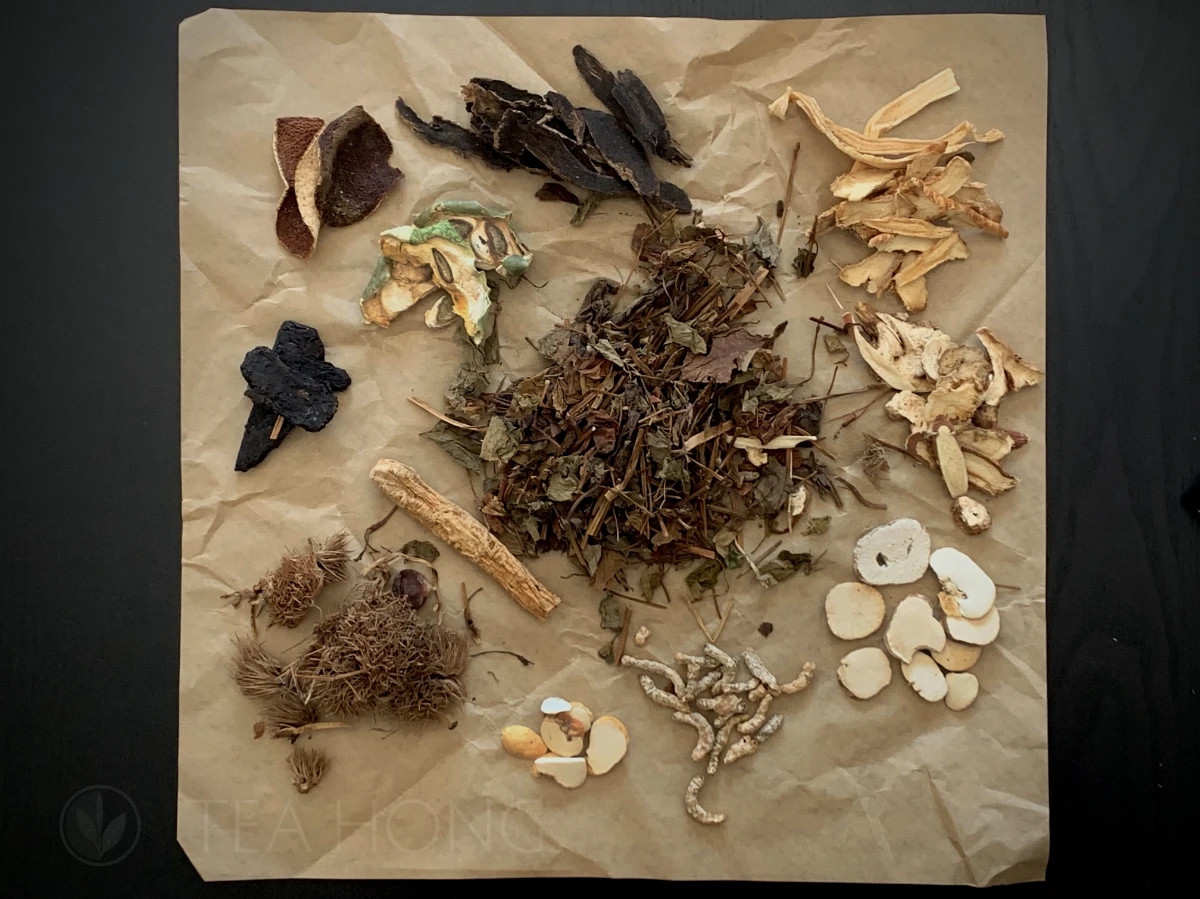
Chinese licorice is commonly used in various TCM prescription formula for making concoction. Some of these formulae can be very specific for certain ailments, while some others can be used as a health supplement
A different species
While Glycyrrhiza uralensis, the Chinese licorice, although in the same genus as the common licorice, it is a different species.
It has, by far, less amount of glycyrrhizin, so it is much less sweet. It also has much less amount of anethole, but much higher amount of other flavonoids. That is why it is chosen as an herbal health supplement rather than for use in confectionary production. That is also why it tastes much cleaner and more complex.
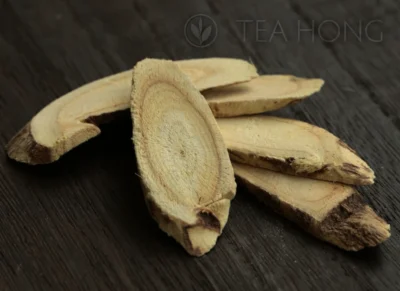
Slices of the root of Chinese licorice as a herbal product
When we say there is a Chinese licorice note in a tea’s profile, we mean exactly that clean, slightly cooling, refreshing and yet complex aromatic character. Put a piece of dried Chinese licorice root on your tongue and you will immediately know what we mean.
Next time when you see that term “Chinese licorice” in the tea’s description, I hope you will not be thinking about that licorice candy taste, but rather the comforting sensation of the Chinese herb.

Comments (0)
Leave a reply
You must be logged in to post a comment.
