
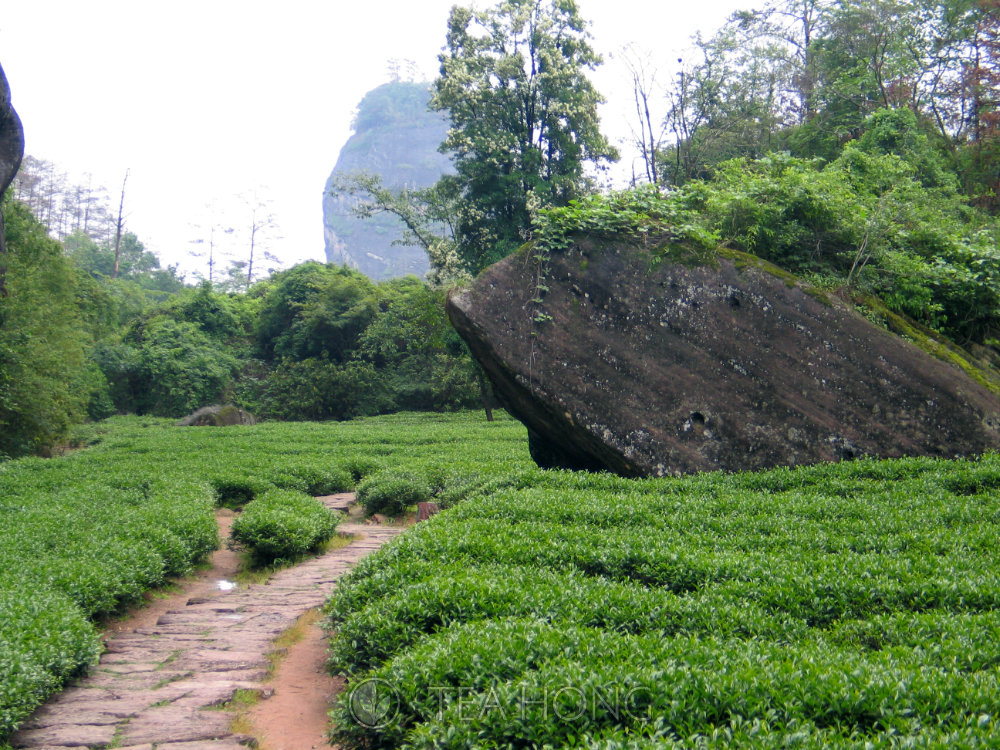
A small patch of tea bushes on the peak of a Wuyi mountain, Zhong Xin Yan, i.e. Centre Rock
Amongst old tea drinkers, Wuyi oolongs are referred to as “Yan Cha” — Tea from the Rocks, or Rock Tea, as some in the trade call it. The mountains in the Wuyi-shan area are made up largely of big dark colour rocks, a different landscape from some of the neighbouring counties. Yet since tea export became a major part of the local economy in the 18th century, Wuyi style tea production has been spread very broadly. To differentiate the authenticity of tea from Wuyi, where the heritage, techniques, and terroir are believed to be superior than the neighbouring areas, oolongs from Wuyi have been referred to as “Teas from the Authentic Rocks” — Zheng Yan Cha. Hence the shorter form, Yan Cha, is broadly used.
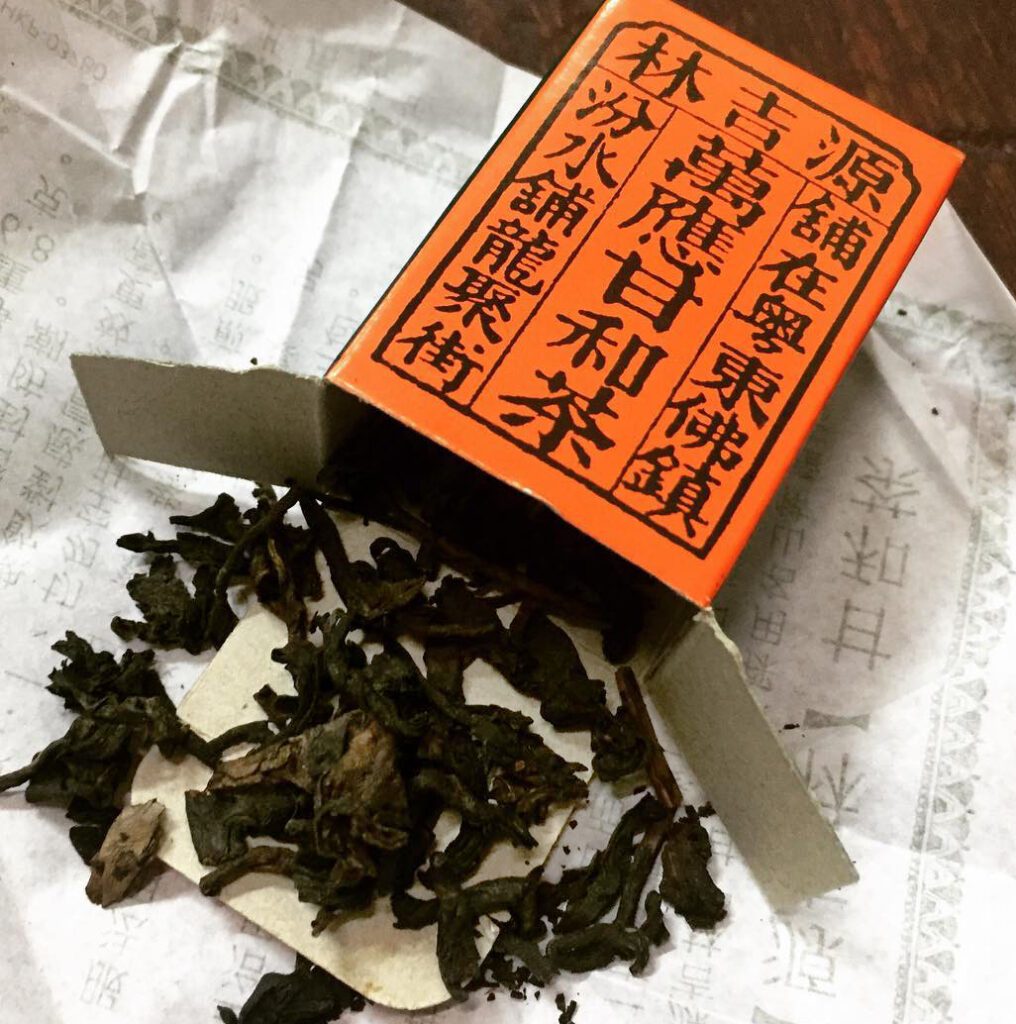
I could not find my own old photo of the match box folk remedy I took years ago. It was not digital then. But found this on the internet. It is a newer package than the one I remember. I believe the company still operates and produces a similar product, perhaps in a different package. Notice the very low grade tealeaves that look so much like what one can get as “Wuyi tea” in certain stores.
My Childhood Medicine
In the 1960’s, seeing a doctor was very costly to most families, especially to us. Like a majority of Hong Kongers of my age, we were the first generation born locally of refugee parents escaping from Communist China during the 1950’s. Most were very deprived. When one got sick, people often sought help from more affordable folk remedies.
We were exceptionally poor, even by refugee family standard, and because of the poor living environment and lack of food, I got sick quite often as a child, especially during the change of season like now. My mother would get a small package, the size of a larger matchbox, from a neighbourhood herbal medicine shop. She would then put the very dark colour content in a cup, steep it with boiling hot water, and force me to drink up that “medicine”. Magically, it worked most of the time. My mother called it “Hopp Zai Cha” — Little Box Tea.
Many years later, I saw in some closedown sale in an old shop that matchbox package and picked up one for nostalgic purpose. To my surprise, the major ingredient was actually tealeaves. It smelled and tasted like Wuyi, albeit a very cheap one, with some additional herbal smell from the other ingredients.
This discovery was an initial spark for me to study the medicinal use of tea later in life when my career changed dramatically from design consultancy to tea.
Wuyi Yan Cha
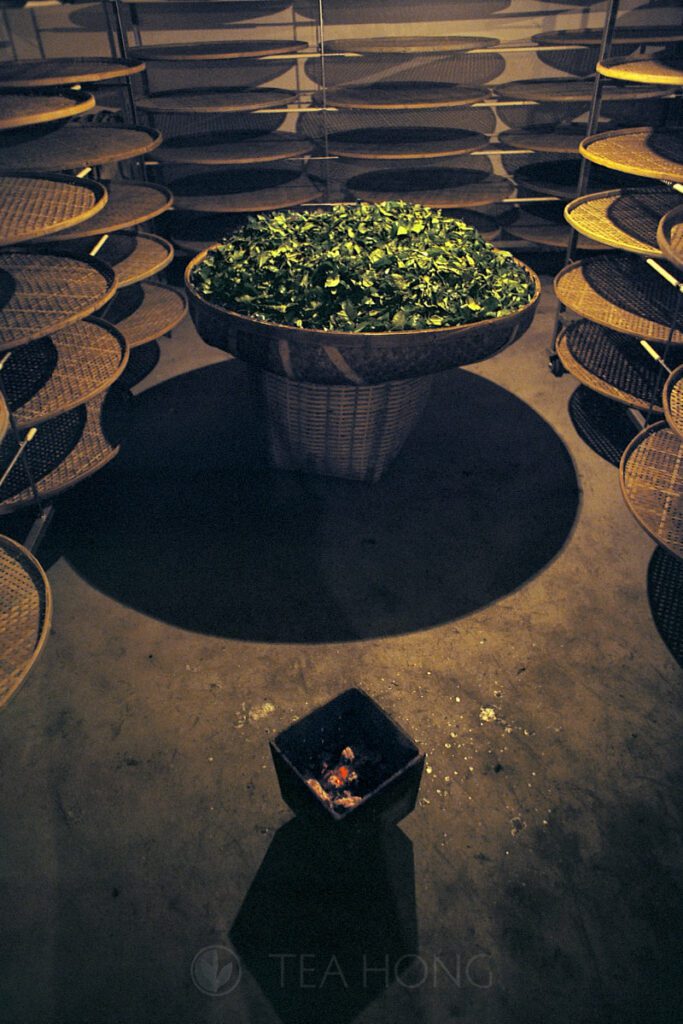
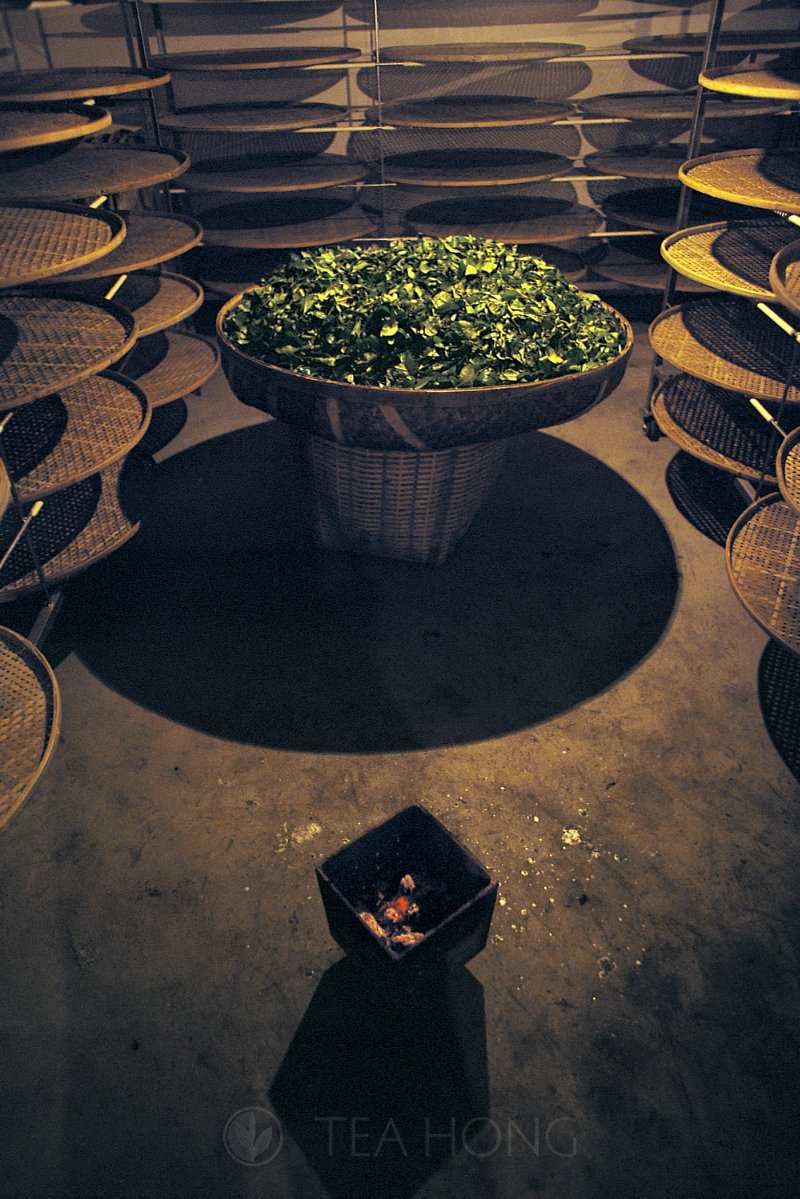
Charcoal warmer in the oxidation room during the last round of oxidation in Wuyi oolong production. This usually happens around 3 ~ 4 am for high quality productions
This family of oolongs is marked with a distinctive style: higher temperature roasting and baking, both in those varieties with medium bake and those with deep bake. This firing not only gives the tea a characteristic taste profile, but also tones down the “chilly’’ nature of the raw tealeaves to give the tea their relatively warmer TCM inclination. That makes the category much more appropriate at this time of the year, for the northern hemisphere.
Significant maturing
At Tea Hong, we do not sell freshly produced Wuyi oolongs. I believe that the tea has to be properly rested for mellowing before it is suitable for enjoyment, both for the taste and for the body. More so for deep baked versions.
Contrary to myths, traditional and master-crafted Wuyi oolongs are never over-fired. Cheap ones are. Over-firing is a technique to cover up poor harvests and lowly processing skills. While high-fire is a style, over-fire is a shortcoming. Even our deepest baked and most price-friendly selection, Cassia Classic, is not as over-fired like what’s popularly available in the market. It has been maturing in our storage since 2019 (the batch available at the time of this writing).
May I invite you to join my continual study of this group of teas by first exploring their sensory characteristics:
Medium baked
Deep baked
(The vintages indicated above reflect the batches that are available at the time of this writing. Please check the vintage of the tea you’d like to purchase on the specific product page under the tab “Additional Information”, if you are reading this months later or more.)
See all Wuyi teas here» Wuyi
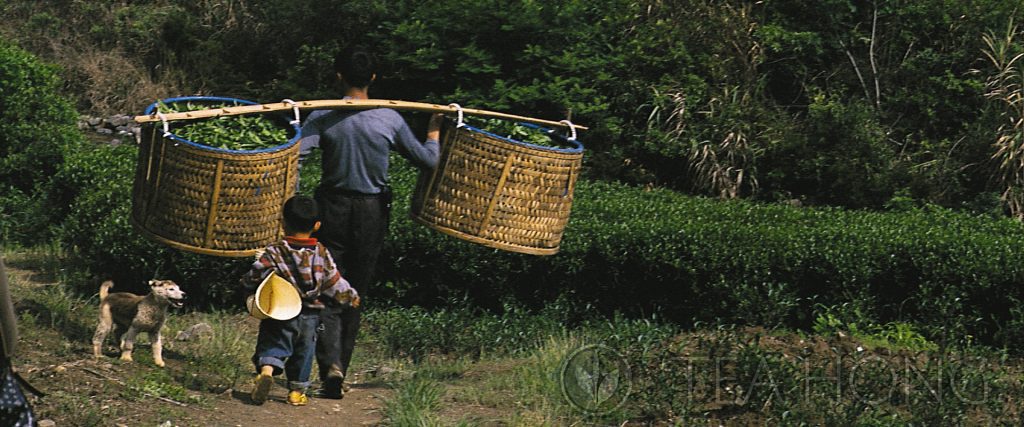
Wuyi tea farmer and boy going home in late afternoon with the sun-wilted harvest of the day. A long night of processing awaits.
Direct from farms, as we always do
We work directly with highly skilled small family tea farms and producers for genuine Wuyi teas in order to deliver authentic top quality at good value. Since the region has been highly publicised with the tea from this or that specific mountain or rock or even a few this or that oldest tea trees, certain productions have been demanding unreasonable prices, despite their lowly quality. We have sampled those from shops of high reputations in Fujian (the county where Wuyi is part of), Hong Kong, London and some high traffic internet shops, in addition to those sent by major Fujian tea exporters to arrive at this conclusion.
In the early days of my tea career, because of the international prestige of the tea brand I had created in Hong Kong, I had the opportunity to meet the young owner of a major corporation from this region. As he was inviting me to work with him to expand their market, he told me he had bought the mountains together with all those “historical old tea trees” for his “publicity” use. He said so that his factories can be selling all the tea at whichever prices they want to the whole country and for exports. He then showed me photos and pamphlets of the tea trees and the huge tea factories he owned.
Is yours really direct from farm? Even you have visited Wuyi?
I dislike him not only for his lowly trick, but his manipulative attitude even in speaking. Such young “entrepreneurs” were where they were simply because of their families’ political positions, and because of their born in privileges, most such people really think that they could do whatever they want to manipulate people and things. In my previous life as a consultant I had worked with a few of such and had enough of that. Maybe that is one reason why in my tea career, I have always distanced myself from such “major corporations” or “regional tea exporters”.
Interestingly, in a 2023 visit to a famous teashop in London, the owner gave me a book he wrote with a large section telling how the humble “guardian” of the few ancient Da Hong Pao tea trees were producing the most genuine and precious Da Hong Pao oolong. They were exactly some of the very “historic” tea trees that young corporate owner bought and used as marketing tool. The same mountain that he bought.
This tricked London tea man probably has the same good intent as many teashop owners in the West, without knowing that their tea farm visits were actually staged publicity shows. These innocent tea people, hoping to support genuine small stake tea farmers, have unknowingly become part of the marketing machine of a much larger dark force. This is a sad reality in the tea world that I hope will fade with better awareness and sensitivity with the real thing.
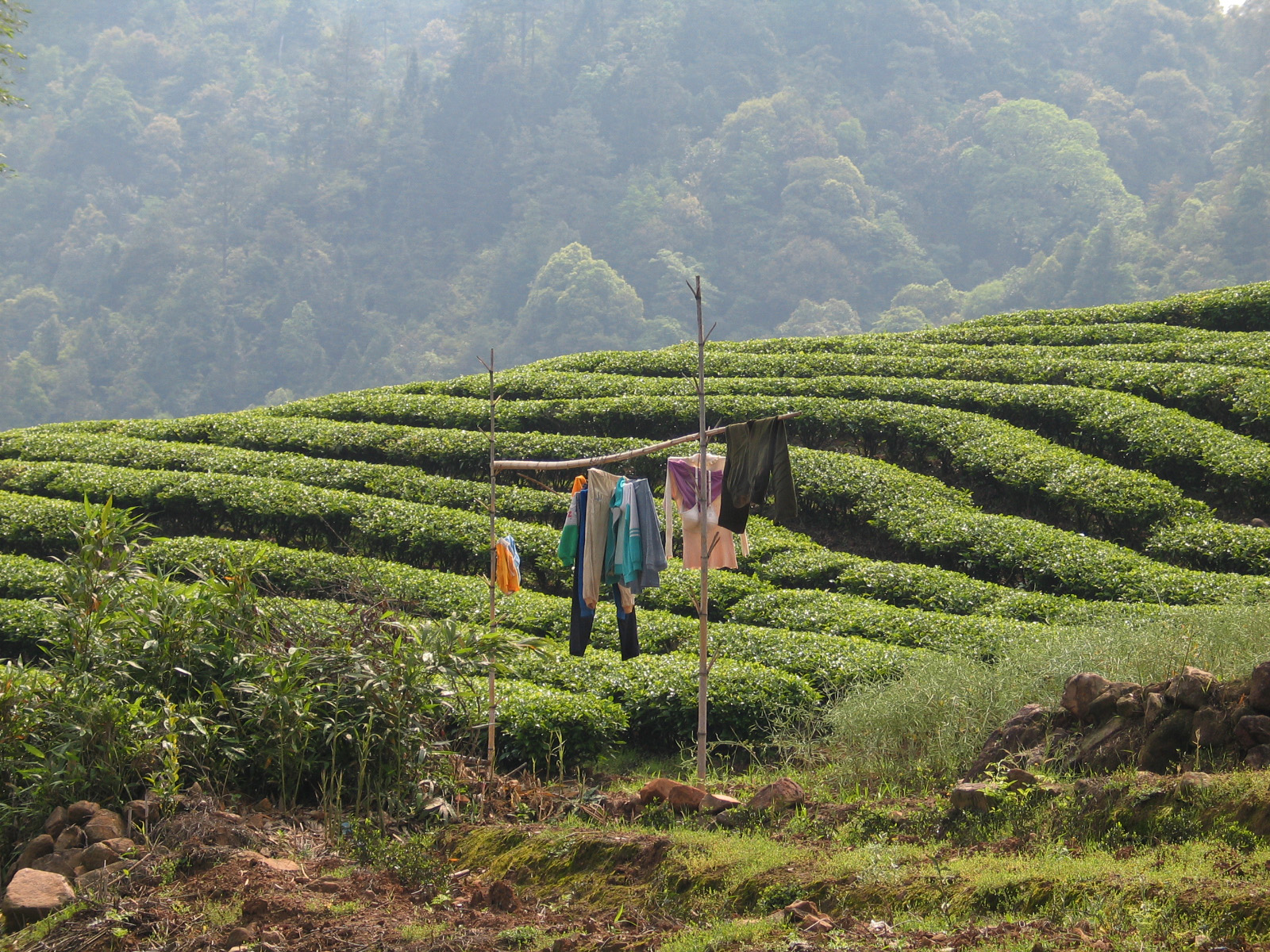
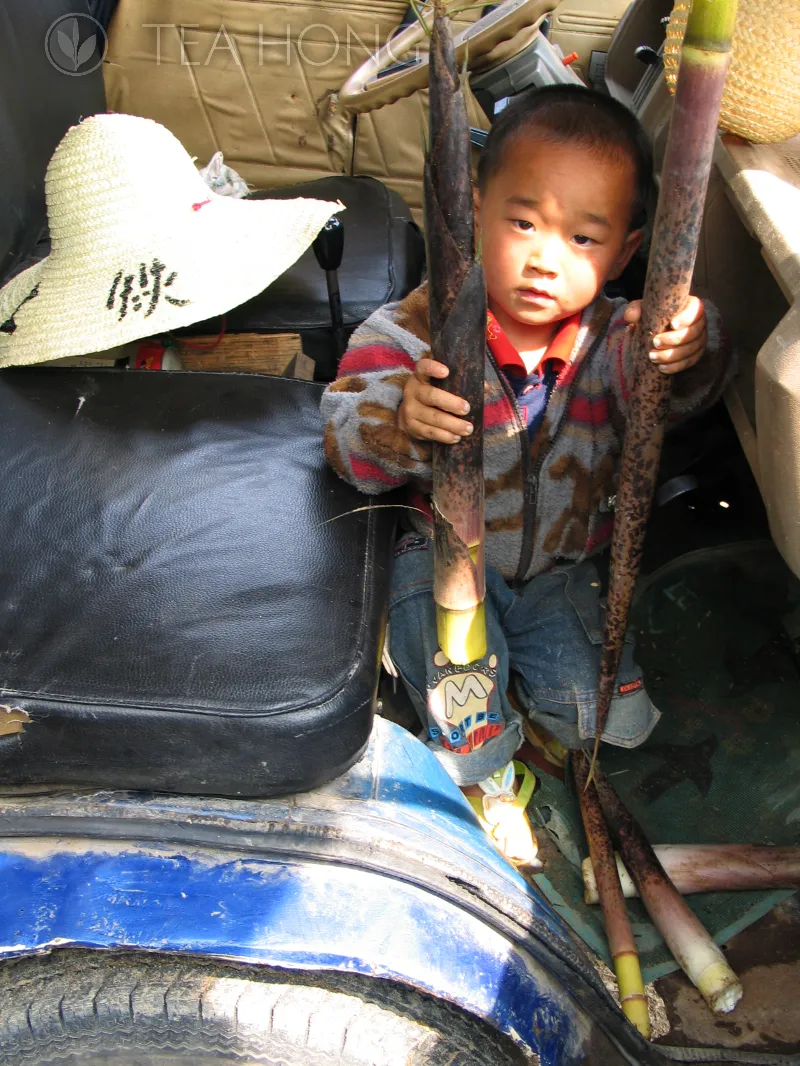
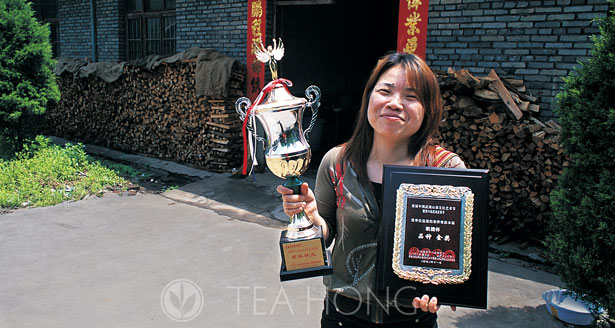
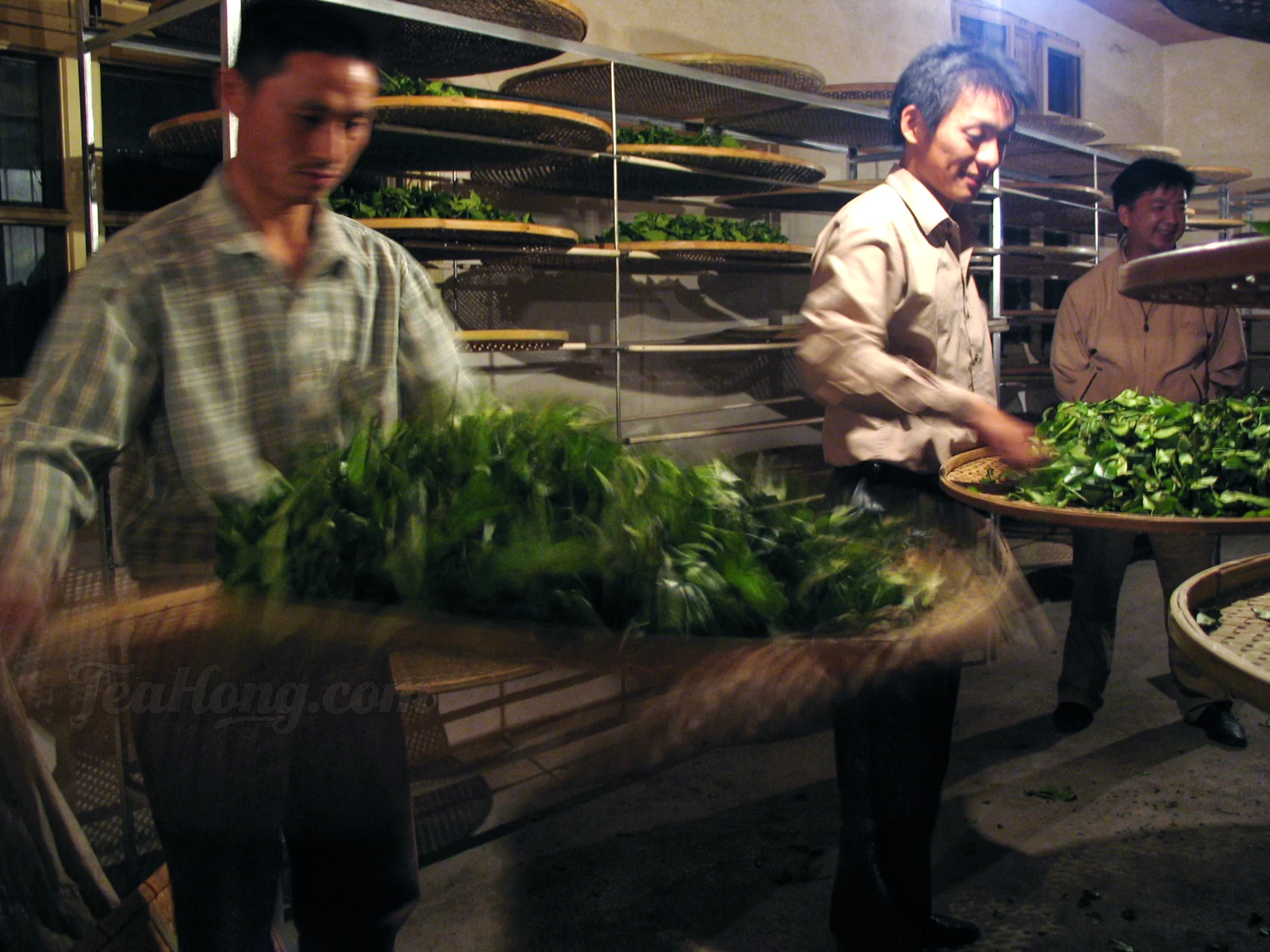
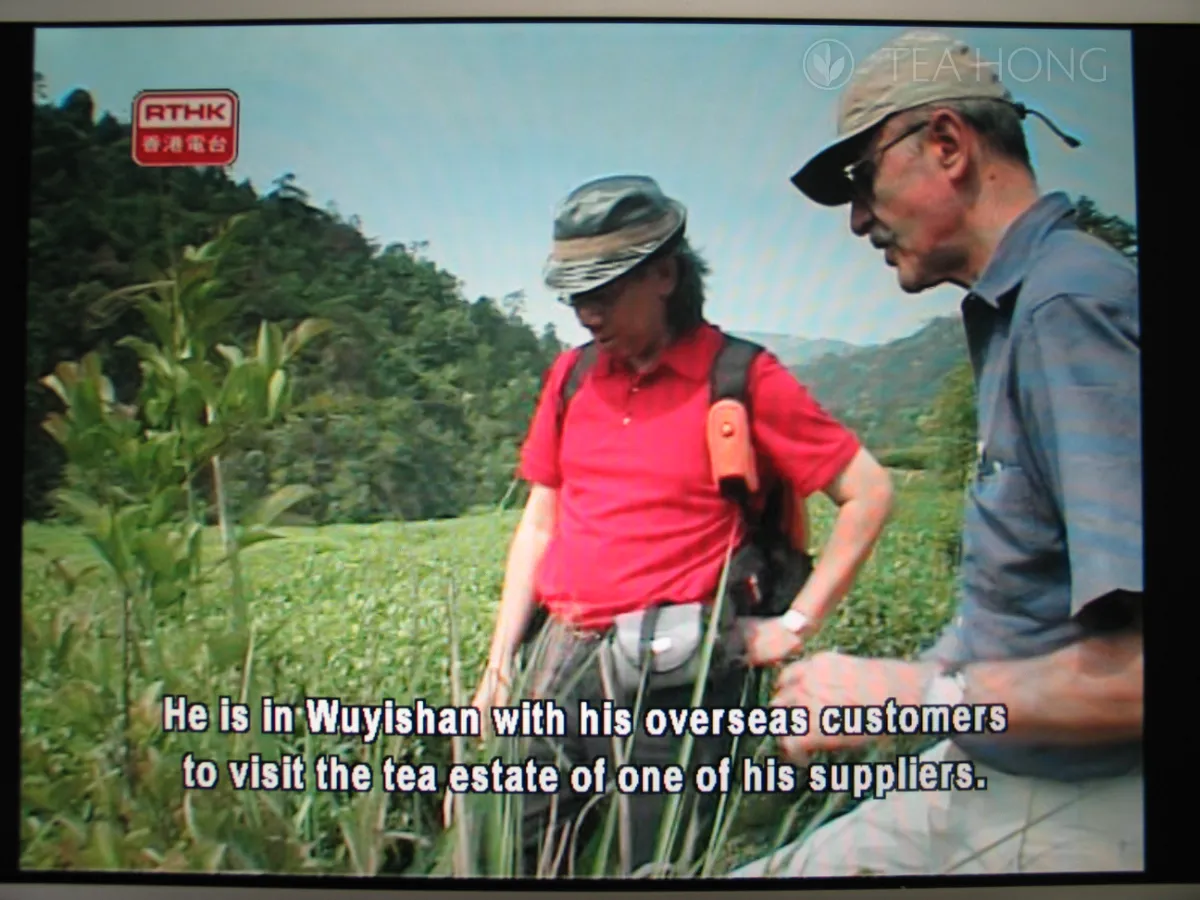
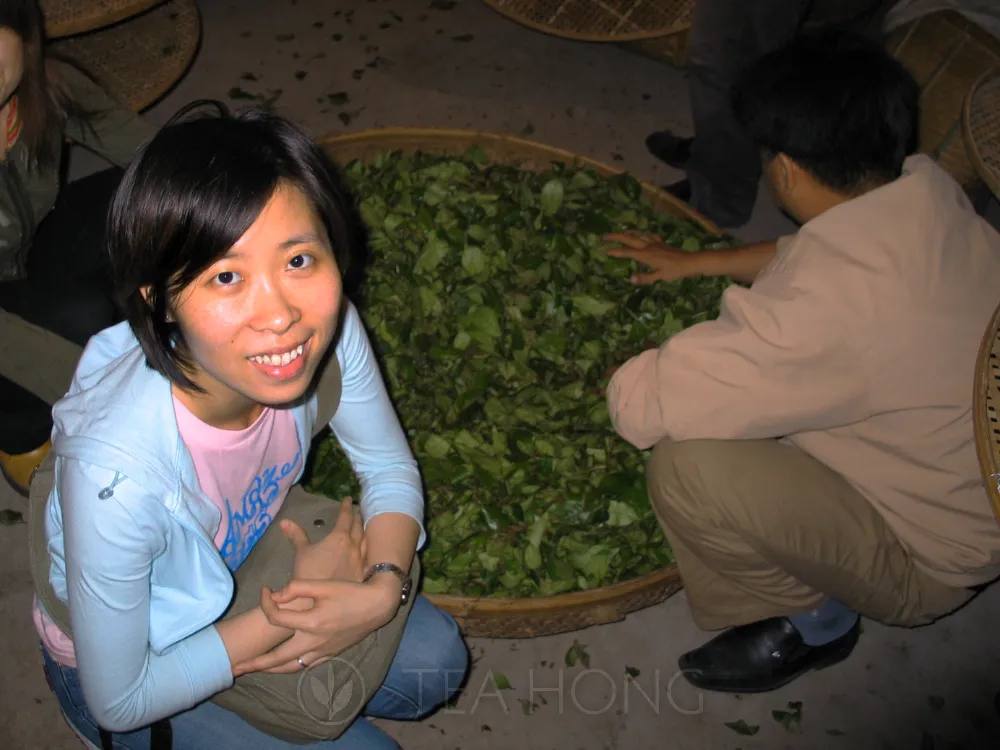
A small album of an actual production Wuyi tea farm


Comments (2)
-
Fascinating, Leo. I wonder if in the future, you will talk more about the importance of properly “resting” a tea before it goes to market.
-
Thanks for asking. Most certainly I will. However the need for each different tea category, or even specific tea selection can be different. If there is any one category or selection you are interested in, please let me know.
-


Leave a reply
You must be logged in to post a comment.